Hutchison Hall
John D. Hutchison and Co. 和記洋行
The Hutchison name has a long history in Hong Kong, reaching into every trade and linked to many other names — think of “Hutchison Whampoa”, “Watsons”, “3” and “CK Hutchison”, not to mention businesses carrying the name outright, such as “Hutchison Telecommunications” and “Hutchison Ports”. Across more than 150 years, Hutchison has grown in different directions in every era and left an indelible mark on Hong Kong.
Hutchison and
the development of Hong Kong
1877
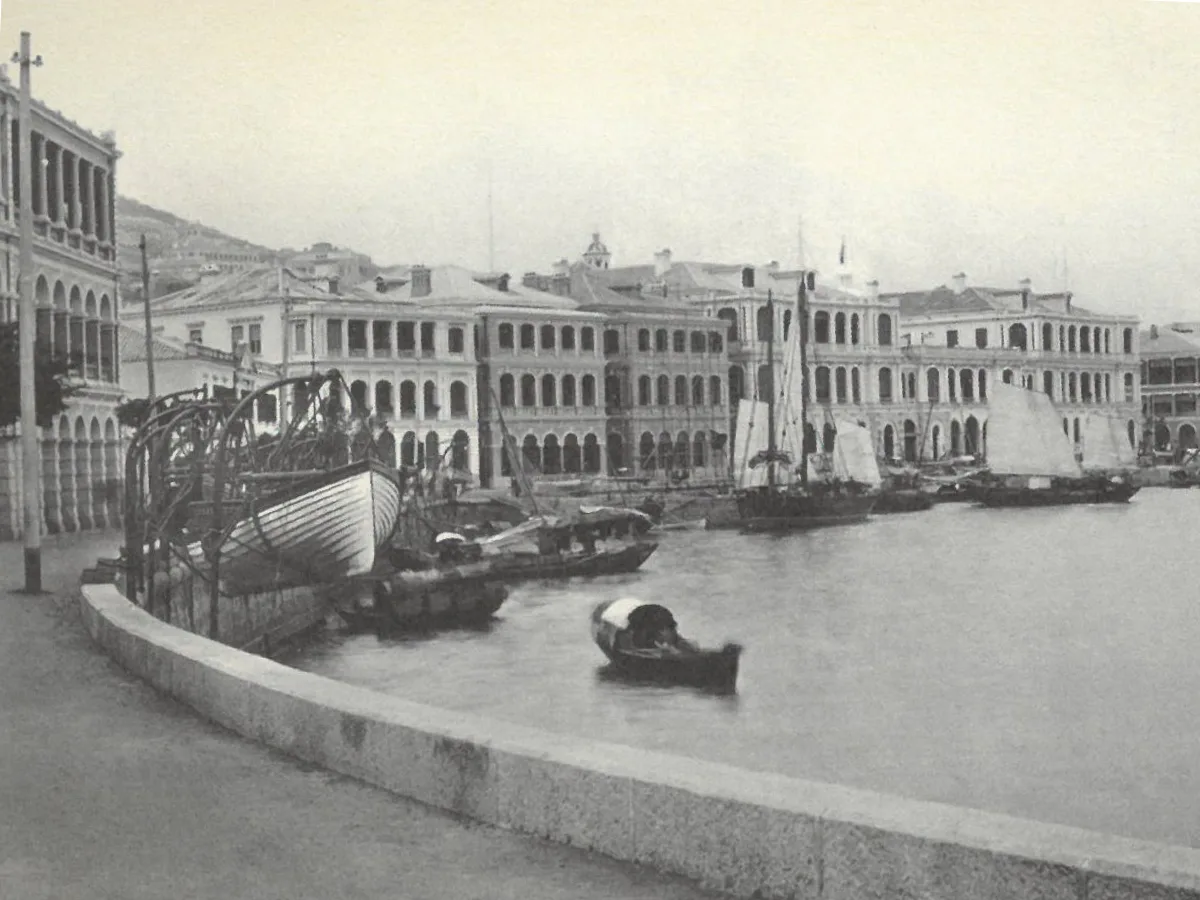
John D. Hutchison and Co.
Hutchison traces its origins to Robert Walker and Co., founded as early as 1860 — one of the many hongs (洋行, foreign trading houses) then common in Hong Kong. In 1877 the British merchant John D. Hutchison took over the firm and renamed it John D. Hutchison and Co. — 和記洋行 in Chinese — and the name “Hutchison” (和記) formally opened its long chapter in Hong Kong’s brand history. Mr Hutchison died of illness in Shanghai in 1920.
1960s
Hutchison International
After the Second World War, Sir John Douglas Clague (祁德尊爵士) — a legendary figure of Hong Kong’s British colonial era and a retired British Army colonel — joined John D. Hutchison and Co. in 1947. In 1965, having acquired control of the firm’s shares, he renamed it Hutchison International (Hutchison International Limited) and took the chairmanship.
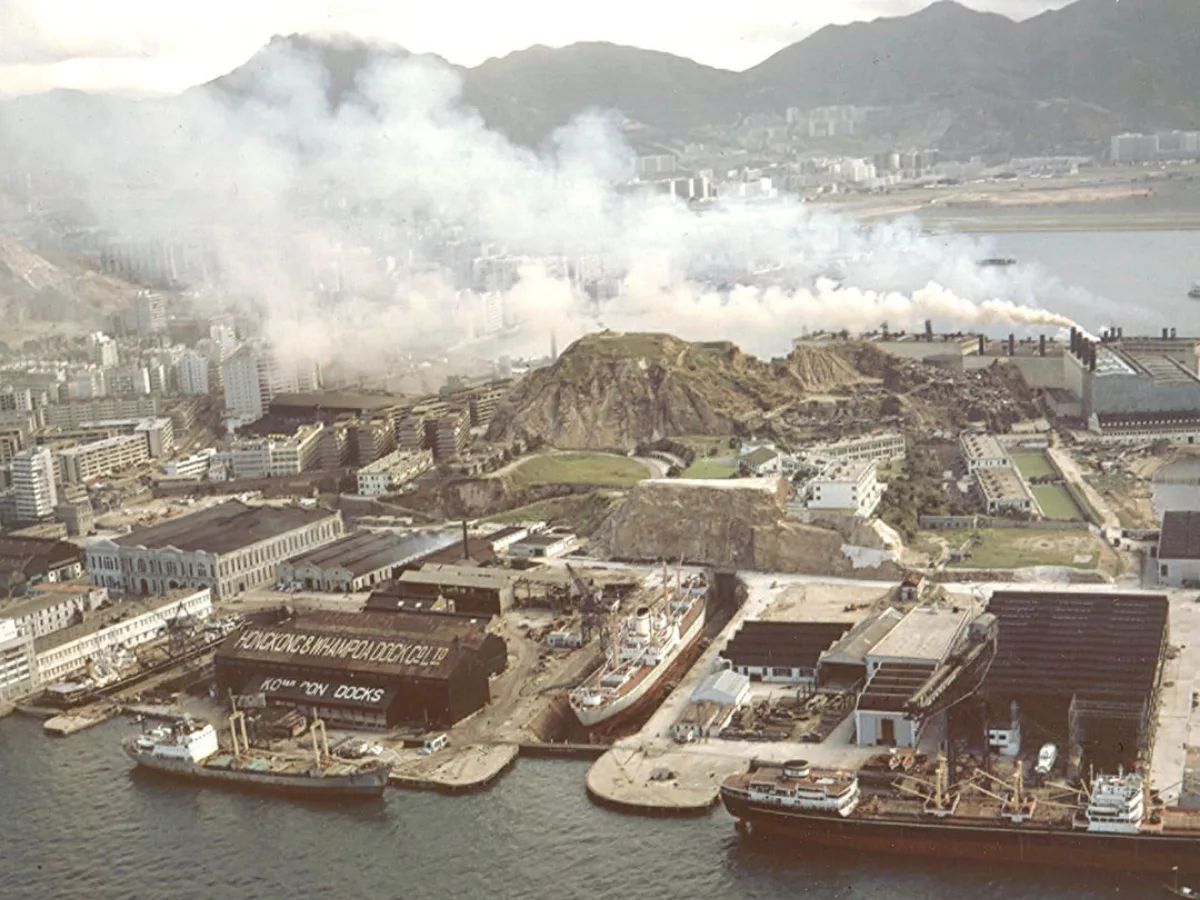
Clague drove Hutchison International into a phase of rapid expansion, acquiring Hong Kong and Whampoa Dock (黃埔船塢), Watsons and the Kwan Yik godowns (均益倉, warehouses) in the 1960s. At its height the group counted more than 300 associated companies and was for a time Hong Kong’s largest landowner — a business second in strength only to Jardine Matheson, and ranked with Jardines, Swire and Wheelock Marden (會德豐) among Hong Kong’s four great hongs.
Hutchison International’s distribution and agency business, meanwhile, continued to trade under the John D. Hutchison and Co. name. This line of business was finally sold in 1989 to Inchcape Pacific (英之傑太平洋) and renamed 英和商務 (Ying Wo Commercial); a few years later it was acquired by the Li & Fung group, which runs the Circle K convenience stores.
1975
HSBC changes Hutchison
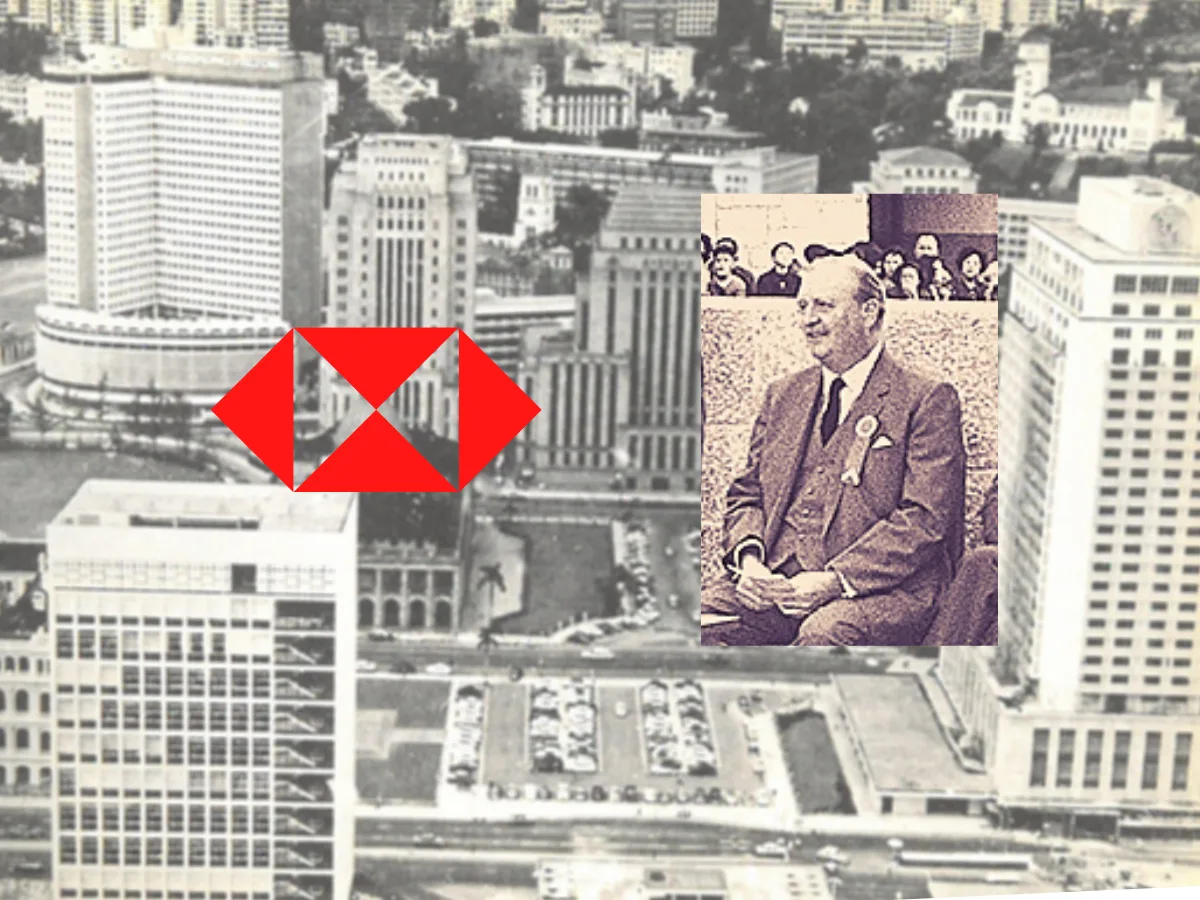
In 1975, with Hutchison International in financial difficulty, HSBC injected capital and became its largest shareholder. Clague was forced to resign, ending his stewardship of Hutchison. Yet Sir Douglas Clague’s influence on Hong Kong went well beyond the firm: he co-founded TVB with Run Run Shaw, championed the construction of Hong Kong’s first cross-harbour tunnel, served as chairman of the Hong Kong Jockey Club, and chaired the Hong Kong Housing Society from 1952 to 1981. Clague Garden Estate (祁德尊新邨) in Tsuen Wan is named in his memory.
1979
Hutchison Whampoa
After HSBC became Hutchison International’s largest shareholder, it appointed W.R.A. Wyllie (韋理) as chief executive, and in 1977 merged Hutchison International with Hong Kong and Whampoa Dock to form Hutchison Whampoa. The dock business, originally in Hung Hom, had merged with Taikoo Dockyard as early as 1972 and moved to Tsing Yi. The old Whampoa Dock site became Whampoa Estate and Whampoa Garden, developed under Hutchison Whampoa, while Taikoo Dockyard became today’s Taikoo Shing.
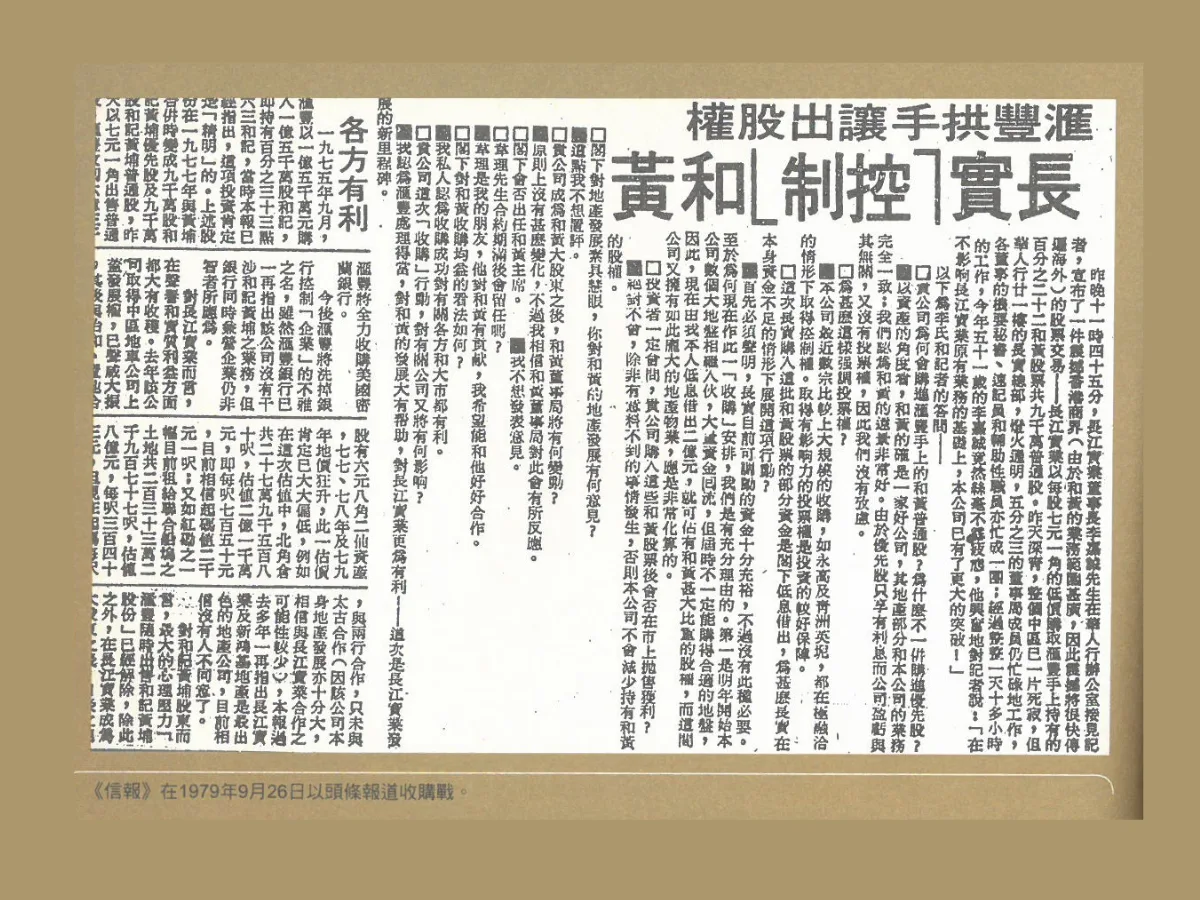
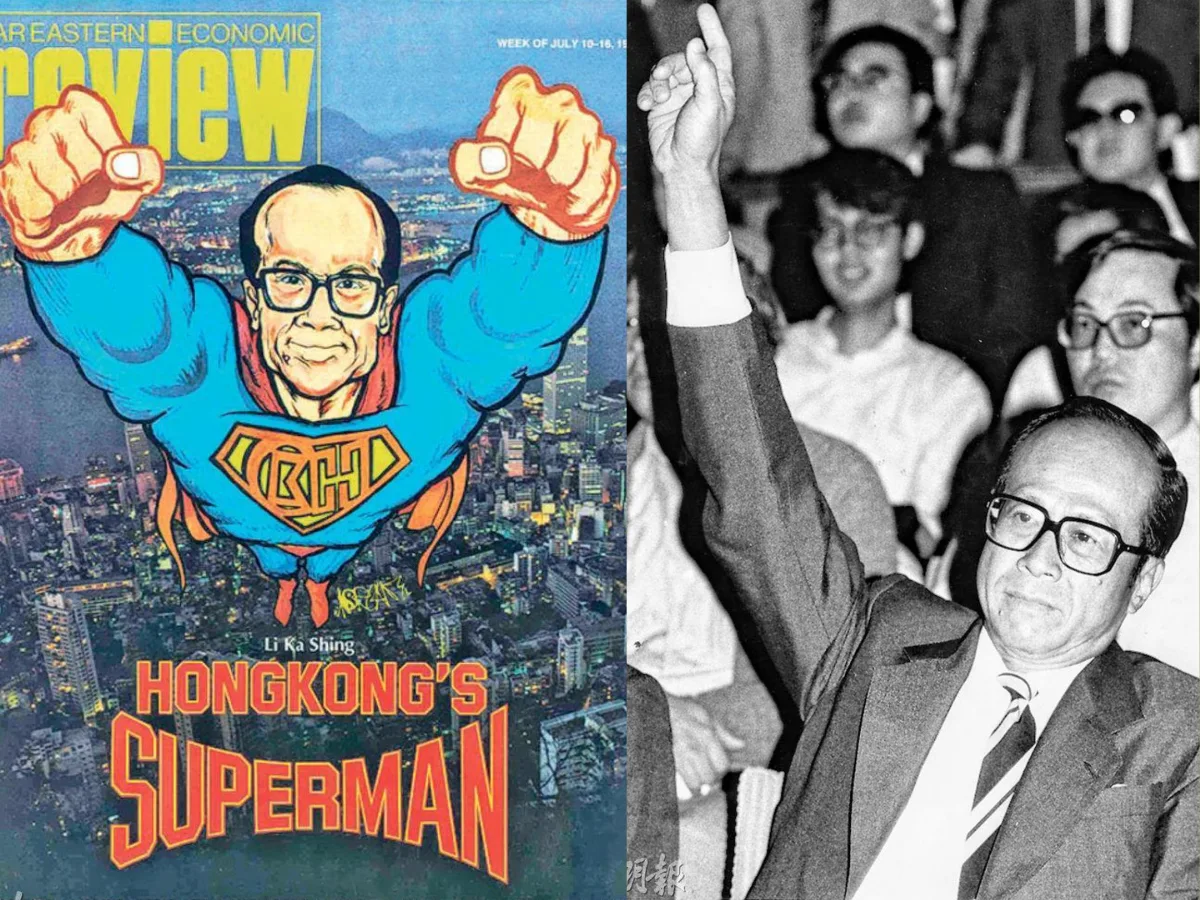
The defining event for Hutchison Whampoa came in 1979, when Li Ka-shing opened secret negotiations with HSBC over the bank’s Hutchison Whampoa shares. On 25 September an agreement was reached: Cheung Kong Holdings acquired HSBC’s entire Hutchison Whampoa stake, becoming the largest shareholder. Reportedly, Cheung Kong’s market value at the time was just over HK$700 million, against more than HK$6 billion for Hutchison Whampoa.
The news stunned the whole of Hong Kong and was seen as a historic moment — an old British hong passing into the hands of a rising Chinese merchant — and Li Ka-shing became the first Chinese businessman to control a British-owned company. By 1981 Cheung Kong held more than 40% of Hutchison Whampoa, and Li Ka-shing formally became chairman of its board.
Cheung Kong and Hutchison Whampoa
In 1980, Hong Kong and Whampoa Dock and Hutchison’s property arm (和記地產) merged their management resources and businesses to form the Hutchison Whampoa Properties group, which in 1982 completed its first “mini-township”, Aberdeen Centre. Cheung Kong and Hutchison Whampoa — together known as the “Cheung Kong–Hutchison group” (長和系) — went on to develop numerous property projects in Hong Kong, including the residential estates Whampoa Garden, South Horizons, Kingswood Villas, Laguna City and Tierra Verde, and commercial projects such as Harbourfront (海濱廣場), the Harbour Plaza hotel and Wonderful Worlds of Whampoa (黃埔新天地) in Hung Hom, and The Center in Central.
Beyond property, Hutchison Whampoa moved successively into retail, telecommunications, ports, infrastructure and energy. Many well-known brands sat within the group, including Hongkong International Terminals (HIT) and the Watsons company, both owned before Li Ka-shing took charge, followed by the acquisition of Hongkong Electric in 1985.
Watsons, PARKnSHOP and Fortress
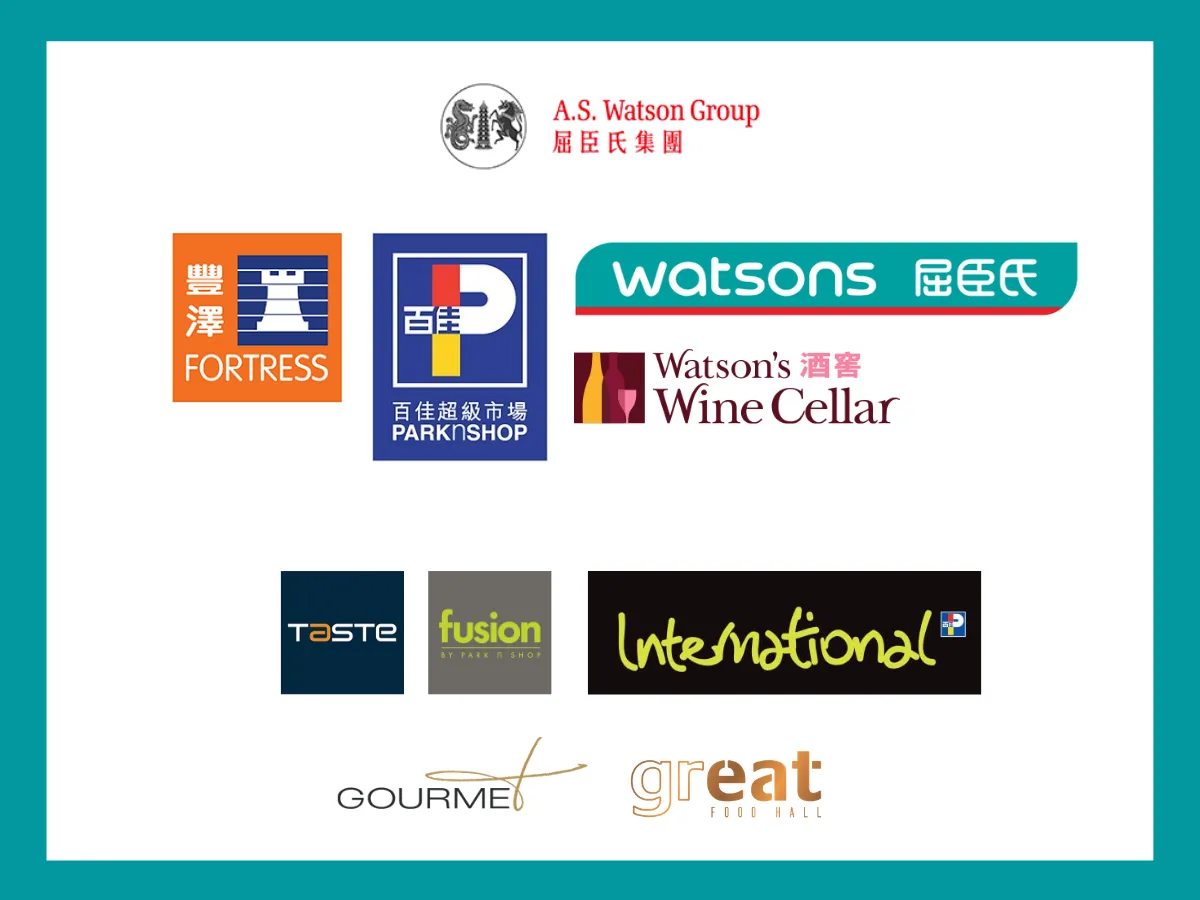
In retail, the Watsons company already ran the Watsons drugstores and the PARKnSHOP supermarkets, and in 1990 Fortress also became a member of the Watsons group. Watson’s Wine Cellar opened in 1998. In 2002 PARKnSHOP opened the 便利佳 (Bin Lei Kai) convenience stores, and supermarket brands under various other names followed.
Hutchison Telecommunications
In telecommunications, from 1983 Hutchison Whampoa operated a succession of brands in Hong Kong: Hutchison Telephone (和記電話), Hutchison Paging (和記傳訊), Hutchison Communications (和記通訊), 天地線 (Tin Tei Sin), Orange, Everyday PCS and 3. In 1996 the mobile, paging and fixed-line services were consolidated into Hutchison Telecommunications (和記電訊), which launched the 姿訊咭 (Chi Shun Card). 3 Hong Kong, which still runs a 5G business in Hong Kong today, entered the market in 2004 with the launch of 3G services.
Li Ka-shing’s second son Richard Li — who at Hutchison Whampoa had helped set up the STAR TV project — acquired Hong Kong’s largest operator, Hong Kong Telecom, in 2000 through Pacific Century CyberWorks, a company unconnected with Li Ka-shing, making it a direct competitor of Hutchison’s telecommunications business.
The HGC that is not Hutchison
In 2017, Hutchison Whampoa sold its fixed-line telecommunications business. In running the businesses it bought, the new consortium kept the English brand “HGC”, inherited from the initials of Hutchison Global Communications, but the Chinese name and full English company name became HGC Global Communications Limited (環球全域電訊). Although “HGC” has no connection with Hutchison, as late as 2020 many Hong Kong people were still calling the fixed-line services of “HGC” by the name 和記 — Hutchison.
Metro, STAR TV and TOM
In media, Hutchison Whampoa was licensed in 1990 to operate Hong Kong’s second commercial radio broadcaster, and Metro Radio (新城電台) began broadcasting in 1991. Its original golden-hits channel (金曲台) became Metro Finance (新城財經台) in 2001 — the first 24-hour all-Cantonese financial news station.
In the same period, Hutchison Whampoa and Li Ka-shing jointly invested in satellite television, with Richard Li running the venture. STAR TV (衛視) formally went on air in May 1991, and was sold in 1993 to Rupert Murdoch’s News Corp.
In 1999 Hutchison Whampoa founded TOM.COM, which listed on the Growth Enterprise Market in 2000, whipping up a dot-com whirlwind that had the whole city queuing to subscribe for shares.
Entering the twenty-first century, Hutchison Whampoa also took part in e-commerce. In 2000 it set up bigboXX.com, a B2B — business-to-business — online purchasing platform. In 2001 it took a stake in the American priceline.com, subsequently running online travel services under the Priceline brand.
CK Hutchison
In 2015, the Cheung Kong and Hutchison Whampoa groups completed a reorganisation that merged the two groups’ businesses, creating CK Hutchison Holdings Limited (長江和記實業有限公司) to hold their non-property businesses, with the property businesses held by Cheung Kong Property Holdings Limited.
The Hutchison name thus parted from Whampoa and was formally joined to Cheung Kong, though people have continued to describe Li Ka-shing’s businesses as the “Cheung Kong–Hutchison group” (長和系). The mergers and mutations of the Hutchison name also trace a journey from a hong run by a Briton in Hong Kong in 1877 to a multinational headquartered in Hong Kong today, its businesses and brands spanning the globe.
Sources:
香港企業併購經典 = Merger & acquisitions
馮邦彥編著
香港增訂版 香港 : 三聯書店香港有限公司 2017
港股經典收購戰
呂志華著
香港 : 明報出版社 1993
香港金融風雲35載
陳景祥主編
天窗出版/信報財經新聞有限公司 2008
香港商戰風雲錄
藍潮著
初版 香港 : 名流出版社 1997
太古之道 : 太古在華一百五十年
鍾寶賢著
香港第一版 香港 : 三聯書店 香港有限公司 2016
承先啟後 : 利豐馮氏邁向110週年 : 一個跨國商貿企業的創迎與超越
馮邦彥著
香港第一版 香港 : 三聯書店香港有限公司 2016
盈動兼併香港電訊
馮邦彥
初版 香港 : 明報出版社有限公司 2000
https://www.ckh.com.hk/tc/about/milestones.php
http://www.hutchison-whampoa.com/tc/about/milestones.php?year=1960
https://www.hit.com.hk/cn/About-Hit/Milestones.html
http://www.etnet.com.hk/www/tc/news/topic_news_detail.php?category=special&newsid=2292
https://www.mpfinance.com/fin/daily2.php?node=1521230304715&issue=20180317
https://www.bbc.com/zhongwen/trad/china/2014/01/140107_runrunshaw_profile
Published in Sep 2020 by Hong Kong Brand Museum 香港品牌博物館