Jardine Matheson Hall
Jardine Matheson Group (怡和集團)
To this day, a gun salute is fired in Causeway Bay at 12 noon every day: the “Jardine Noonday Gun” (怡和午炮). It began over a century ago, when Jardines staff would borrow the battery guarding the firm’s godowns to fire salutes welcoming or seeing off senior company figures. On one occasion, a 21-gun salute enraged a newly arrived senior officer of the British Navy — a private firm had no right to imitate military ceremony — and as a punishment the firm was ordered to fire a single shot at noon as a time signal. The punishment became a tradition, and it endures today.
Built on the Opium War: the Leading Hong of British-Era Hong Kong
1832
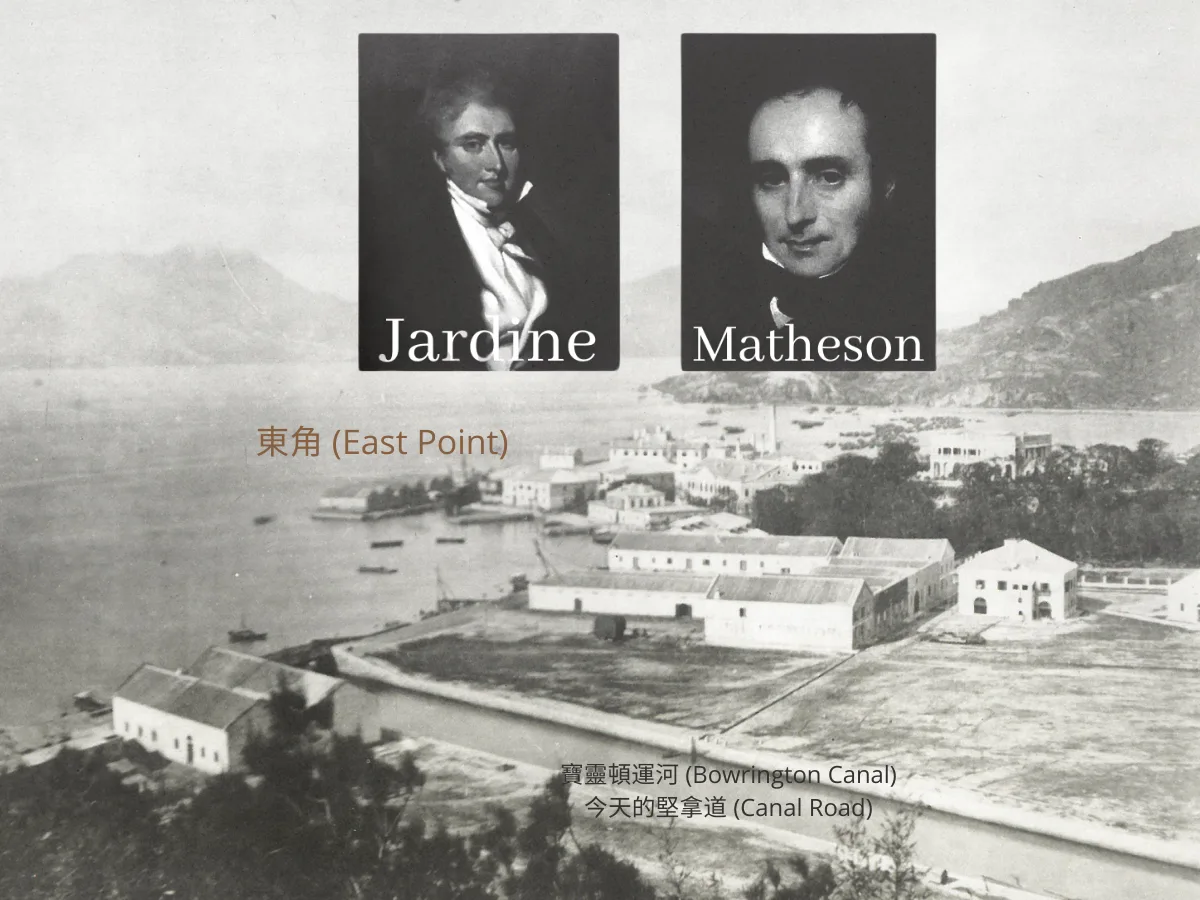
Jardine & Matheson — the 渣甸行 (“Jardine’s hong”)
The Jardine Matheson Group is known in English simply as “Jardines”. Jardine’s Crescent (渣甸坊) and Jardine’s Bazaar (渣甸街) in Causeway Bay, and Jardine’s Lookout (渣甸山) above Happy Valley, are all named after the group’s founder, the Scot William Jardine. Matheson Street (勿地臣街) beside Times Square is named after the firm’s other founder. And a stretch of the tram route at East Point, Causeway Bay, is named Yee Wo Street (怡和街, after the firm’s Chinese name).
The Scot William Jardine founded “Jardine, Matheson & Co.” with James Matheson in Canton (Guangzhou) in 1832; it was known at the time in Chinese as 渣甸洋行 — “Jardine’s hong” (洋行, a foreign trading house). At first the business was chiefly trade, including the opium business both founders knew well (what today would be called drug trafficking), as well as exporting tea and other goods to Britain; in 1839 the firm moved its trading operations from Macau to Hong Kong.
1842
The Wu family’s Ewo hong and
Jardine’s Ewo hong
Why Jardines took the Chinese name 怡和 (“Ewo”) is a matter of much speculation; the official website mentions that Jardines formally adopted 怡和 as its Chinese name in 1842. (The Firm’s Chinese name ‘Ewo’ - ‘the state of happy harmony’ - was adopted the following year.)
Before Jardines’ 怡和洋行 (Ewo hong) appeared, there was already a hong of the very same name in Canton, opened by the Chinese Wu (伍) family — and no small concern: it was the chief of the merchant houses granted foreign-trade privileges by the Qing government, with businesses spanning property and tea plantations, and even investments in railways and insurance in the United States. Some books go so far as to describe the Wu family’s Ewo hong as the “richest house in the world” of the 19th century.
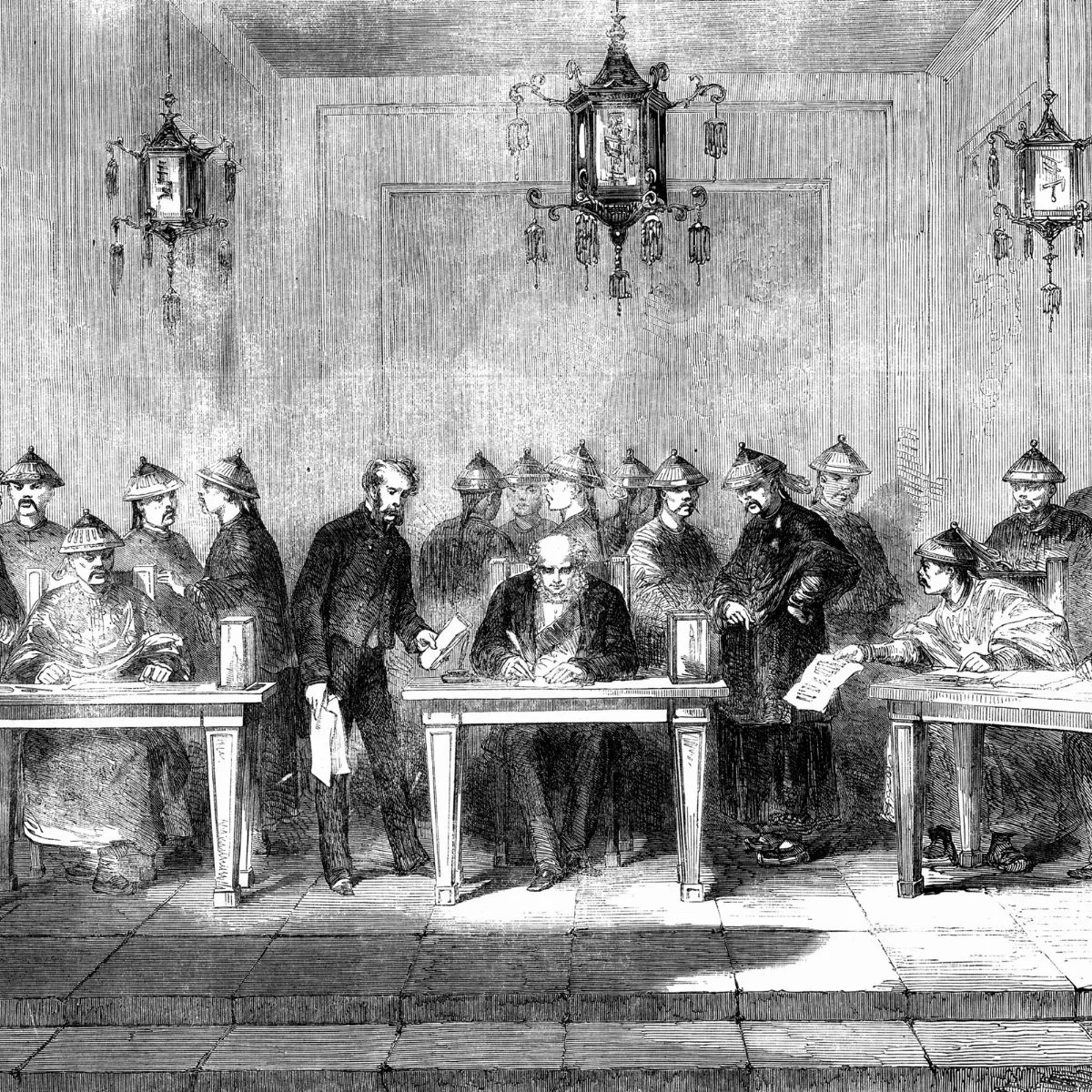
After the Qing government’s defeat in the Opium War in 1842, it not only ceded Hong Kong but was forced to pay enormous indemnities. Part of the burden was ultimately passed on to the merchant houses that had held the foreign-trade privileges, with the Wu family’s Ewo hong bearing one million silver dollars. The Treaty of Nanking also forced the Qing government to open five ports to foreign trade, and the hongs originally run by Chinese merchants vanished as a result.
According to some books, Jardines thereby took over the original Ewo’s business. In any event, from 1842 onwards Jardines’ use of the name 怡和洋行 can no longer have caused any confusion. Some historians also hold that Jardines’ close relationship with the British government — through the Opium War, Britain’s late-Qing foreign trade, and later the governance of Hong Kong — brought the firm considerable benefit from those political ties.
“Hong Kong is ruled by the Jockey Club, Jardines, HSBC and the Governor — in that order”: this saying circulated ever more widely in the mid-20th century.
1864
Holding Fast to Central
Jardines moved its head office from Causeway Bay to Central in 1864, and thereafter took part continuously in Hong Kong’s development:
- 1866: helped establish the “Hongkong and Whampoa Dock Company”.
- 1878: built Hong Kong’s first sugar refinery, the “China Sugar Refinery” (香港中華火車糖局).
- 1879: built Hong Kong’s first ice works, the “Hong Kong Ice Company” (香港雪廠).
- 1884: helped establish the “Hongkong Tramway Company” (香港電車公司).
- 1886: established “Wharf” (九龍倉).
- 1889: established “Hongkong Land” (香港置地).
- 1897: established the “Hong Kong Cotton-Spinning, Weaving and Dyeing Company” (香港棉紡織染公司).
- 1898: established the “Star Ferry Company” (天星小輪公司).
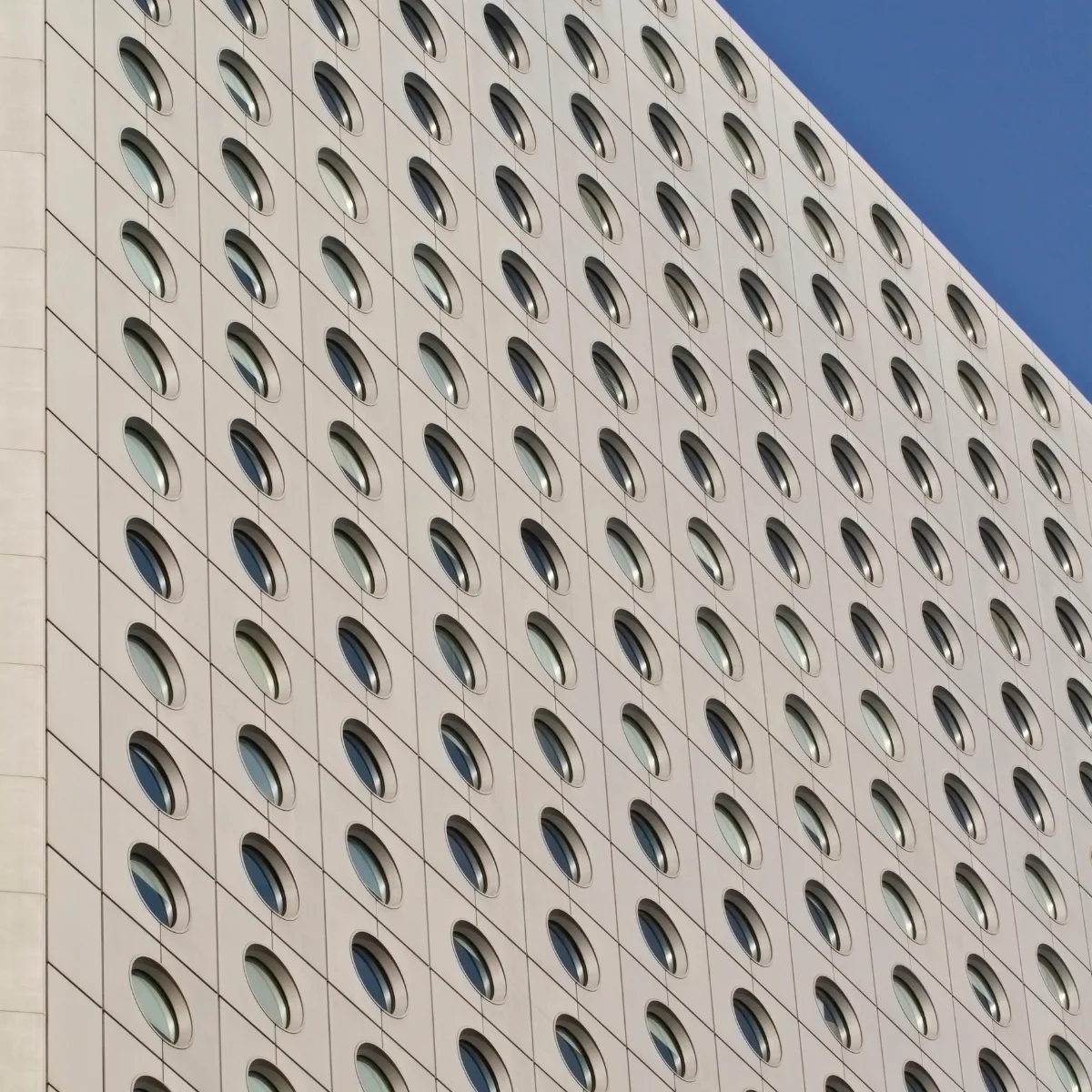
For more than a century, Jardines has occupied Central’s golden acres through its subsidiary “Hongkong Land”, and does so still. Completed in 1973, the “Connaught Centre” (康樂大廈), with its signature round windows, was then the tallest building in Hong Kong. In 1988 it became the head office of the Jardine Matheson group and was accordingly renamed “Jardine House” (怡和大廈).
1886
Wharf and Jardines
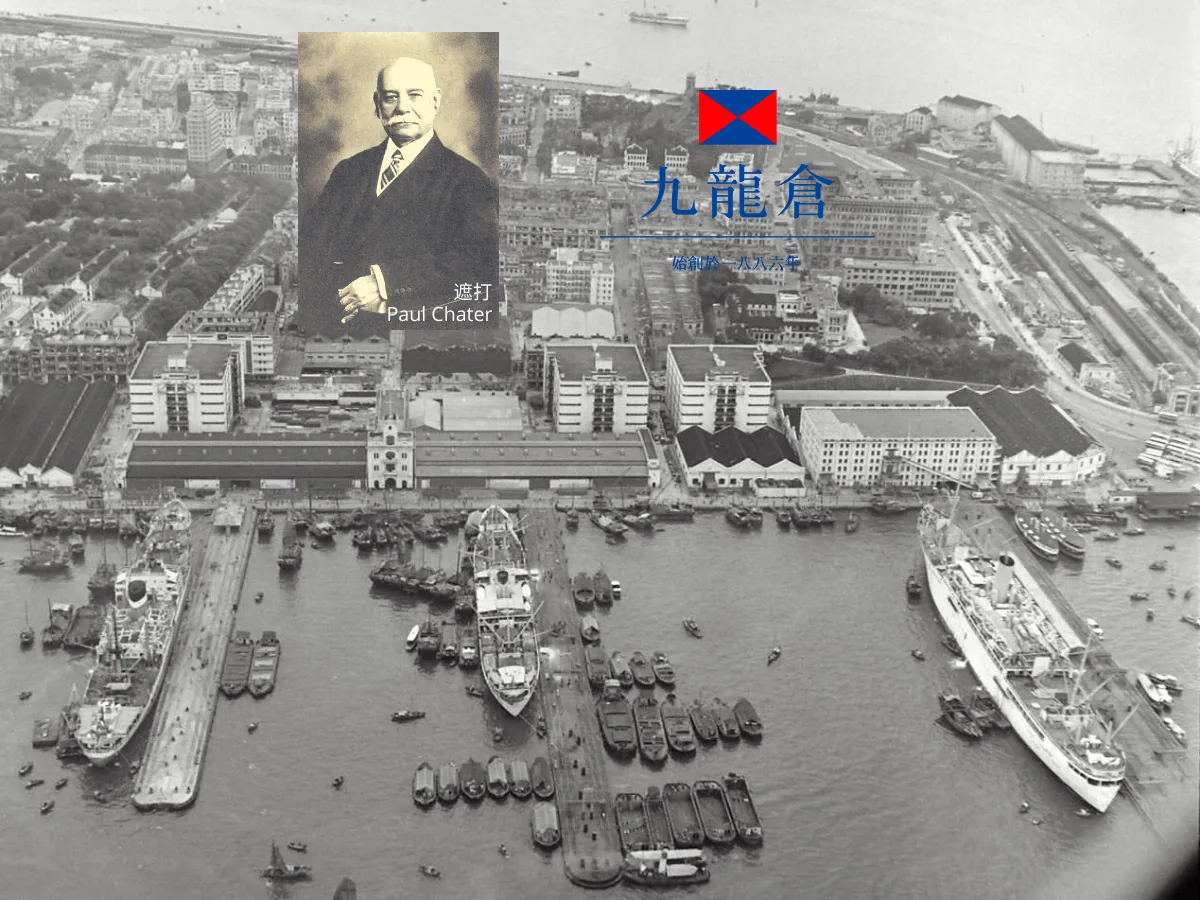
In 1886 Jardines joined the businessman Paul Chater (遮打) in founding the “Hong Kong and Kowloon Wharf and Godown Co.” — “Wharf” (九龍倉) for short.
Wharf has long dominated the Tsim Sha Tsui waterfront: the “Star Ferry”, the Ocean Terminal pier (海運碼頭), “Ocean Terminal” (海運大廈), “Ocean Centre” (海洋中心), “Harbour City” (海港城) and the “Marco Polo” hotels (馬哥孛羅酒店) are all Wharf developments.
Not until 1980, when the businessman Pao Yue-kong won a fierce takeover battle, did Wharf pass out of Jardines’ hands. Since then, Jardines’ official communications have scarcely mentioned Wharf’s development.
HSBC and Jardines
The “British & Chinese Corporation” and “Hong Kong Airways”
Before “HSBC” was founded, Jardines already ran a remittance business of its own. Since HSBC’s arrival was bound to threaten that business, Jardines actively obstructed the bank’s establishment, successfully delaying the British government’s issue of its licence. But within a decade or so of its founding HSBC had become the largest bank of the day, so in 1877 Jardines took a shareholding in HSBC — after which the bank entered a period of rapid growth.
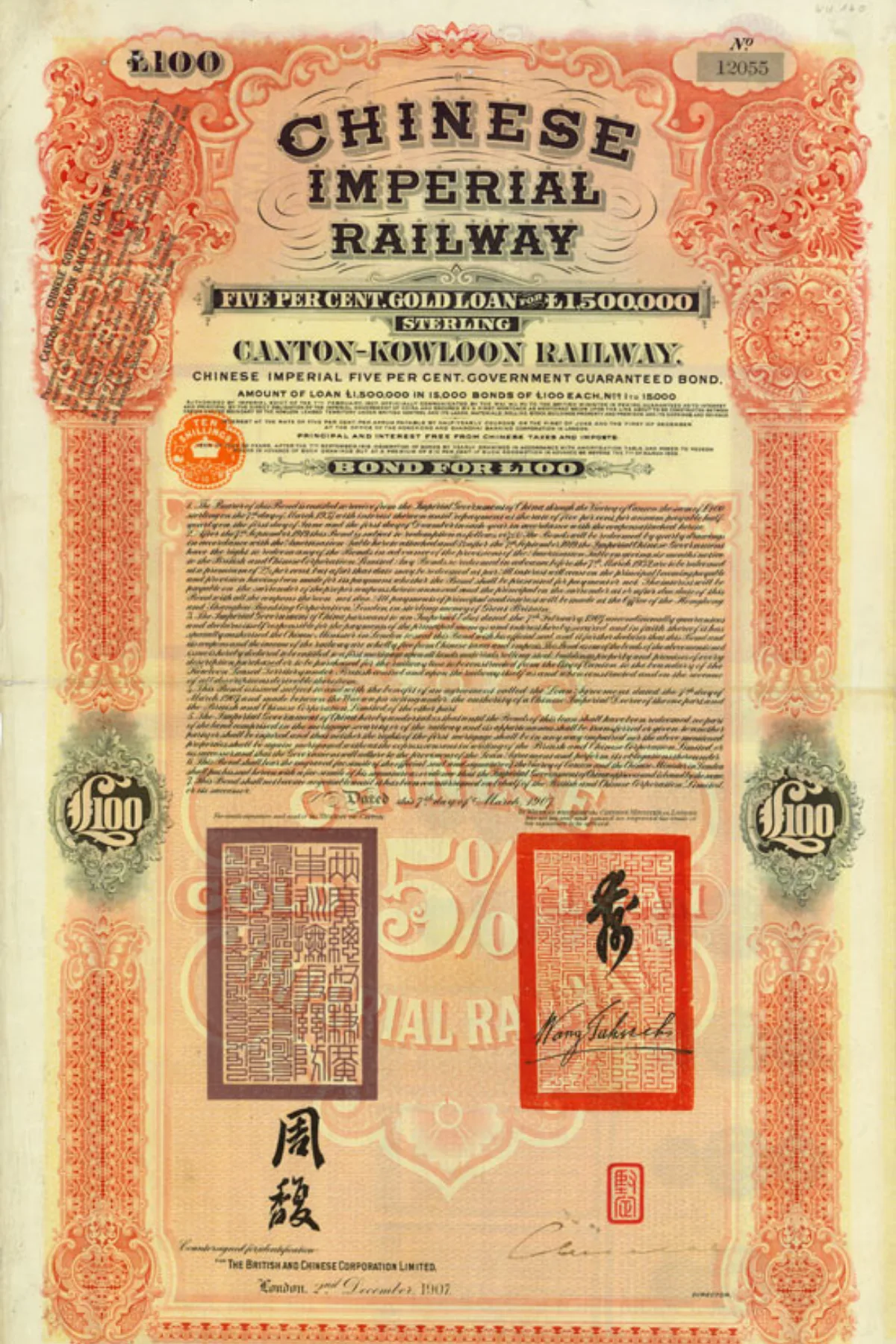
In 1898 Jardines and HSBC jointly founded the British & Chinese Corporation (BCC) to bid for railway projects, with Jardines undertaking construction and operation and HSBC providing the finance; BCC was said to enjoy the backing of the British government.
In 1907 BCC won the contract for the Chinese Section of the Kowloon–Canton Railway — the route of today’s through trains from Lo Wu, Shenzhen to Guangzhou — which opened in 1911. The British Section, from Tsim Sha Tsui to Lo Wu, was by all accounts built by the Hong Kong government and opened a year earlier, after which the government set up the “Kowloon–Canton Railway Office” to manage it.
Besides the Kowloon–Canton Railway, BCC also built the Nanking–Shanghai Railway (京滬鐵路 — “京” because Nanking was then the capital of the Republic of China) and the Soochow–Hangchow–Ningpo Railway (蘇杭甬鐵路) linking Suzhou, Hangzhou and Ningbo.
After the Second World War, aviation took off. Books record that in early 1947 Jardines and HSBC joined the British Overseas Airways Corporation in launching a small carrier, “Hong Kong Airways” (香港航空公司). After 1949 China adopted a closed-door policy and banned flights to and from Hong Kong; Hong Kong Airways struggled, and in 1959 Cathay Pacific was invited to absorb it.
Hongkong Land
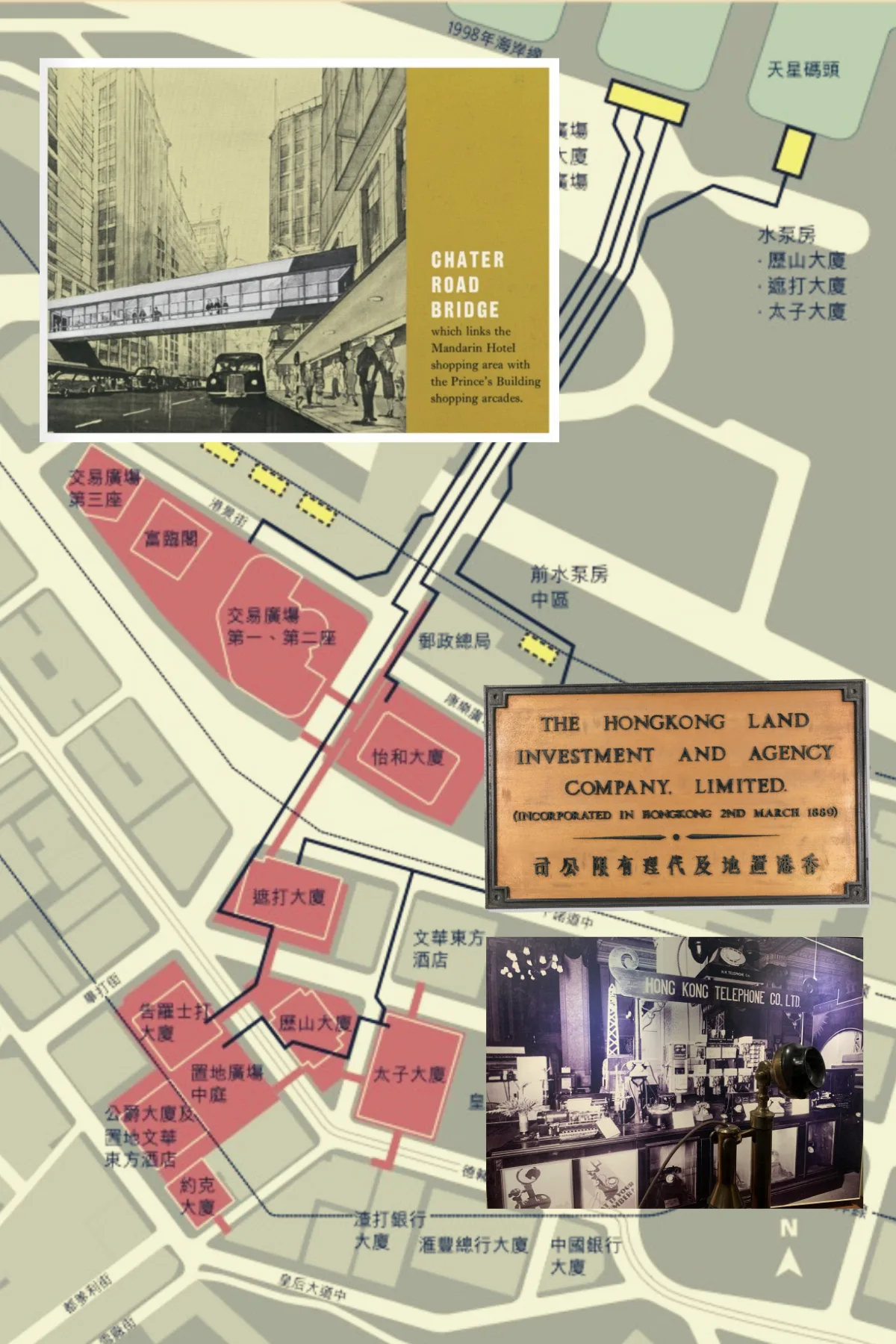
Founded on 2 March 1889, “Hongkong Land” (香港置地及代理有限公司) is Hong Kong’s oldest property company, concentrating on office buildings in Central, the political and economic heart of Hong Kong. Hongkong Land was the second collaboration between Jardines and the businessman Paul Chater (遮打), after Wharf. The land around today’s Chater Road was reclaimed from the harbour at the new company’s urging to the Hong Kong government; Hongkong Land developed the district, which became the core of present-day Central.
In 1965, Hongkong Land linked Prince’s Building to the neighbouring building with a pedestrian footbridge — an innovative, epoch-making design for its time, and still an iconic footbridge system today, connecting twelve buildings. Chater Road, too, is named after Hongkong Land’s co-founder Paul Chater. When the MTR (the former Mass Transit Railway) first opened in the early 1980s, Central station’s English name was “Chater”; only when the Island Line opened in 1985 did it become today’s “Central”.
Hongkong Land’s Hong Kong properties include “The Landmark” (置地廣場), “Exchange Square” (交易廣場), “Alexandra House” (歷山大廈), “Chater House” (遮打大廈), “Prince’s Building” (太子大廈), “York House” (約克大廈), “The Forum” (富臨閣) and the “Mandarin Oriental” hotel (文華東方酒店). It also took part in developing the “Connaught Centre” (康樂大廈) and the “Hong Kong Club” building (香港會) in Central, “Century Tower” (世紀大廈) on Tregunter Path, “Chi Fu Fa Yuen” (置富花園) in Pok Fu Lam, “Kwun Tong Building” (觀塘大廈) on Yuet Wah Street, “Tai On Building” (太安樓) in Sai Wan Ho, the “World Trade Centre” (世貿中心) and “The Excelsior” hotel (怡東酒店) in Causeway Bay, Phase 1 of the Convention and Exhibition Centre (會展一期) in Wan Chai, “Chi Lok Fa Yuen” (置樂花園) in Tuen Mun, “Luk Yeung Sun Chuen” (綠楊新邨) in Tsuen Wan, “Redhill Peninsula” (紅山半島) in Tai Tam and “Serenade” (上林) on Tai Hang Road, among others.
In the 1980s Hongkong Land even ventured into public utilities, buying partial stakes in the “Hong Kong Telephone Company” (香港電話公司) and “Hongkong Electric” (香港電燈), both later sold off in full.
Mandarin Oriental
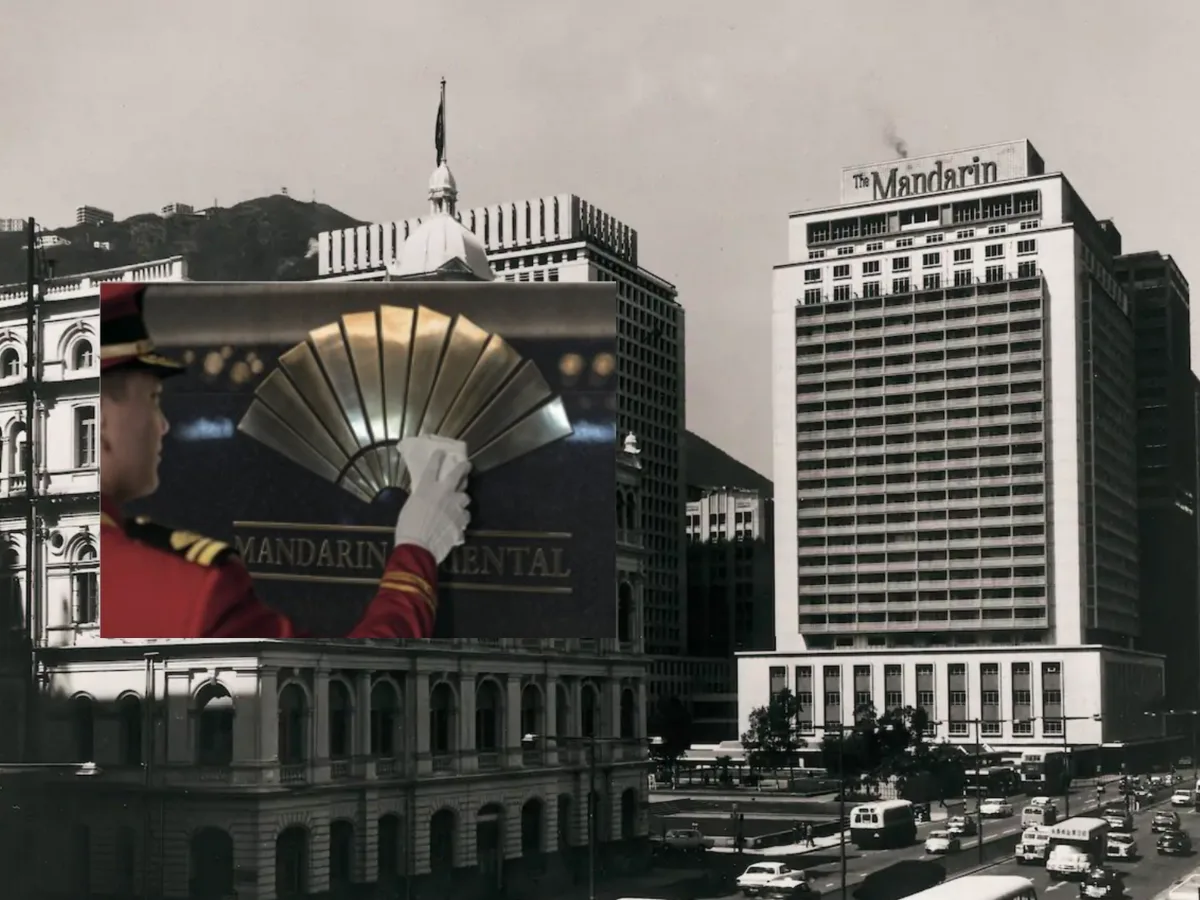
In 1963, Hongkong Land’s Mandarin Hotel opened in Central. In 1972 The Excelsior opened in Causeway Bay, becoming the headquarters of the “Mandarin Oriental” group of the day — and the group’s only hotel not to carry the “Mandarin Oriental” name. The Excelsior closed in March 2019, and the building was demolished for redevelopment as offices.
In 1987 Mandarin Oriental was spun off from Hongkong Land and separately listed in London, held directly by Jardines; it has since been an international brand focused on hotel management.
Dairy Farm International
In 1972, Jardines used Hongkong Land to mount a successful takeover of “Dairy Farm” (牛奶公司). To win the takeover battle, Jardine chairman Henry Keswick personally telephoned some Dairy Farm shareholders, persuading them to exchange their shares for Hongkong Land stock. It became a historic takeover episode in the Hong Kong stock market.
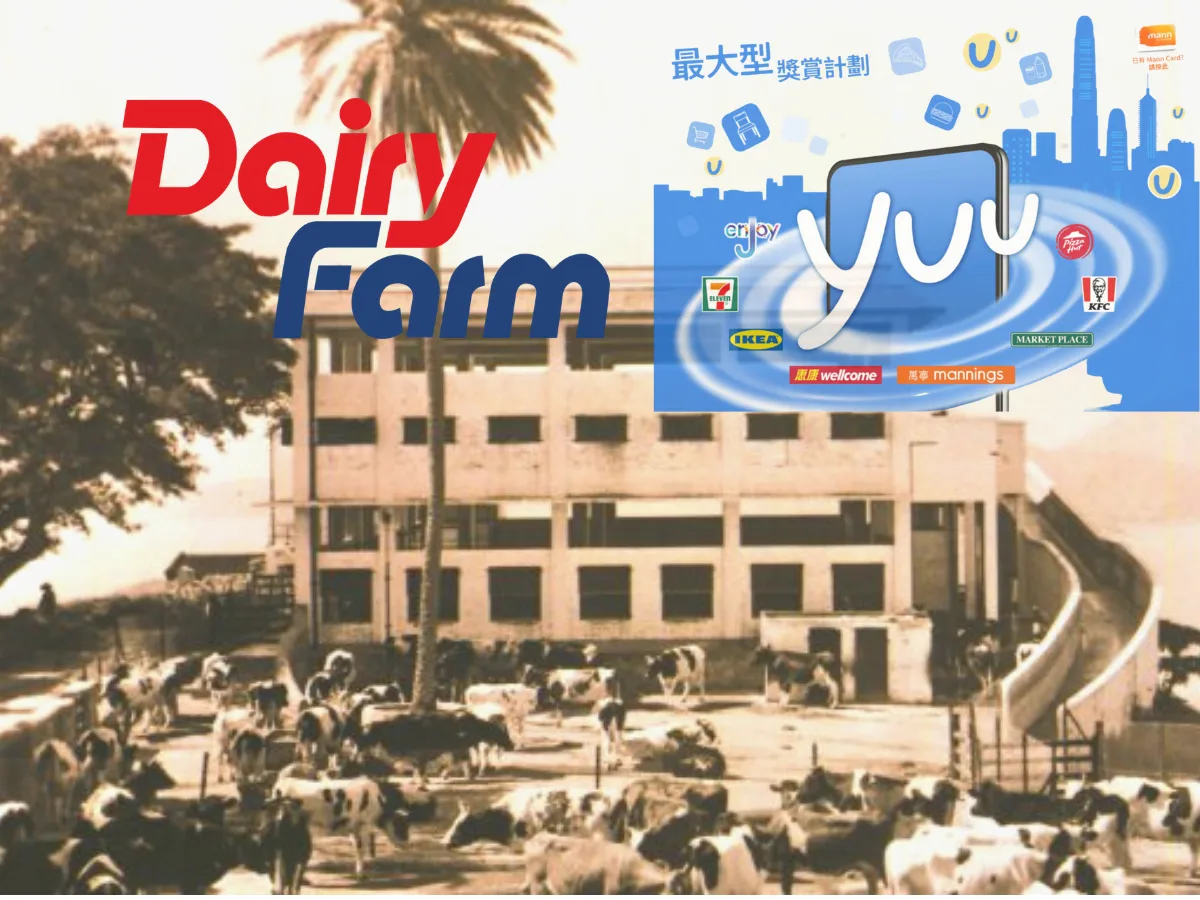
Jardines launched the takeover chiefly with an eye on Dairy Farm’s extensive landholdings, which later became today’s “Windsor House” (皇室堡) and “Chi Fu Fa Yuen” (置富花園). Dairy Farm then diversified: alongside its original “Wellcome” (惠康) supermarkets it acquired “Mannings” (萬寧), and Jardines injected a 50% stake in “Maxim’s” (美心) into the company. When Jardines restructured in 1986, Dairy Farm — until then under Hongkong Land — was spun off and listed as “Dairy Farm International” (牛奶國際), held directly by the Jardine Matheson group.
Dairy Farm International and Jardines have between them introduced a string of brands to Hong Kong, including “IKEA” (1975), “7-Eleven” (1981), “Pizza Hut” (1987) and “Starbucks” (2000). In 2013, the Jardine Restaurant Group acquired the Hong Kong business of “KFC”.
The “yuu” rewards scheme, recently advertised as the “largest” of its kind, is built precisely on the network of Jardines’ retail and catering businesses — and the reach of that network reflects the influence Jardines still holds in Hong Kong.
Jardine Noonday Gun
Anyone keen to experience a piece of Jardines history can also go and watch the “Noon Day Gun” (怡和午炮) ceremony.
The spot where the ceremony takes place has a story of its own. In 1841, British forces had already raised their flag over Hong Kong, but the Treaty of Nanking had not yet been signed — the Qing government had not yet formally recognised Hong Kong’s cession. Even so, Jardine, Matheson & Co. had already bought three lots of land at East Point for £565 at an auction held in Macau: today the stretch from Sogo in Causeway Bay down to the waterfront. It was the first land auction ever held in British Hong Kong.
Hong Kong’s first telegraph line was also laid by Jardines, in 1863, linking its East Point head office with its Central branch.
That is why East Point Road (東角道), opposite Jardine’s Crescent, and East Point Centre (東角中心), where Sogo stands, are both named after East Point. The Noon Day Gun stands where Jardines’ cargo pier used to be. Law and order were poor in those days and piracy was common, so the firm kept a small cannon to protect its property.
The time-signal salute that the British forces imposed on Jardines as a punishment became a tradition, and the daily noon gun was kept after the handover. There is also a “Midnight Gun” at 23:59 on New Year’s Eve; after it is fired, “Auld Lang Syne” is played to mark the end of the year.
Location: the typhoon shelter waterfront opposite World Trade Centre, Causeway Bay
Time: 12 noon
Sources:
洋行之王 : 怡和 (King of the Hongs: Jardine)
劉詩平 (Liu Shiping)
三聯書店香港有限公司 2010
香港金融風雲35載 (35 Years of Hong Kong’s Financial Storms)
陳景祥 (ed.)
天窗出版/信報財經新聞有限公司 2008
香港走過的道路 (The Road Hong Kong Has Travelled)
劉潤和、高添強 (Lau Yun-wo and Ko Tim-keung)
香港增訂版 香港 : 三聯書店香港有限公司 2013
太古之道 : 太古在華一百五十年 (The Taikoo Way: 150 years of Swire in China)
鍾寶賢 (Chung Po-yin)
香港第一版 香港 : 三聯書店 香港有限公司 2016
香港商戰風雲錄 (Chronicles of Hong Kong’s Business Wars)
藍潮 (Lam Chiu)
初版 香港 : 名流出版社 1997
航空新舊聞 (Aviation News, Old and New)
趙予杰
經濟日報出版社
從啟德出發 (Setting Off from Kai Tak)
吳詹仕
經濟日報出版社
改變香港歷史的60篇文獻 (60 Documents That Changed Hong Kong’s History)
區志堅、彭淑敏、蔡思行
中華書局
上半山下中環 : 一個城區的蛻變 (Mid-Levels and Central: The Transformation of a District)
余震宇 (ed.)
初版 香港 : 中華書局香港有限公司 2017
香港歷史圖片 : 博物館藏品精選 (Historical Pictures of Hong Kong: Selections from the Museum Collection)
香港博物館 (ed.)
香港歷史博物館
香港 : 香港市政局 1982
https://www.jardines.com/en/group/history.html
https://www.hkland.com/tc/about-us/history-and-milestones
https://hklandblob.blob.core.windows.net/assets/125_anniversary_tc/mobile/index.html#p=1
http://cache.org.hk/rthk/teachingmaterials/rthk_book20151123.pdf
https://kknews.cc/zh-hk/history/9emmb8.html
https://hk.appledaily.com/finance/20191125/RAMIP2RFYPUUHQ5NWPDSIZORYQ/
RTHK (香港電台) programmes: 《古今風雲人物》, 《歷史說香港》
Published in Sep 2020 by Hong Kong Brand Museum 香港品牌博物館