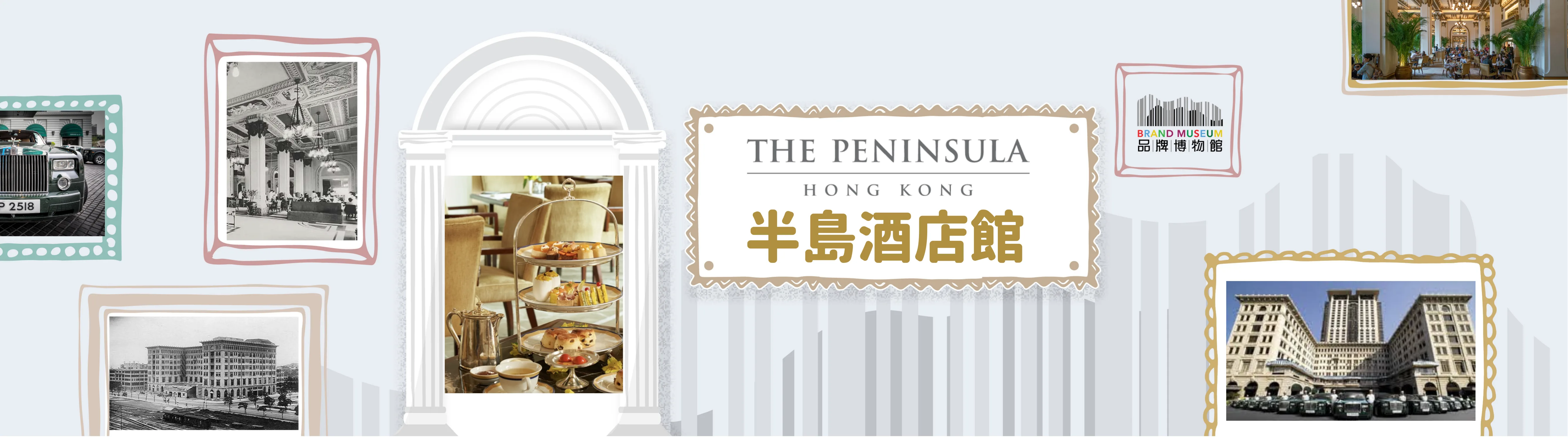
The Peninsula Hall
The Peninsula 半島酒店
The Peninsula is Hong Kong’s longest-established hotel. Its old building is a Grade I historic building that preserves the character of the colonial era — but more importantly, The Peninsula has witnessed a century of Hong Kong’s development, hardship and change. Its parent, The Hongkong and Shanghai Hotels, is the world’s oldest hotel group in continuous operation. Behind the glamour, it also shaped the consumer culture of Hong Kong’s Chinese society, and “the Peninsula” became one of the few places where memories endure: English afternoon tea in the lobby lounge, tea dances, the Rolls-Royce fleet, mooncakes from Spring Moon (嘉麟樓, the hotel’s Chinese restaurant), Gaddi’s and the Verandah are the shared memories of the upper and middle classes.
Witness to a Century of Hong Kong’s Development
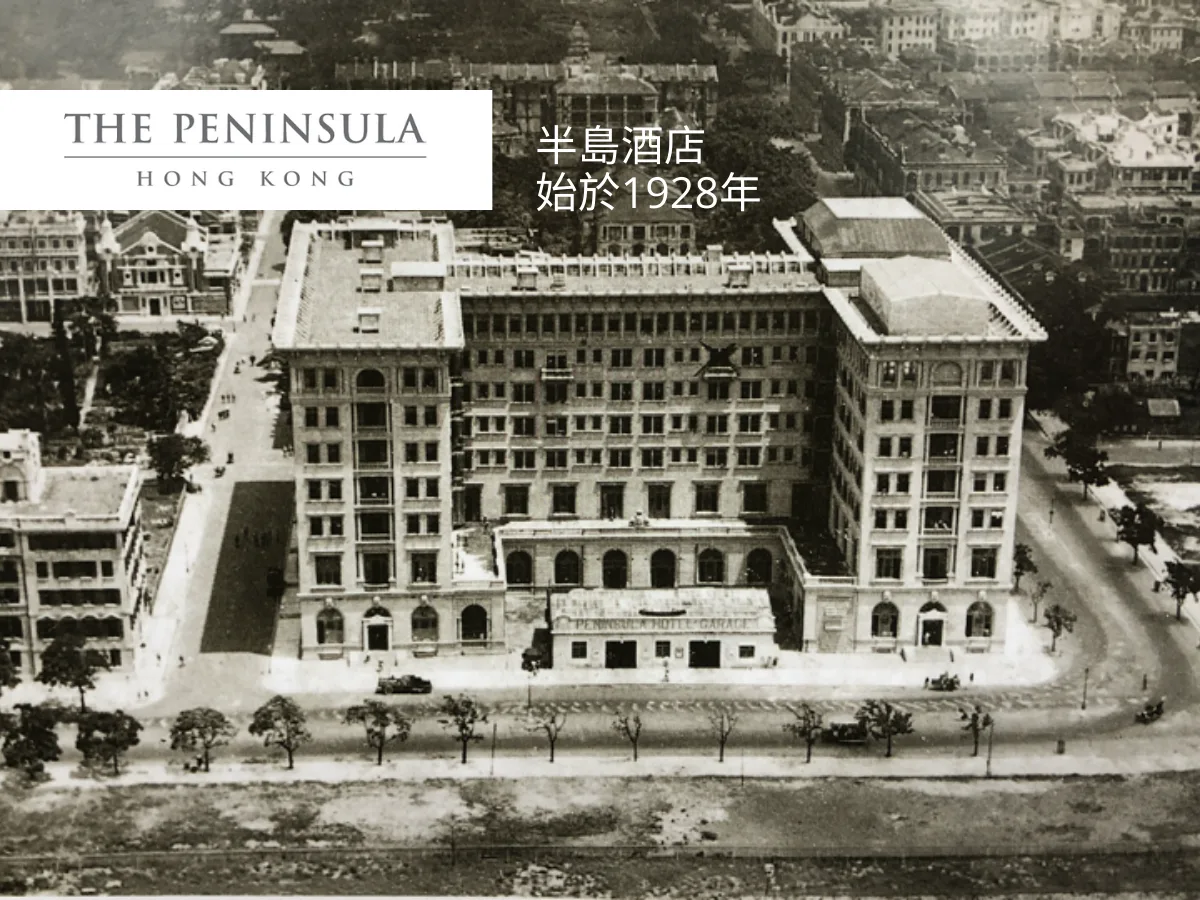
1928
The Peninsula, today classified as a Grade I historic building, was completed in 1928. Its owners, the Kadoorie family — British Jews — planned its construction in the 1920s. Shortly after completion it briefly served as a temporary barracks for the British garrison in Hong Kong, before formally opening on 11 December 1928.
The opening ceremony was addressed by Sir Wilfred Thomas Southorn, then Colonial Secretary and Acting Governor of Hong Kong, who described it thus: “Standing at the entrance to Victoria Harbour, and the finest hotel of all, it brings travellers facilities and comfort never seen before, and raises the standing of the Colony (Hong Kong).”
The Peninsula Becomes the “Grande Dame of the Far East”
The forerunner of the Peninsula’s management group was The Hongkong Hotel Company, founded in 1866 — only the third company ever registered in Hong Kong. In 1923 it was renamed The Hongkong and Shanghai Hotels, Limited. Before construction, the hotel drew on the group’s two Shanghai establishments, the Astor House Hotel (禮查飯店) and the Majestic Hotel (大華飯店), and the Civil Engineers of Hong Kong Realty Trust Co. Ltd. were commissioned to design and build an Italian Renaissance-style building. Beyond its glamorous, modern interiors, the hotel housed a big band, a dance floor, restaurants and bars, becoming a social venue for high society — with patterns of consumption and taste steeped in class.
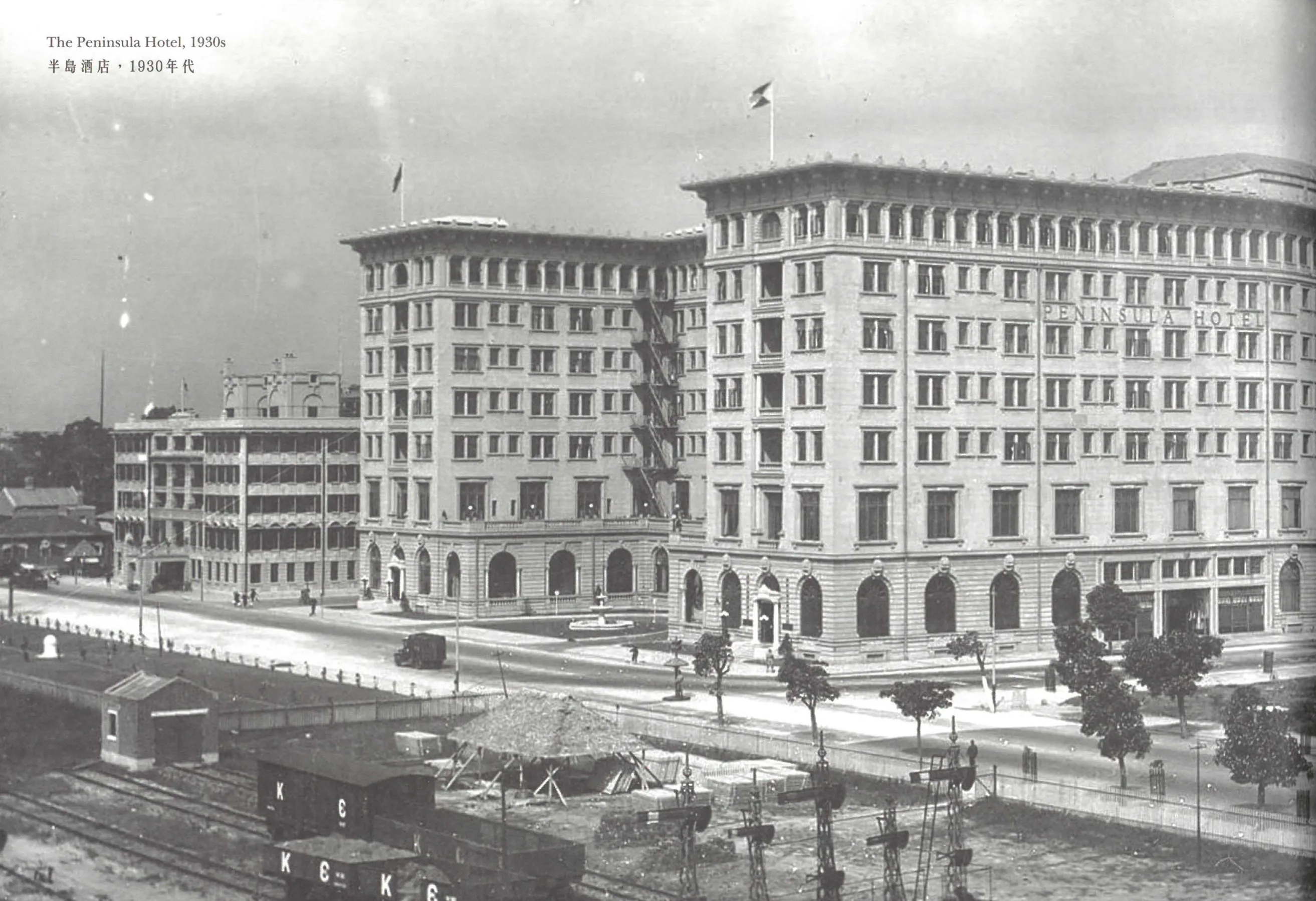
The building was constructed using then-novel reinforced-concrete techniques, its surface finished in a grey-green plaster coating, with the cornices and the hotel’s fine interior ornament created by renowned Shanghai craftsmen. The great columns of the lobby, the mirrored ceilings and long ceiling fans, together with sumptuous Viennese chandeliers, carpets and wooden furniture, were the height of luxury. The seven-storey hotel was later renovated in the 1960s and 1980s; even when the 1989 pro-democracy movement in China triggered a crisis of confidence in Hong Kong, the group pressed ahead with an expansion in 1990, completing a new wing added to the north of the original building in 1994.
When the Peninsula first opened, a room cost as much as HK$11 a night — equivalent to several months’ wages for an ordinary worker at the time. Its exclusive image long kept Chinese customers away; many Chinese in that era were reluctant even to enter the building, so the clientele was mainly Western. In the 1960s, as several large hotels opened across Hong Kong, the young board director Sir Michael David Kadoorie proposed opening a disco in the hotel to pursue a more modern direction; in 1966 Hong Kong’s first disco appeared — in the basement of the Peninsula.
Tea Dances Break Down
the Cultural Barrier
Tea dances later became the culture that broke down the barrier, and many members of the Chinese elite came to “the Peninsula” to learn ballroom dancing. In the early 20th century, social dances such as the waltz and tango swept Britain, and Hong Kong caught the fashion of English gentlemen and ladies: the grand hotels all installed live bands in their tea rooms. It is said the Peninsula once divided its lobby lounge into two halves, originally to separate unmarried from married guests. Patrons savoured their tea and danced to their hearts’ content. Afternoon Tea — originally no more than a bite between lunch and dinner — became a combination of black tea with sandwiches, scones and sweets that only high society could afford. The Afternoon Tea habit became the pastime of society wives and ladies, and this culture too was carried into Hong Kong’s wealthy class.
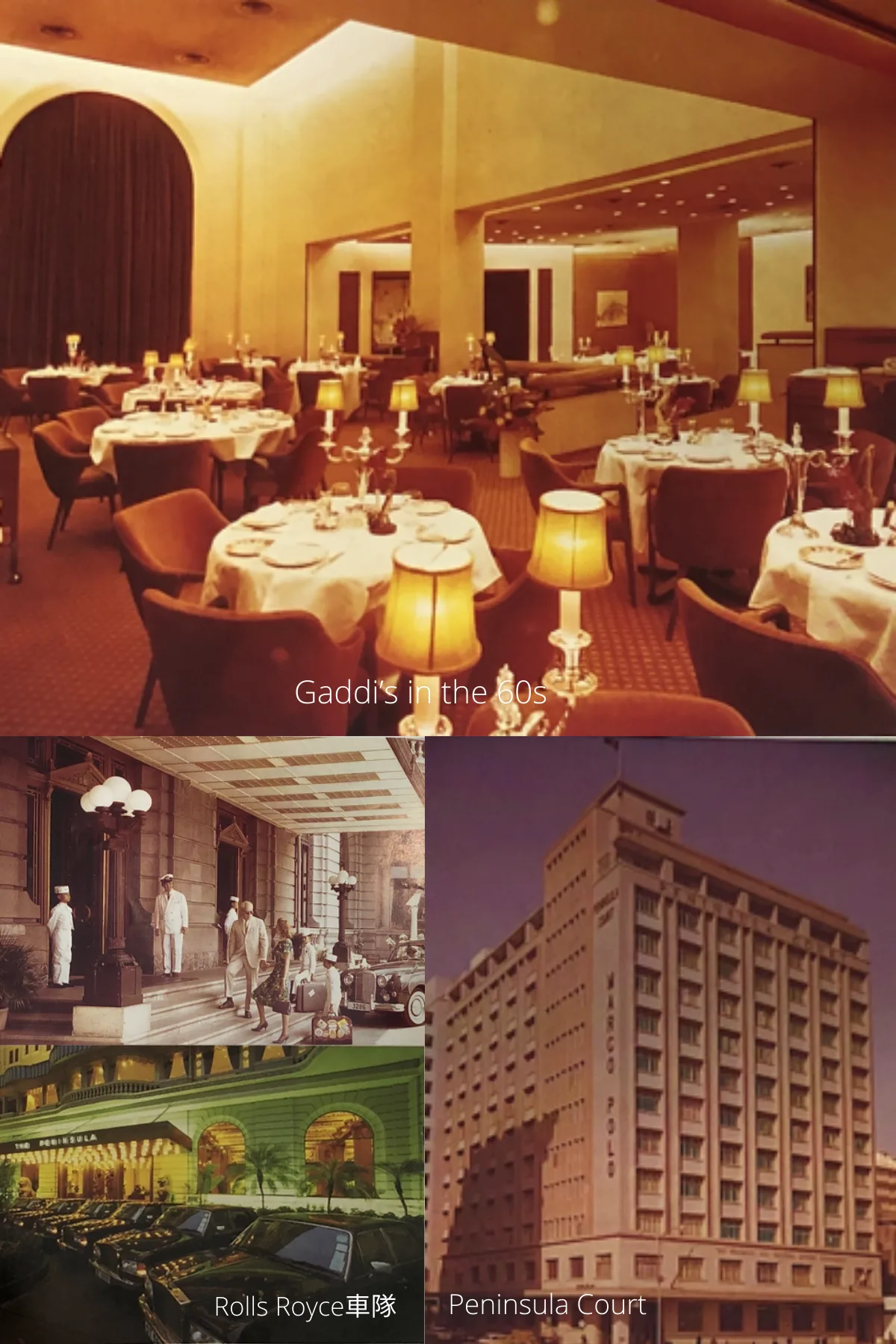
In the 1960s, international brands began moving into the hotel; hotels in that era offered not just lodging but an important social arena. Grand hotels had two kinds of social venue: the Supper Club, which usually served dinner to hotel guests in a quiet atmosphere with live singing after the meal; and the Night Club, which opened at ten, serving drinks and light bites in a lively atmosphere with varied performances. These pastimes were not confined to Westerners — they entered the life of Hong Kong’s high society, and frequenting the grand hotels became a mark of status.
By the 1970s, the Peninsula had gone further, purchasing Rolls-Royce saloons to chauffeur its guests and forging an image of luxury for the brand.
Displaying Modern Imperial Glory Through Aesthetics
According to Peter Hibbard, a British historian who has studied the development of tourism in China for more than thirty years, one important period in the Peninsula’s aesthetic was the construction of a modern imperial glory in the 1920s–50s.
When it opened in 1928, “the Peninsula” stood for “a modern image”; the press hailed it at its opening as “the finest hotel east of Suez”. The Suez Canal, opened in 1869, had joined the waterways of Europe and Asia, and luxury hotels sprang up one after another along the new route. Hong Kong, as Asia’s shipping hub, began building grand hotels from the mid-19th century.
The Peninsula was not Hong Kong’s first hotel, but it set the course for the industry’s glittering rise. The Hongkong Hotel Company, founded in 1866, opened Hong Kong’s first grand hotel, the Hong Kong Hotel, on the Central waterfront in 1868. In 1923 the company acquired the Shanghai Hotels company, merging to form The Hongkong and Shanghai Hotels, Limited, which built the Peninsula.
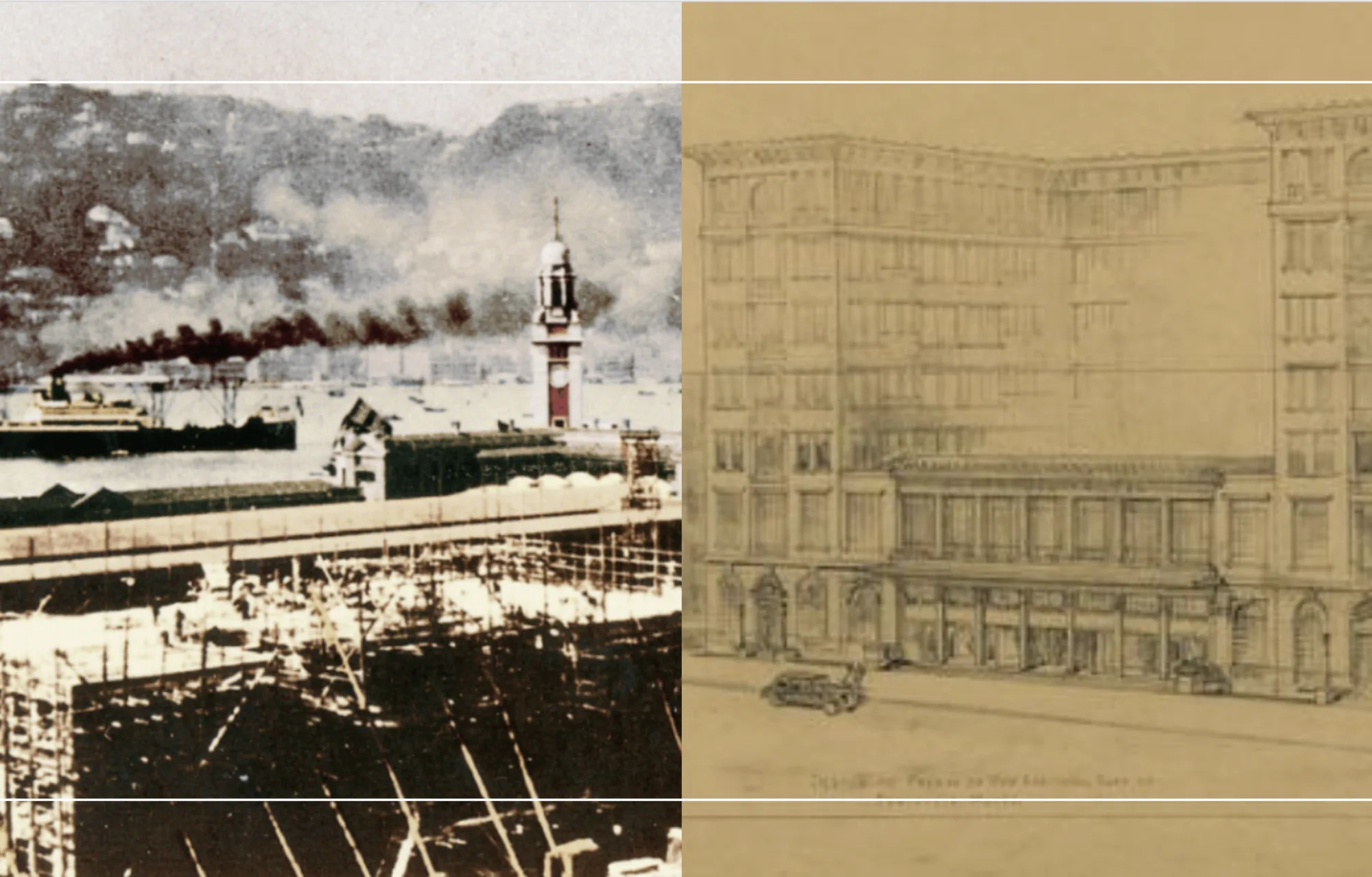
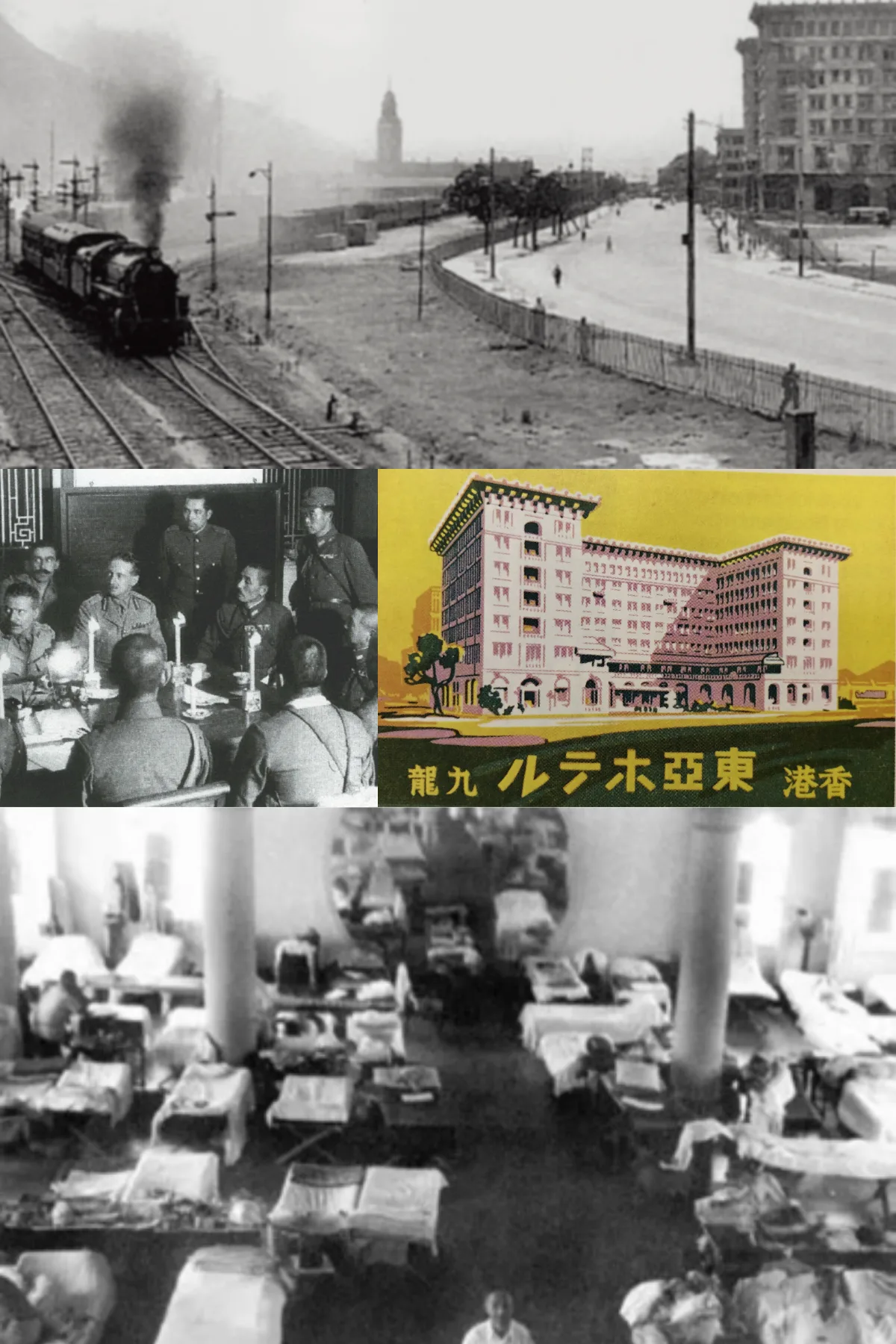
The Peninsula was originally built at the invitation of the colonial government of the day, on a piece of newly reclaimed land opposite the terminus of the Kowloon–Canton Railway (British Section), which had opened in 1911 to link Tsim Sha Tsui with Canton (Guangzhou). The colonial government promoted the building of a state-of-the-art new hotel on the Kowloon peninsula, beside the railway terminus and the steamer piers, to receive travellers who had set out from Europe by train, crossed China, and finally arrived in Hong Kong.
Behind the Glamour
Behind its glamour, the Peninsula also witnessed Hong Kong’s most turbulent events. Its construction in the 1920s was beset by setbacks — the 1925 boycott of Japanese goods, the Canton–Hong Kong general strike of 1926, and its requisition as a temporary barracks for the British garrison soon after completion. It did not formally open until 11 December 1928. The hotel was mocked at the time as a “white elephant”: by choosing Kowloon over Hong Kong Island, it was widely assumed no one would want to stay there.
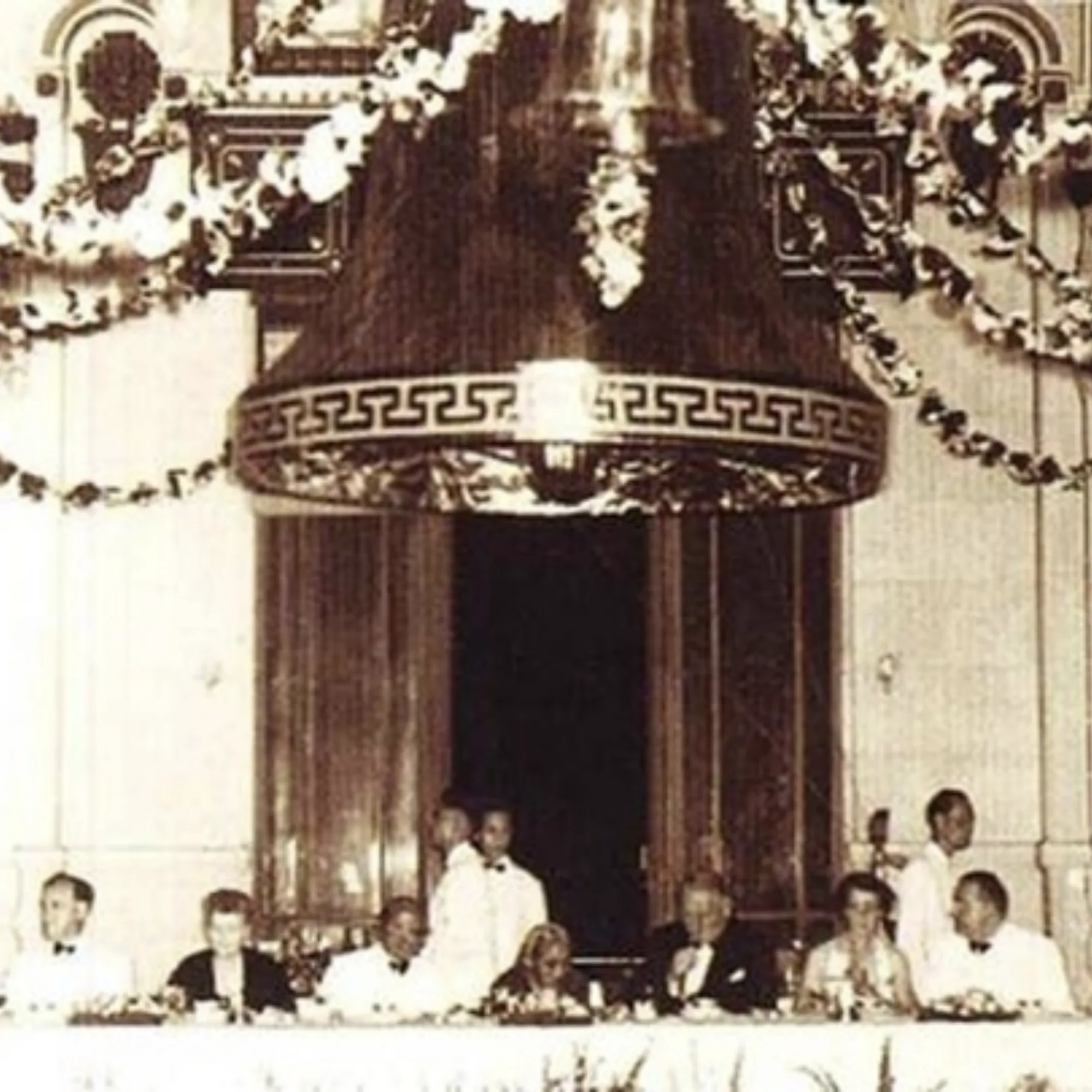
In 1931, Sir Robert Ho Tung — of one of Hong Kong’s four great families of the day — booked the Rose Room and the roof garden to host a thousand guests at his golden wedding celebration. The party gathered Hong Kong’s political and business elite, and the Peninsula thereby entered the circles of high society.
With the Second World War, however, the Peninsula entered the darkest period of its history.
A Shelter for Refugees
The Kadoorie family’s core assets in Hong Kong were China Light and Power (CLP) and the Peninsula. Before Hong Kong fell, to keep CLP’s facilities out of Japanese hands, Michael Kadoorie’s father Lawrence Kadoorie, with the government’s support, personally blew up the power station in Kowloon in 1941. During the war, the Peninsula’s façade was painted in camouflage colours to avoid being hit by Japanese bombs.
On 25 December 1941, the Governor, Sir Mark Aitchison Young, surrendered to the Japanese, signing the instrument of surrender in Room 336 on the third floor of the Peninsula. Historic photographs record that the power was cut that day, and the party signed by feeble candlelight. Hong Kong then fell; during the “three years and eight months” of the Japanese occupation, the Peninsula was requisitioned as the Japanese military headquarters and for a time renamed the Toa Hotel (東亞酒店, “East Asia Hotel”), until the liberation after the war.
After the Second World War, Lawrence returned to Hong Kong with his brother Horace and a group of former staff to rebuild the bombed China Light and Power and refurbish the badly damaged Peninsula. The ballroom where pre-war parties had been held was converted into a refugee reception centre. Foreigners left temporarily homeless were housed at the Peninsula, which took in several hundred foreign refugees over a few months.
After the 1950s
East Meets West
After the liberation, Hong Kong faced rebuilding on every front, but benefited from the great wave of capitalists who fled south from the mainland to escape the Communist regime. The Hongkong and Shanghai Hotels group decided to wind up its business in China, and in 1952 demolished the dilapidated Hong Kong Hotel on Hong Kong Island.
In the 1950s, Sir Horace Kadoorie took over as the group’s chairman, and the Peninsula became its flagship hotel. The hotel carried out a series of innovations, including setting aside space in the lobby for airline check-in counters: Cathay Pacific, Air France, BOAC and others all kept desks in the hotel lobby for ticketing. The hotel also thoroughly renewed its dining, including opening the celebrated fine-dining restaurant Gaddi’s. In 1953, Leo Gaddi, a chef by training, led a team to an international culinary competition in Switzerland and won a gold medal with a Chinese dish of sweet and sour pork (咕嚕肉). The dish went on to appear on Gaddi’s menu, and Eastern cuisine broke onto the international stage.
The hotel later added Marco Polo, a new restaurant serving cuisines of many nations, which in 1956 moved into the newly built residential-style Peninsula Court; guests could cross a footbridge linking the two hotel buildings to dine at Marco Polo. Marco Polo closed in 1968, but the name lives on in the menu of the hotel’s Verandah restaurant, as the honoured title of its lunchtime buffet.
Before the End of Colonial Rule:
The 1990s
Sir Michael Kadoorie, the third generation of the Kadoorie family, became involved in the business from the 1960s and later became the group’s chairman.
The Kadoorie family never lost confidence in investing in Hong Kong. The 1997 handover of Hong Kong to China was seen as a new opportunity for development. The Peninsula continued to build the brand’s distinctiveness through aesthetics, regularly commissioning works from noted artists and adding “Chinese” elements: in both the furnishing of the rooms and the hotel’s art installations, colonial colours and styles were fused with the splendour of Chinese tradition, underlining Hong Kong’s blend of East and West.
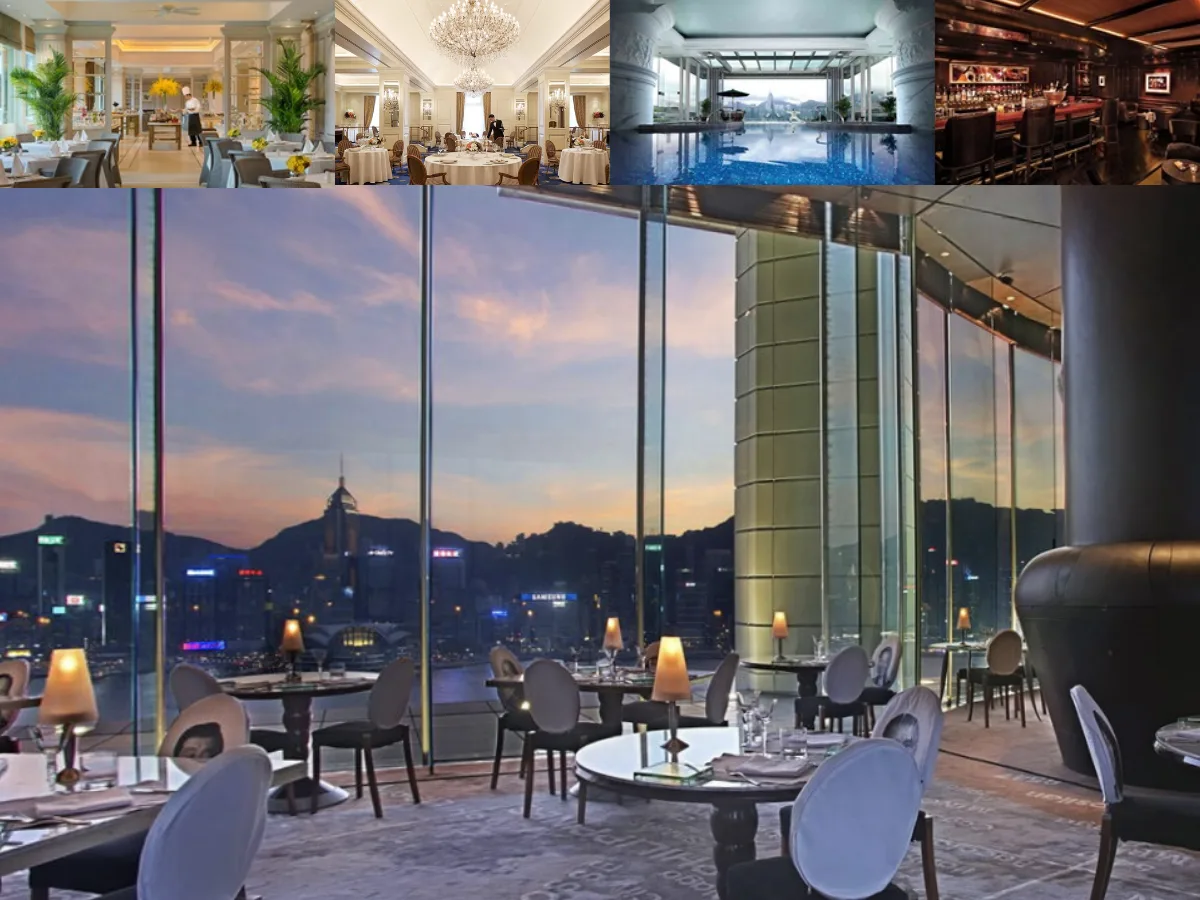
For the new tower built in the 1990s, the Peninsula invited the maverick French designer Philippe Starck to create the rooftop restaurant Felix, installed a helipad on the roof, and introduced a new control system to every room. The design brought back a colonial feeling, including a replica of The Grand Old Lady, the goddess relief that had stood in the hotel lobby in the 1960s, as an art piece for the new tower.
After 2000, Hong Kong’s hotel industry developed rapidly and flourished in every direction. The Peninsula group’s business model and strategy remained focused on owning and operating a small number of premier properties and hotels worldwide. The Hong Kong Peninsula also offered guests ever more distinctive experiences and artistic aesthetics; in recent years it has strongly supported contemporary art, launching diverse art programmes and collaborations at the Peninsula hotels in Hong Kong and around the world — proving especially attractive to the wealthy millennial generation.
A journey through the Peninsula’s history
To experience Hong Kong’s longest-established hotel, besides taking a staycation, you can start from the hotel’s location: build memories of taste and experience through the hotel’s dining, take time to admire the architecture and decor, then wander the streets outside the hotel to explore a century of change on the Kowloon peninsula — and as you gaze across at the bustling skyline of Hong Kong Island, discover some of the brand stories behind Hong Kong’s hundred years of development.
To experience historical and cultural programmes connected with the Peninsula and Hong Kong, watch for the activities the Peninsula offers from time to time:
The Peninsula Academy (半島學堂)
The Peninsula’s website features a programme called “The Peninsula Academy”, a series of distinctive activities tailor-made for adults and children, allowing guests to learn about the history, culture and everyday life of the Peninsula and Hong Kong.
https://www.peninsula.com/zh/hong-kong/academy-listing
China Clipper, 30th floor of the Peninsula
The hotel’s tower block was completed in 1994, with two helipads on its roof and an aviation-themed lounge. The decor of its aviation history corridor includes many exhibits from aviation history; visitors can join guided experiences, take a helicopter ride to admire Victoria Harbour, revisit Hong Kong’s aviation history, and learn about Hong Kong’s air traffic control procedures and the workings of a standard control room.
https://www.peninsula.com/zh/hong-kong/events/event-meeting-space
Sources:
《異地吾鄉:猶太人與中國》 (Strangers’ Homeland: The Jews and China)
By Mark O’Neill (馬克•奧尼爾)
Joint Publishing (Hong Kong) 2018
《淒風苦雨──從文物看日治香港: 從文物看日佔香港》 (Bitter Wind and Rain: Japanese-occupied Hong Kong through Artefacts)
By Tong Cheuk-man (唐卓敏)
Chung Hwa Book Company (Hong Kong) 2015
One hundred years of Kadoorie business records at a glance
嘉道理百年業務紀錄概覽
Hong Kong : Hong Kong Heritage 2011
The Peninsula 1928-1988
https://www.peninsula.com/zh/hong-kong/hotel-fine-dining/the-lobby-afternoon-tea
https://www.hshgroup.com/en/About/Hong-Kong-Heritage-Project
https://www.hongkongheritage.org
https://www.youtube.com/watch?v=WHeOanKXPds (The HSH Story | The Peninsula Hotels 2012)
https://www.youtube.com/watch?v=c1Xrd1_Q8UA (Tradition Well Served: The HSH Group & Kadoorie Family Documentary | The Peninsula Hotels 2014)
https://www.bilibili.com/video/BV133411A7JS/ (九十年前香港大佬何东金婚纪念酒宴录像 — footage of Sir Robert Ho Tung’s golden wedding banquet ninety years ago)
https://digitalrepository.lib.hku.hk/
https://hk.appledaily.com/local/20180609/HK2XULMGUC44MEP6PA7I7WYB7Q/
https://www.etnet.com.hk/mobile/tc/diva/art/oneminreading/38888
https://orientaldaily.on.cc/cnt/lifestyle/20150507/00321_001.html
https://read01.com/zh-hk/M2dgBk7.html#.X87hE2Qzaw4
Published in Dec 2020 by Hong Kong Brand Museum 香港品牌博物館