Hong Kong Nissin Hall
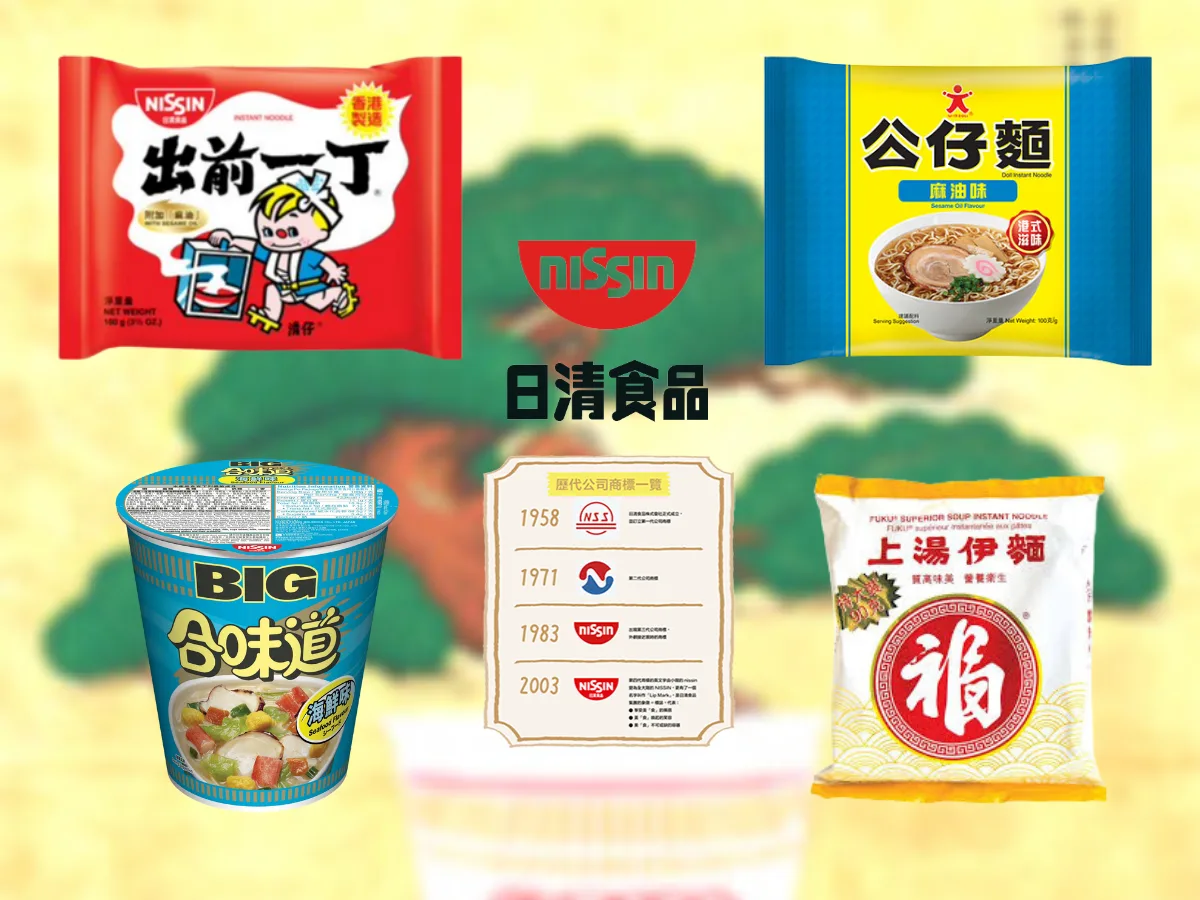
Nissin in Hong Kong
“How about Japanese food at home tonight!” the moment Dad said it, the children were beside themselves with joy. Thirty years ago Hong Kong had no Don Don Donki, and for a child, the rare treat of fragrant sesame-oil-flavour Demae Iccho (出前一丁) was enough to savour for days afterwards. Over the decades it has become an instant food beloved of Hong Kong people, the “end-of-the-pay-month saviour” that every da gung jai (打工仔, ordinary wage-earner) keeps in the cupboard — its standing, it seems, without a “noodle” to rival it.
Most people know that Demae Iccho and Cup Noodles (合味道杯麵) are instant noodles from Japan, made by parent company Nissin Foods of Japan.
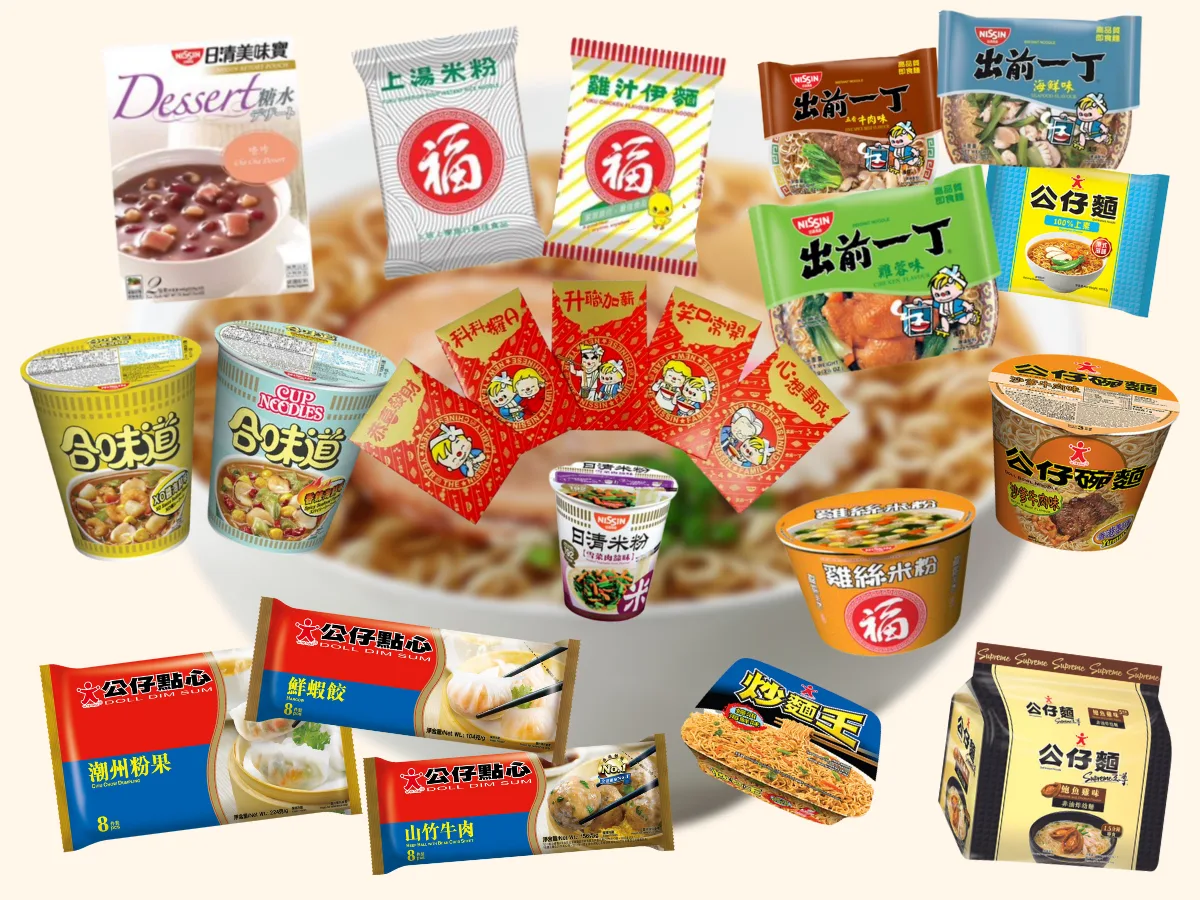
Older Hongkongers, however, prefer to call all instant noodles “Doll noodles” (公仔麵) rather than Demae Iccho. In fact Doll, an instant-noodle brand created by Hong Kong people, had its parent company Winner Food Products (永南食品) acquired by Nissin as far back as 1989. In 2012 Nissin went on to acquire another brand familiar to Hong Kong people, Fuku noodles (福字麵), from Taiwan’s Uni-President Enterprises (統一企業) — since then, virtually all of several generations’ instant-noodle affections have come under its roof.
Nissin has in fact grown up alongside many Hong Kong people. In 2017 Nissin of Japan spun off its Hong Kong and China business for a separate listing in Hong Kong. Rooted in Hong Kong for decades, Nissin has developed many Demae Iccho flavours unique to Hong Kong and has kept extending its sub-brands. The “Hong Kong version” of Demae Iccho is even sold overseas, easing many a Hongkonger’s homesickness.
The Long Labours of the “Father of Instant Noodles”
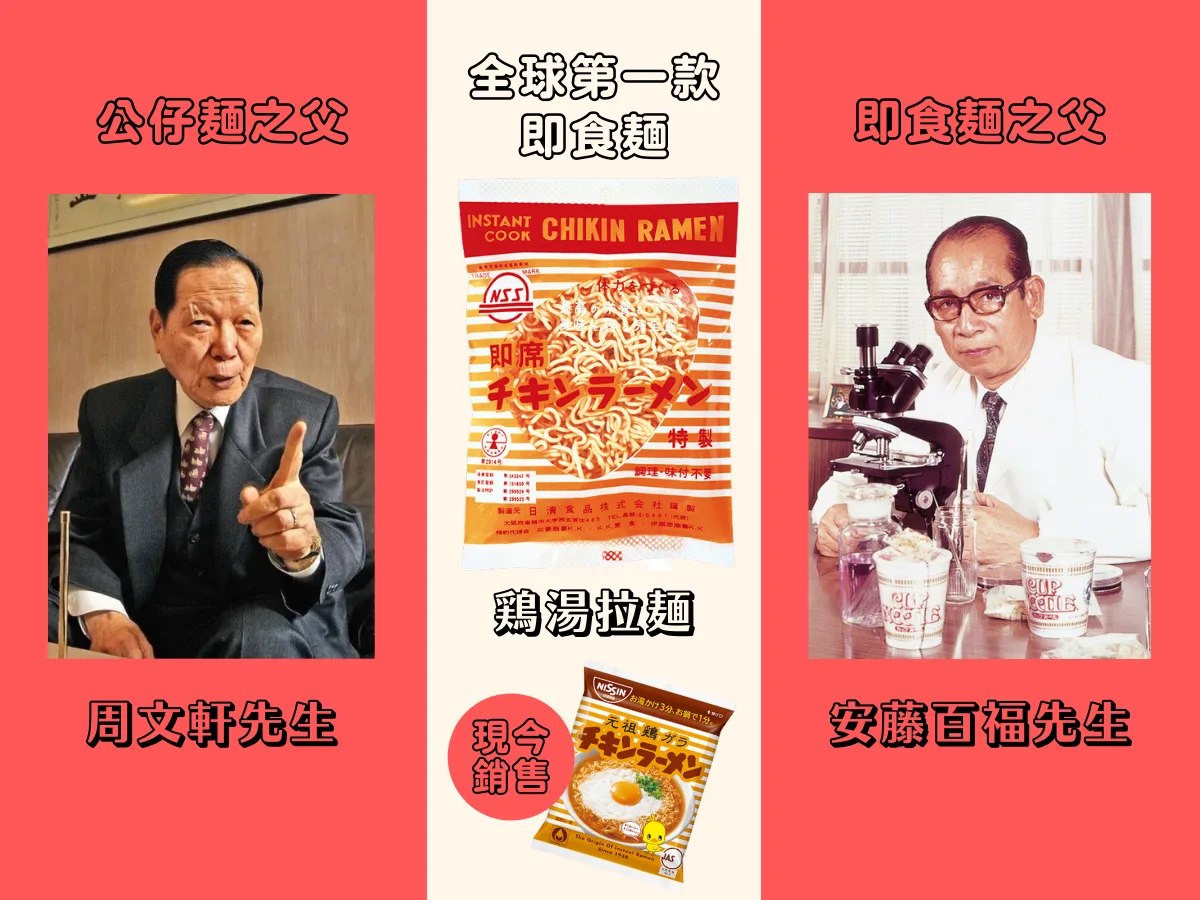
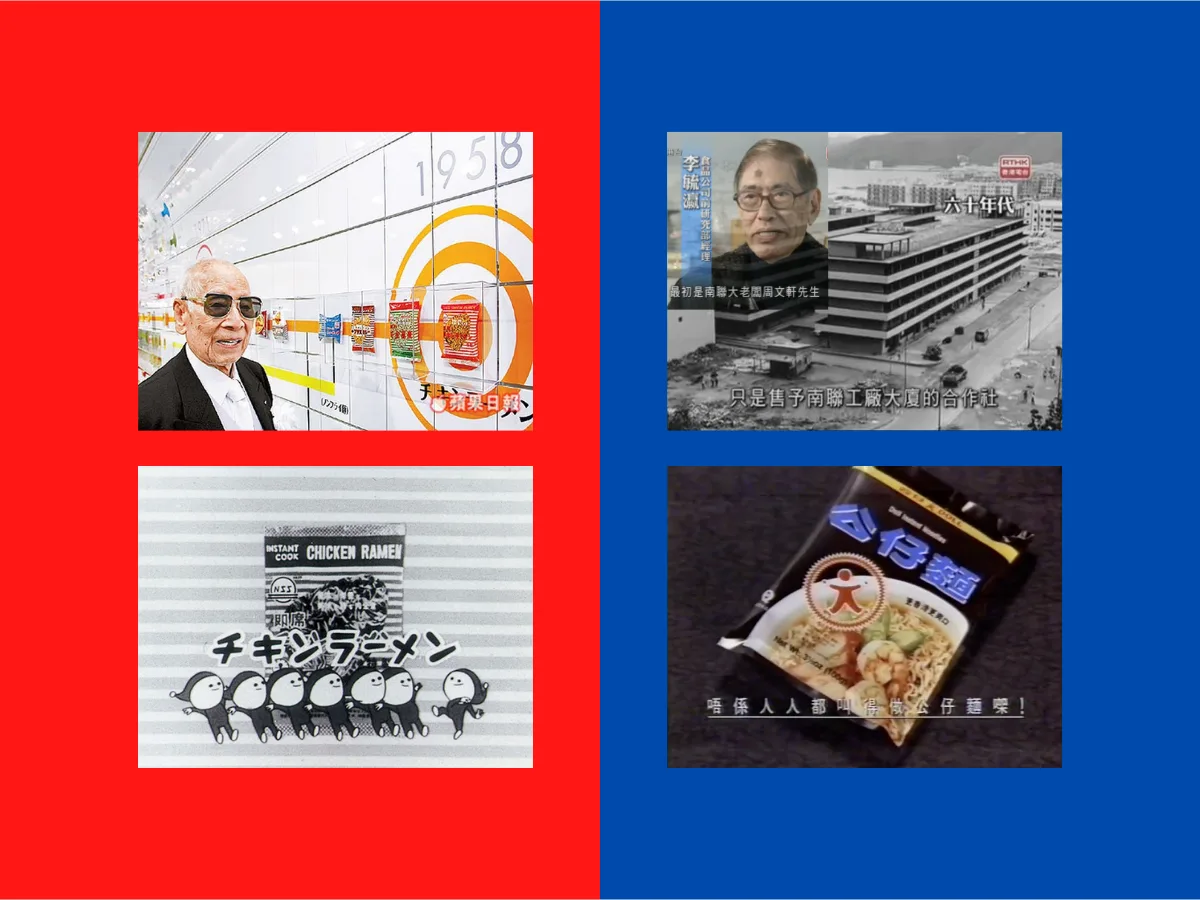
Momofuku Ando, a Taiwanese-born man originally named Go Pek-Hok (吳百福), was the “father of instant noodles”. Deeply moved by the many Japanese who starved in the poverty after the Second World War, he gradually formed his creed of 「食足世平」 — when people have enough to eat, the world will be at peace. In 1958 he invented the world’s first instant noodle, Chikin Ramen (雞湯拉麵), and founded Nissin Food Products Co. (日清食品株式會社). From then on, makers around the world followed Nissin’s example, different instant noodles began to pour forth, and the world’s eating culture changed.
Mr Ando went on to invent Cup Noodles (合味道) in 1971, and even at the age of 94, near the end of his life, he was still developing Space Ram, an instant ramen for space travel.
Nissin launched Demae Iccho in Japan in 1968, and it was introduced to Hong Kong as early as 1969. That same year, Chow Man-hin (周文軒), a businessman who ran cotton mills, brought the technology to Hong Kong and set up a factory to produce “Doll noodles” (公仔麵), which caught on rapidly and sank deep into the popular mind — which is why many Hong Kong people still habitually call all instant noodles “Doll noodles”, Demae Iccho included.
Nissin launched Cup Noodles in 1971, giving instant noodles an entirely new category. Nissin’s biggest competitor at the time, market leader Doll, did not launch its “Doll Bowl Noodle” (公仔碗麵) until 1983. As for the rivalry between Nissin and Doll, after a fierce price war it was transformed in 1989 by Nissin’s acquisition.
Shaping Hong Kong’s Food Culture
Fifteen years after Demae Iccho arrived in Hong Kong, Nissin of Japan established Nissin Foods (H.K.) Co., Ltd. (香港日清食品有限公司) in 1984, and in 1985 its first factory, in Tai Po, began producing and developing products.
In 1989 Nissin acquired Winner Food Products, owner of the Doll brand among others, but kept Doll running independently. To this day the Hong Kong Nissin website lists only the Demae Iccho, Cup Noodles and Fuku brands, without loudly proclaiming that Doll and Demae Iccho belong to the same corporate family.
Meanwhile Winner, under Nissin, has actively developed improved versions of Doll dim sum and expanded beyond noodles, while Nissin keeps developing products to suit Hong Kong tastes — Spicy Seafood flavour Cup Noodles, instant rice vermicelli, instant tong sui (糖水, Cantonese sweet soup) and more.
Over the years, Nissin’s products have shaped the eating culture of a generation of Hong Kong people — it is hard to find a Hongkonger who has never eaten a Nissin product. Even in recent years, as Japanese and Korean trends have swept Hong Kong, Nissin’s product lines have kept close to Hong Kong tastes.
Instant Noodles — Only for Saving Money?
Nissin’s official website says that Momofuku Ando, watching his wife fry tempura, had a flash of inspiration and set about exploring the possibilities of deep-frying noodles, successfully developing Nissin’s Chikin Ramen — the forerunner of the “Nissin original chicken-flavour ramen” (日清元祖雞汁泡麵) you see in supermarkets today. But another version circulates on the internet: that a Taiwanese man, Chang Kuo-wen (張國文), filed the patent first and later transferred the rights to Momofuku Ando for twenty-three million yen; some even say that similar instant noodles had already appeared in various parts of China and Japan before Nissin was founded.
Either way, when Chikin Ramen first went on sale it cost 35 yen — six times the price of a bowl of udon from a street stall at the time — so instant noodles were in fact food for the “well-off”. But once Chikin Ramen appeared, manufacturers copied Nissin en masse, launching all manner of instant-noodle products of varying quality, which drove prices straight down.
As for Hong Kong people’s image of instant noodles as “cheap and cheerful”, it likely stems from Doll’s marketing and its later price war with Demae Iccho. In 1968, textile magnate Chow Man-hin and Wong Ching-hei (王清熙), who had worked at Amoy Food (淘大食品), founded Winner Food Products Ltd. Seeing that Japanese instant noodles were riding high, and that Chinese people had long been noodle-eaters, Wong Ching-hei visited Japanese noodle factories to learn the craft, and Chow Man-hin decided to bring the technology to Hong Kong, creating the “Doll noodles” brand — instant noodles with a cartoon doll on the packet.
At first Doll noodles were sold only at the co-operative store in the industrial building where Chow Man-hin’s textile business was based, but they were an instant sensation, warmly received by the public. Doll then built its name with energetic promotion, including handing out Doll noodles in public housing estates to help grassroots residents. In 1968, Doll sponsored the flagship television variety show Enjoy Yourself Tonight (《歡樂今宵》) for six months running, putting Doll noodles in front of the general public every evening — older friends may still remember the “Doll noodles gold-digging contest” (公仔麵掘金比賽).
From then on, Doll noodles became not just a byword for instant noodles but the very image of “good value for little money” — a stark contrast with the premium pricing of the original Chikin Ramen when it first launched in Japan.
Hong Kong People’s Instant-Noodle Attachment
In the 1960s Nissin pushed its instant noodles energetically onto the international market, promoting them in Korea, Taiwan, Hong Kong and beyond. From the opening of its first factory in Tai Po in 1985, Nissin — through making and acquiring the instant foods Hong Kong people love — built the collective memory of a generation.
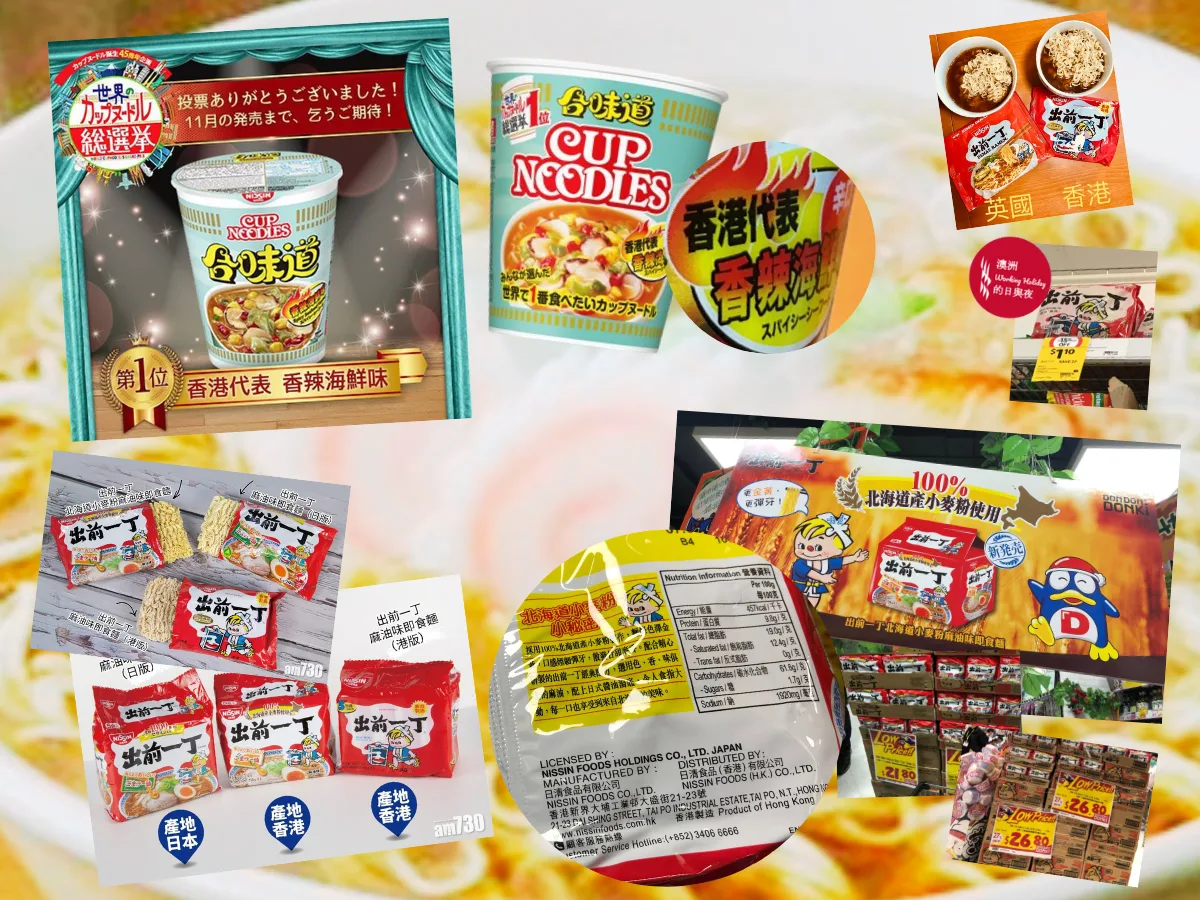
Nissin Hong Kong strives to be the brand that “suits” (合) Hong Kong people’s “taste” (味道) — a play on the Chinese name of Cup Noodles — and its Spicy Seafood flavour, representing Hong Kong, once took the championship in a worldwide Cup Noodles poll (「世界合味道總選舉」). As a result, Nissin of Japan launched the Spicy Seafood flavour Cup Noodles in Japan in 2016.
That said, Nissin’s website also notes that the Cup Noodles Spicy Seafood products sold in Japan and Hong Kong differ in specification. What is more, netizens discovered that the Spicy Seafood Cup Noodles sold in Hong Kong were not “Made in Hong Kong” but produced in mainland China — while the cup noodles sold in Taiwan were, conversely, made in Hong Kong.
Nissin also told the media in 2016 that only two flavours of Cup Noodles sold in Hong Kong were made in Hong Kong. In recent years Hong Kong people have paid close attention to place of origin, and several media outlets have run features on the differences between the “Hong Kong version”, “Japanese version” and “mainland version” of sesame-oil-flavour Demae Iccho.
During the pandemic, the Donki whirlwind swept into Hong Kong and the city’s Japanese supermarkets were packed; the “Japanese version” of Demae Iccho became Hongkongers’ new darling. Not to be outdone, Nissin Hong Kong launched a “Hokkaido wheat flour” Demae Iccho, its packaging 95% similar to the Japanese version — courting Hong Kong tastes with an all-out Japanese look.
The traditional “Hong Kong version” of Demae Iccho, meanwhile, is still made in Hong Kong, and has become a comfort to Hong Kong people overseas. During the pandemic, when international travel was frozen, Hongkongers all over the world shared photos on social media of eating Demae Iccho wherever they were — proof enough that it has become a deeply etched part of Hong Kong culture.
Cup Noodles Museum
The Cup Noodles Museum at China Hong Kong City, Tsim Sha Tsui, offers various workshops and an exhibition gallery on Momofuku Ando. If you are interested in the history of Nissin and instant noodles, you can also visit the official website: https://www.cupnoodles-museum.com.hk
Cup Noodles Museum
Address:
Shops 26–35, Level 2, China Hong Kong City, 33 Canton Road, Tsim Sha Tsui, Kowloon
Opening hours:
Monday, Tuesday, Thursday, Friday: 11:15 am – 7:15 pm
Saturday, Sunday and public holidays: 11:15 am – 8:15 pm
Wednesday: closed (if a Wednesday is a public holiday, the museum closes on the following day instead)
Sources:
RTHK, Hong Kong Stories《香港故事》, episode 「速食速決」 (on instant food)
《李雪廬回憶錄》(Memoirs of Lee Suet-lo), by 李雪盧
Joint Publishing (Hong Kong) Co., Ltd., December 2010
https://www.cupnoodles-museum.com.hk
https://www.doll.com.hk/tc/about/history.php
https://www.nissinfoods.com.hk/tch/history
https://www.nissingroup.com.hk/wp-content/uploads/2021/04/C20124135-Nissin-AR-.pdf [archived]
https://www.nissinfoods.com.hk/eng/news/2016/press-release-2016-10
https://www.nissinfoods.com.hk/tch/news/cupnoodles-museum-hong-kong-by-nissin-foods-set-for-launch
https://tw.appledaily.com/headline/20070224/N75RRHDJMDTJ5Y6EO4I6OJ6B4M/
https://www.am730.com.hk/news/旅遊.飲食/出前一丁北海道小麥粉麻油味新登場-233887
出前一丁之父安藤百福「食得溫飽 世界和平」 即食麵誕生60周年 (HK01 — Momofuku Ando, father of Demae Iccho, and 60 years of instant noodles)
日清新品牌策略 打造健康環保形象 [archived] (SME Lab — Nissin’s new brand strategy for a healthy, green image)
香港出售合味道非港產? 日清證僅剩兩口味於香港製造 (HK01 — Cup Noodles sold in Hong Kong not locally made? Nissin confirms only two flavours still made in Hong Kong)
8個你不知道的即食麵真相 全球消耗量最多的地方有香港份? (HK01 — 8 instant-noodle facts you didn’t know)
【生活中的品牌故事】日清杯麵是如何誕生的? (Business Digest — how Nissin Cup Noodles came to be)
【港式食品】將公仔麵引入香港的兩個人 (WeToast — the two men who brought Doll noodles to Hong Kong)
https://www.facebook.com/111511287316298/posts/163547432112683/
https://australiaworkingholidaydayandnight.wordpress.com/2019/03/01/澳洲超市/
Published in Oct 2021 by Hong Kong Brand Museum 香港品牌博物館