RTHK Hall
RTHK
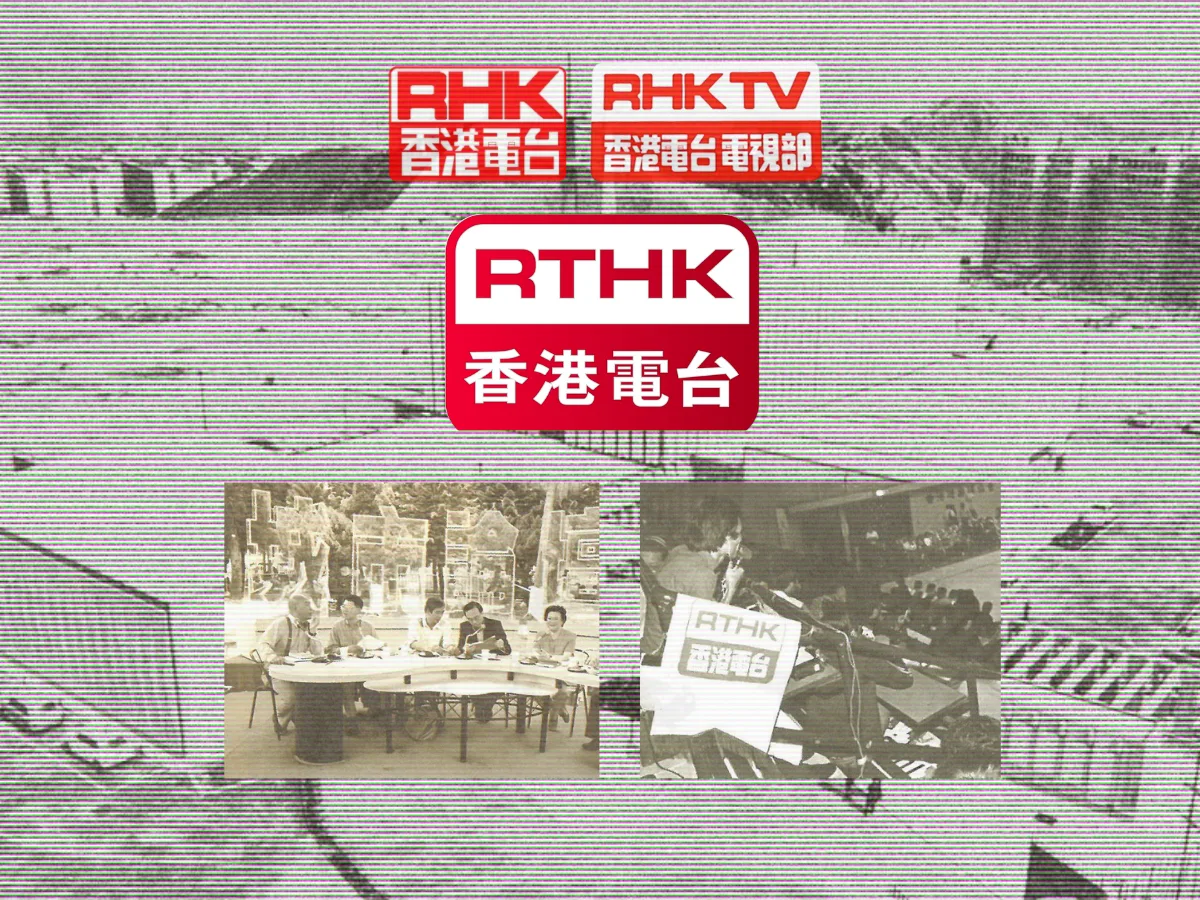
Before the Second World War, the postal authority was the Hong Kong government body that controlled information: besides mail services, telegraphs, wireless and postal money orders were all handled at the Post Office. Broadcasting, a wireless service, was naturally no exception — the forerunner of RTHK (香港電台, Radio Television Hong Kong) began at the General Post Office in Central in 1928, opening the history of broadcasting in Hong Kong.
RTHK
and
the History of Broadcasting in Hong Kong
A Government Station
Run by the Post Office
“ZBW” and “ZEK”
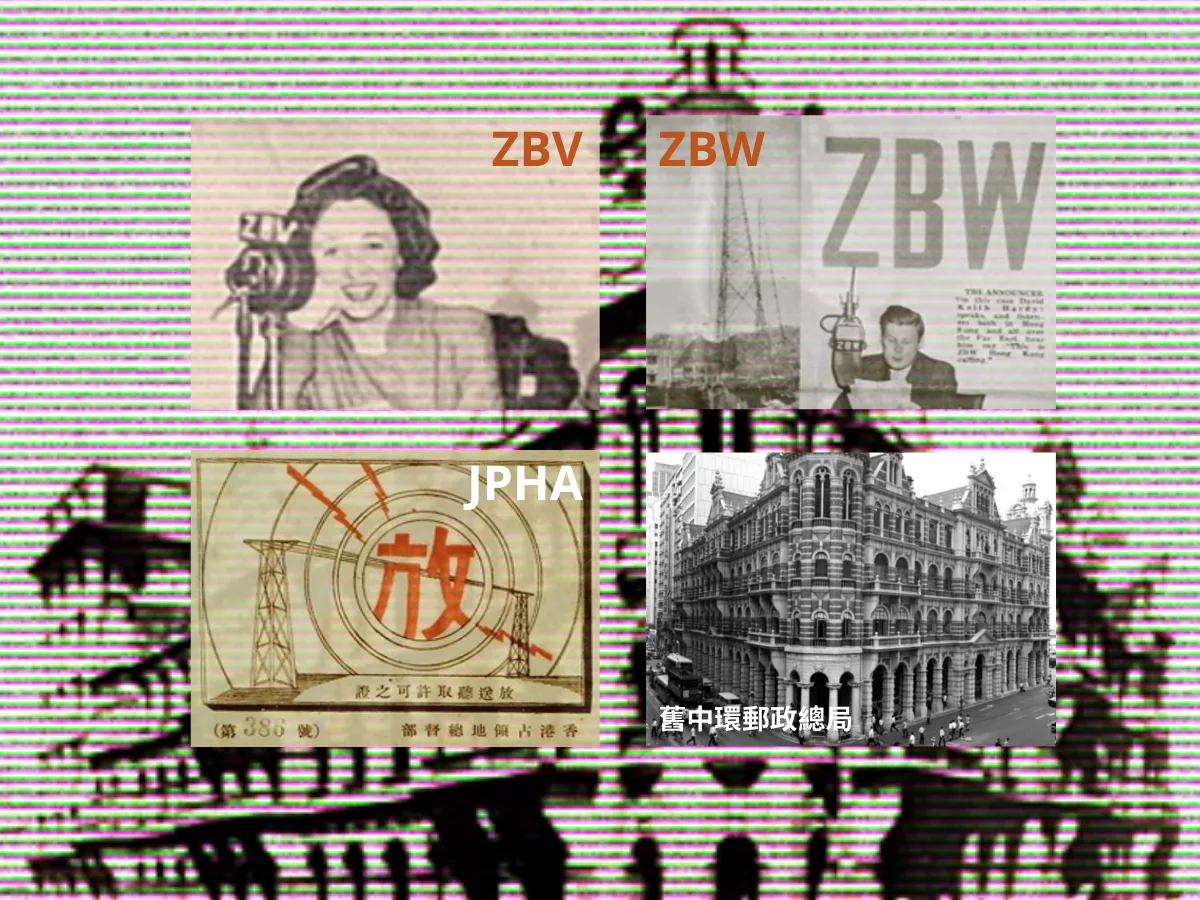
Hong Kong’s broadcasting history began in June 1928, when a station was launched under the impetus of two engineers and amateur broadcasters, transmitting under the call sign “GOW”. In February 1929 the British colonial government made the Postmaster General concurrently the first station controller in Hong Kong broadcasting history, and the official station broadcast under the call sign “ZBW”. In October that year, the studio moved into the old General Post Office in Central. This was the earliest phase of RTHK’s forerunner: a broadcasting service run by the Post Office, for which listeners had to pay for a licence — listening without one was illegal.
Early Hong Kong radio was transmitted on medium wave at AM 845 kc. At first there were only English programmes: classical music, popular songs, news, weather, the stock market, and relays of the BBC. In 1931, ZBW began carrying a Chinese-language programme of about one hour, roughly once a month.
In 1934, Chinese and English began broadcasting in separate slots on the same channel, with the Chinese service using the call sign “ZEK”. Besides Cantonese content there were also programmes in Mandarin and Chiuchow (潮州話, the Chaozhou dialect), reflecting the large numbers of Chinese who had come to Hong Kong from further north in China. Programming centred on news and information, with music strengthened later.
In 1938, with the commissioning of Hong Kong’s second transmitting station, the Chinese and English services formally became separate stations, broadcasting until transmissions were cut off when the Japanese army occupied Hong Kong in 1941. The “Hong Kong Hoso Kyoku” (香港放送局) set up during the Japanese occupation ran the broadcasting service under the call sign JPHA; Japanese-language broadcasts were added, while the remaining hours still carried news and entertainment in Cantonese, Mandarin and English.
The Broadcasting Station Housed
at Cable & Wireless
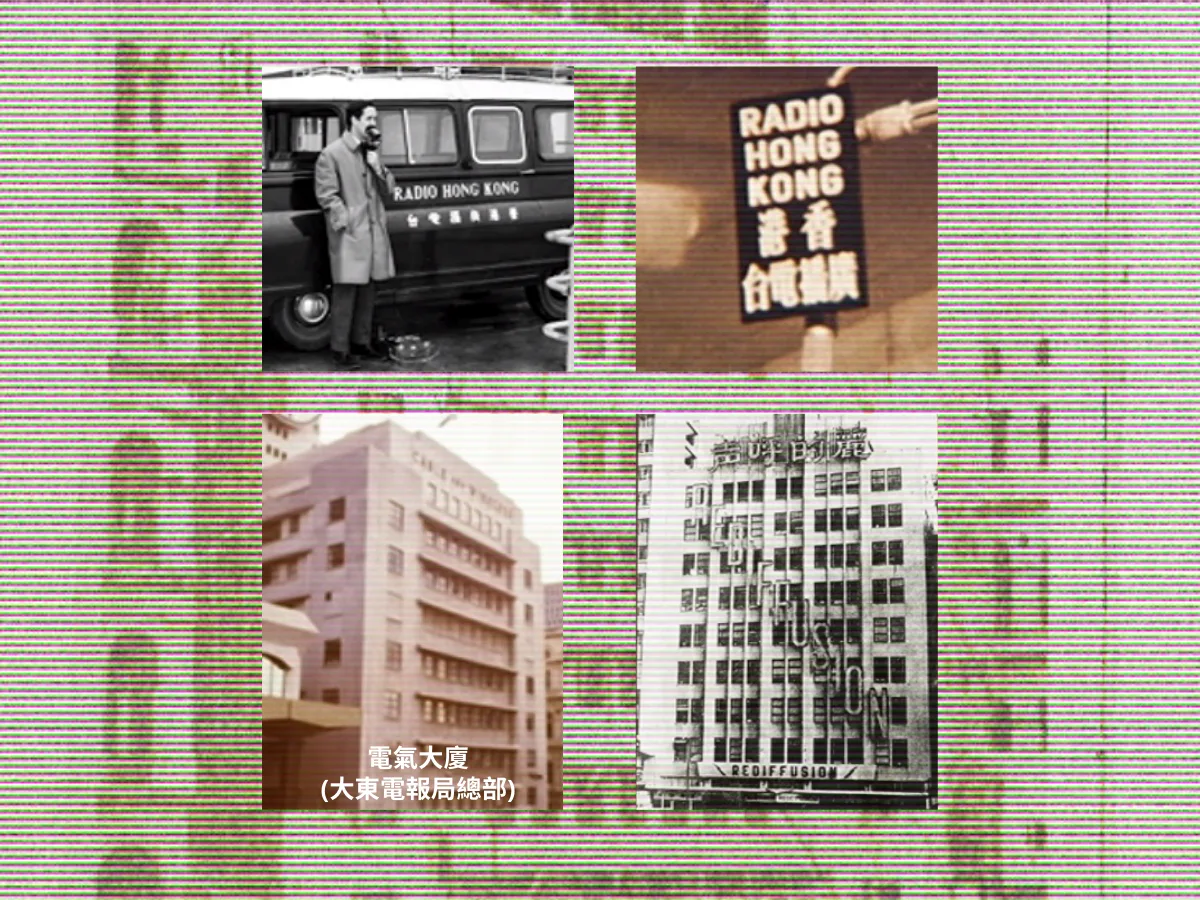
Radio Hong Kong (香港廣播電台)
Radio broadcasting recovered quickly after the Second World War, and in August 1948, marking the 20th anniversary of government broadcasting, the station was renamed “Radio Hong Kong”. Analysts note that as East and West entered the Cold War after the war, the Hong Kong government received funding and advanced equipment from the British government, which had political reasons — economic interests and the promotion of Western values — for providing them.
In 1949 the government station was reorganised with an upgraded management structure, and the Post Office handed its telecommunications-related services to Cable & Wireless, so the studios moved into Cable & Wireless’s Central headquarters. In 1951, management of the government station formally passed from the Postmaster General to the government’s Public Relations Officer. In 1954, the colonial government established a broadcasting department, and from then on the Director of Broadcasting led the government station’s operations. In 1957, the station’s Chinese channel began broadcasting all day.
On 22 March 1949, “Radio Rediffusion” (麗的呼聲) launched one Chinese and one English channel, delivered by wire, with sound quality better than AM broadcasting, which could not carry low and high frequencies — Hong Kong had its second radio station. Yet according to reports quoting Yip Sai-hung (葉世雄), former head of RTHK’s digital radio, RTHK and Rediffusion frequently co-broadcast Cantonese opera (大戲, daai hei) and also jointly ran poverty-relief programmes.
Moving to Broadcast Drive
Five Stations Hill in full bloom
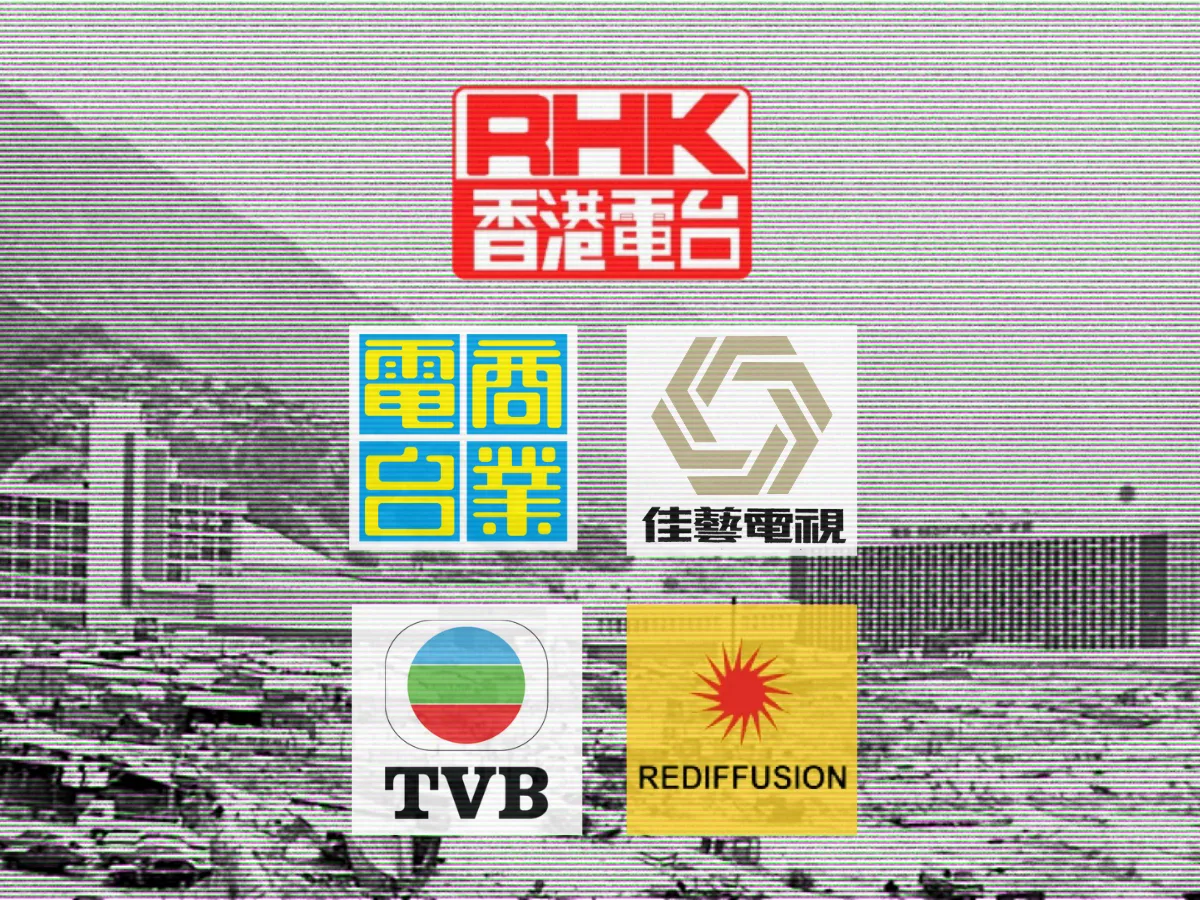
On 26 August 1959, “Commercial Radio” (商業電台) began broadcasting over the airwaves, becoming RTHK’s first true competitor. Commercial Radio existed, in fact, because its founder George Ho Cho-chi (何佐芝) held the agency for Sony radios: he invested in a radio station to push up radio sales. The arrival of Commercial Radio, together with low-cost transistor radios (原子粒收音機 — 原子粒, “atomic grain”, is the Hong Kong term for the transistor), drove a golden age of radio broadcasting, and RTHK benefited too.
On 1 June 1960, Hong Kong began FM broadcasting, and sound quality improved dramatically. Facing head-on competition from Commercial Radio, “Radio Hong Kong” saw staff poached and programme rivalry turn white-hot; radio drama became a major part of popular entertainment. RTHK also placed great weight on football coverage, with several matches broadcast live each week.
In 1963 Commercial Radio, having more advertising than it could carry, opened its second channel — proof of radio’s popularity. Many listeners never obtained radio licences, and in 1967 the government simply abolished the paid listening licence. Licences then totalled over 180,000, but listeners were estimated at 600,000, at a time when Hong Kong’s population was about 3 million.
Faced with radio’s explosive growth, RTHK moved on 25 April 1969 into Broadcasting House at 30 Broadcast Drive, Kowloon Tong, where it remains to this day. RTHK arrived at Broadcast Drive after TVB and Rediffusion, followed in turn by Commercial Radio, Educational Television and Commercial Television (佳視) — which is how Broadcast Drive earned the nickname “Five Stations Hill” (五台山; Educational Television later merged with RTHK, hence five).
RTHK’s Television Unit Founded
and a New Name Used Ever Since
Radio Television Hong Kong (香港電台)
In 1967 TVB began broadcasting, and Hong Kong media entered a new era. In 1973, with over-the-air broadcasting now widespread, Rediffusion’s wired sound service ended, and the company founded “Rediffusion Television” (麗的電視) instead — renamed “Asia Television” (亞洲電視, ATV) in 1982. In 1975 a third television station, “Commercial Television” (佳藝電視), also launched, and Hong Kong entered the golden age of television.
In 1976, “Radio Hong Kong” was formally renamed “Radio Television Hong Kong”, its abbreviation changing from “RHK” to “RTHK” — and the RTHK logo has been used ever since. The same year it merged with the Educational Television unit founded with the Education Department in 1968, jointly producing “Educational Television” (etv), which had first aired in 1971. RTHK’s television division also produced many much-loved programmes, such as Below the Lion Rock (《獅子山下》), 《性本善》 (a sex-education series), Hong Kong Connection (《鏗鏘集》), City Forum (《城市論壇》) and Headliner (《頭條新聞》).
Beyond educational television, RTHK had in fact been co-producing Police Magazine (《警訊》) with the Public Relations Branch of the Royal Hong Kong Police since 1973, re-enacting crimes in dramatised form. Lam Ka-wah (林嘉華), who hosted Police Magazine and Junior Police Call (《少年警訊》) at the age of 17, was the first entertainer to have come out of the police force. From 1973 to 1978, Police Magazine consistently ranked among the highest-rated television programmes.
A Driving Force of Hong Kong’s Music Scene
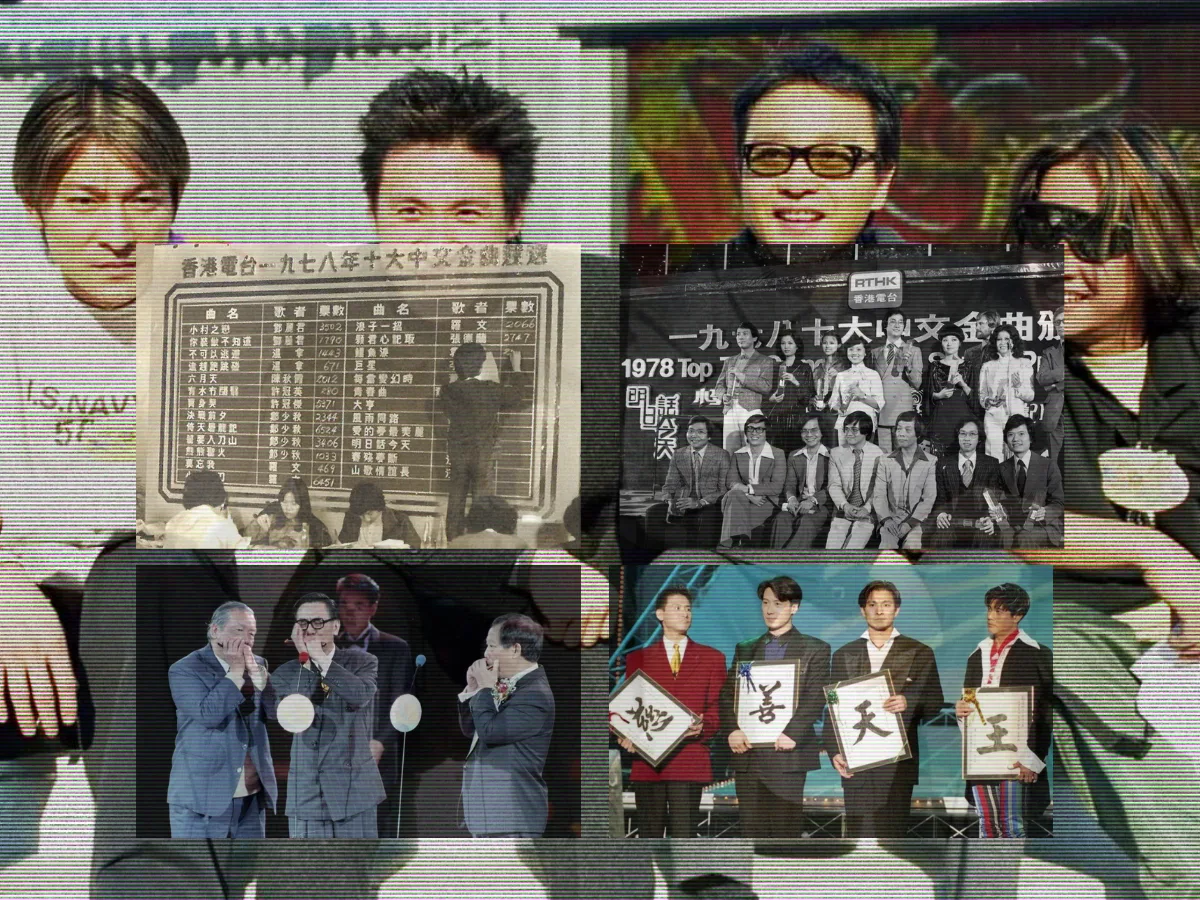
The Top Ten Chinese Gold Songs Award
In 1979, RTHK held the first “Top Ten Chinese Gold Songs Award” presentation in the format of a press conference — and to everyone’s surprise, media and public response was overwhelming. It became an annual event, staged as a concert from 1982. Only in 1984 did TVB launch its Jade Solid Gold Best Ten Music Awards (《十大勁歌金曲頒獎典禮》); Commercial Radio introduced the Ultimate Song Chart (叱吒樂壇流行榜) in 1988, and Metro Radio (新城電台), which began broadcasting in 1991, later staged the Metro Radio Hits Music Awards (《新城勁爆頒獎禮》).
The four music award ceremonies became a hot topic for Hong Kong people at the start of every year through the 1980s and 90s, not only invigorating the local music scene but also giving rise to superstars including the “Four Heavenly Kings” (四大天王) of Cantopop. Award shows staged by different media outlets, and later online media, became the norm — until 2019, when physical ceremonies were halted because of the social movement. RTHK’s “Top Ten Chinese Gold Songs” can be said to have opened a chapter of Hong Kong popular culture that lasted for decades.
The ancestor of Hong Kong’s “fung yin” phone-in shows
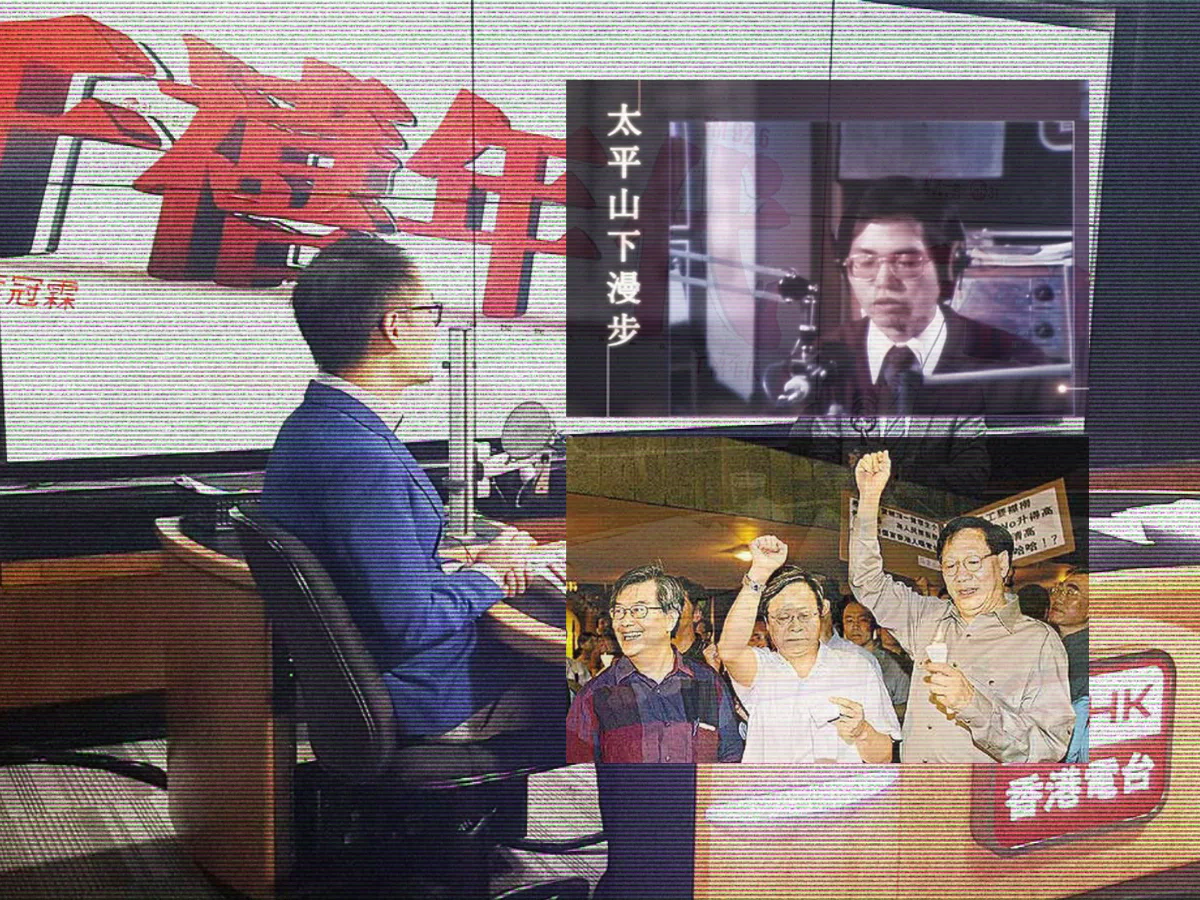
Another RTHK hallmark was its pioneering “personal opinion programmes”. As early as the 1970s, the programme 《太平山下漫步》 (“A Stroll Below Tai Ping Shan”) invited listeners to voice their views on air. In the early 1980s the programme was renamed 《八十年代》 (“The Eighties”), and as late as 2021 it was still broadcast live every morning on radio and television under the name 《千禧年代》 (“The Millennium”).
These “fung yin” (烽煙, literally “beacon smoke” — a Cantonese pun on “phone-in”) political call-in programmes, in the unusually free political climate around the 1997 handover, became locomotives of public opinion. RTHK later added 《自由風・自由Phone》 (“Free Wind, Free Phone”) in the early-evening slot; Commercial Radio had 《自由港自由講》 (“Free Port, Free Talk”) in the 1980s, followed by 《風波裡的茶杯》 (Teacup in a Storm) fronted by Albert Cheng King-hon (鄭經翰) and 《毓民七鐘聚》 hosted by Raymond Wong Yuk-man (黃毓民); after the “silencing of the famous mouths” (名咀封咪), when the star hosts left the airwaves, it launched 《在晴朗的一天出發》 (“Setting Out on a Clear Day”).
RTHK’s television division, for its part, made City Forum a long-running political debate programme, broadcast live on television since 1980. As political disputes turned white-hot in the 2010s, the programme once again became a social focal point, and also gave rise to the nickname “Victoria Park uncles” (維園阿伯) for its regular hecklers. In 1993 Asia Television also had 《龍門陣》, which made Wong Yuk-man and Albert Cheng household names.
《八十年代》・《九十年代》・《千禧年代》 (“The Eighties”, “The Nineties”, “The Millennium”)
In the Eye of the Political Storm
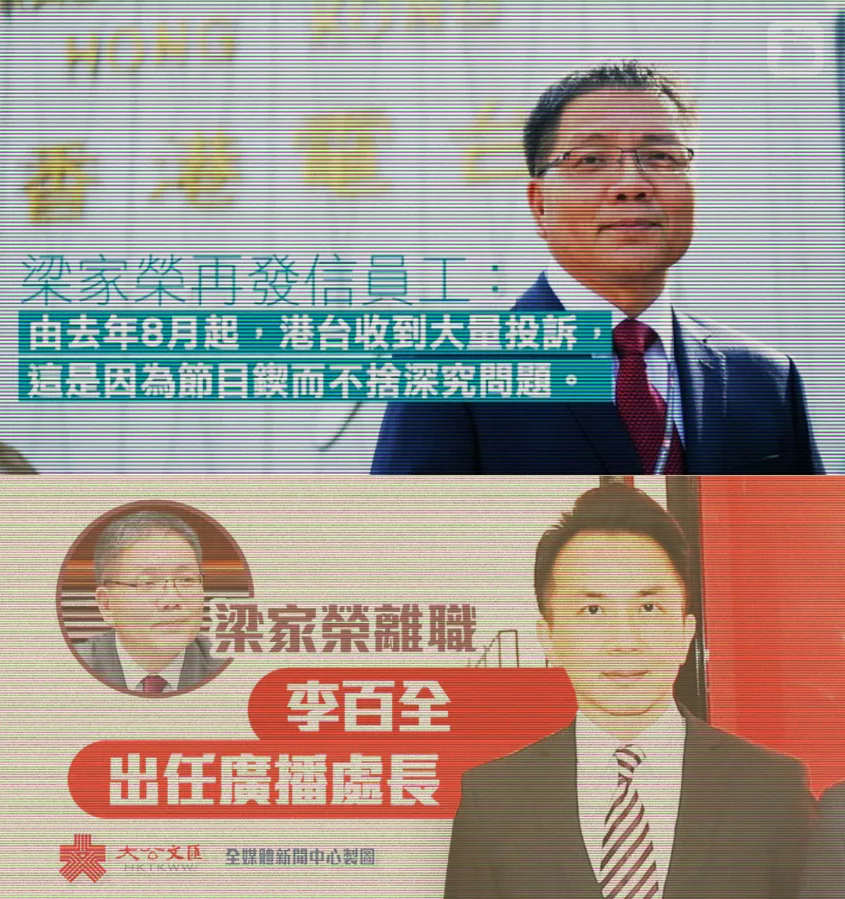
As political conflict in Hong Kong escalated in recent years, RTHK too found itself in the eye of the political storm, repeatedly criticised by the pro-establishment camp. The hugely popular television programme Headliner was taken off the air; newsroom journalist Nabela Qoser (利君雅) was placed under investigation; Hong Kong Connection director Bao Choy Yuk-ling (蔡玉玲), prosecuted over her use of public records searches, was denied support; and an Administrative Officer with no broadcasting experience was parachuted in as Director of Broadcasting, vetting programmes by standards that even the most experienced staff could not fathom, suspending programmes and punishing staff — events that together depict a broadcaster facing enormous change.
The SAR government not only published a report criticising RTHK’s governance; Leung Ka-wing (梁家榮), the Director of Broadcasting who had come from a journalism background, took the rare step of ending his contract early and departing. Public opinion was no longer in uproar — yet many people still did their utmost, before public numbness set in, to spotlight changes that were hard to accept in so short a time.
RTHK’s role as a media organisation has in substance never been separable from politics: in 1949 the British government injected resources for political reasons to strengthen the station’s propaganda capability, and in 2021 the government drastically overhauled RTHK’s governance in the wake of the fierce anti-extradition-bill social movement of 2019.
Hong Kong people lived through some 20 good years of unusually open political space around the handover, and can hardly help feeling bittersweet about the upheaval facing “RTHK”. In 2018, marking the 90th anniversary of broadcasting in Hong Kong, RTHK produced a historical retrospective exhibition, 「回味港台」 (“Savouring RTHK”), and put its contents online in remarkable detail; the webpage was still there in early 2021.
When RTHK’s official website has to revise the contents of 「回味港台」, it seems the “RTHK” brand — like Ocean Park — may already have become a collective memory that Hong Kong people cherish even before the name itself disappears.
Sources:
一起廣播的日子 : 香港電台八十年 (Days of Broadcasting Together: 80 years of RTHK)
陳雲 (Chin Wan), 1961-
初版 香港 : 明報出版社有限公司 2009
一鑑江湖:何鑑江自傳 (the autobiography of Ho Kam-kong)
何鑑江 (Ho Kam-kong)
香港:新銳文創出版社 2020
http://rthk9.rthk.hk/about/pdf/90a_photoalbum.pdf
http://rthk9.rthk.hk/classicschannel/history.htm
https://app3.rthk.hk/mediadigest/content.php?aid=1894
https://app4.rthk.hk/special/rthk90/index.htm#top
https://app4.rthk.hk/special/rthk90/zone.htm
https://www.youtube.com/embed/HDexy3ReO60?rel=0
https://www.radioheritage.net/LLRI16.asp
https://www.metropop.com.hk/%E9%83%B5%E6%94%BF%E9%A2%A8%E5%85%89%E5%8F%B2-%E6%AF%8F%E7%95%B6%E8%AE%8A%E5%B9%BB%E6%99%82 [archived]
https://hk.on.cc/hk/bkn/cnt/lifestyle/20170529/bkn-20170529090045443-0529_00982_001.html
Published in April 2021 by Hong Kong Brand Museum 香港品牌博物館