HSBC Hall
HSBC is one of the earliest brands to appear in Hong Kong. Every day, on banknotes and in the streets,
the HSBC logo is hard to miss. Besides the hexagon emblem,
there is that pair of lions, seen on HSBC’s banknotes and credit cards — their exposure could hardly be higher,
and few will find them unfamiliar. But how many people know the lions’ story?
The HSBC Brand and the History of Hong Kong
1865
Opening
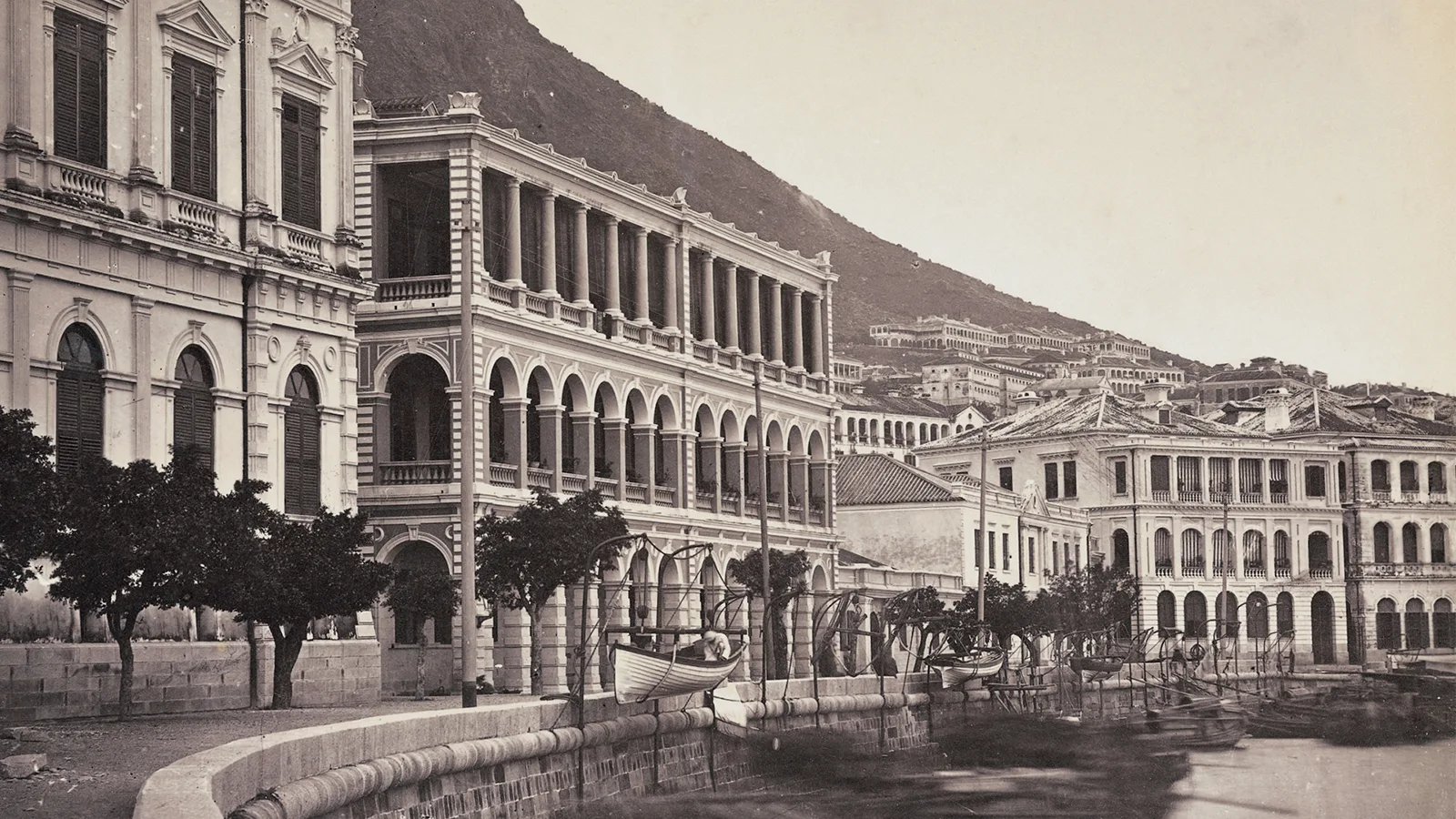
HSBC is a bank founded in Hong Kong. Its first branch opened on 3 March 1865 under the Chinese name 香港上海滙理銀行 (renamed 香港上海滙豐銀行 — The Hong Kong and Shanghai Banking Corporation — in 1881), at No. 1 Queen’s Road in then British-ruled Hong Kong, the site of HSBC’s Hong Kong main building today. Only in April and June of that year did HSBC open in Shanghai and London respectively.
1881
Note issuing
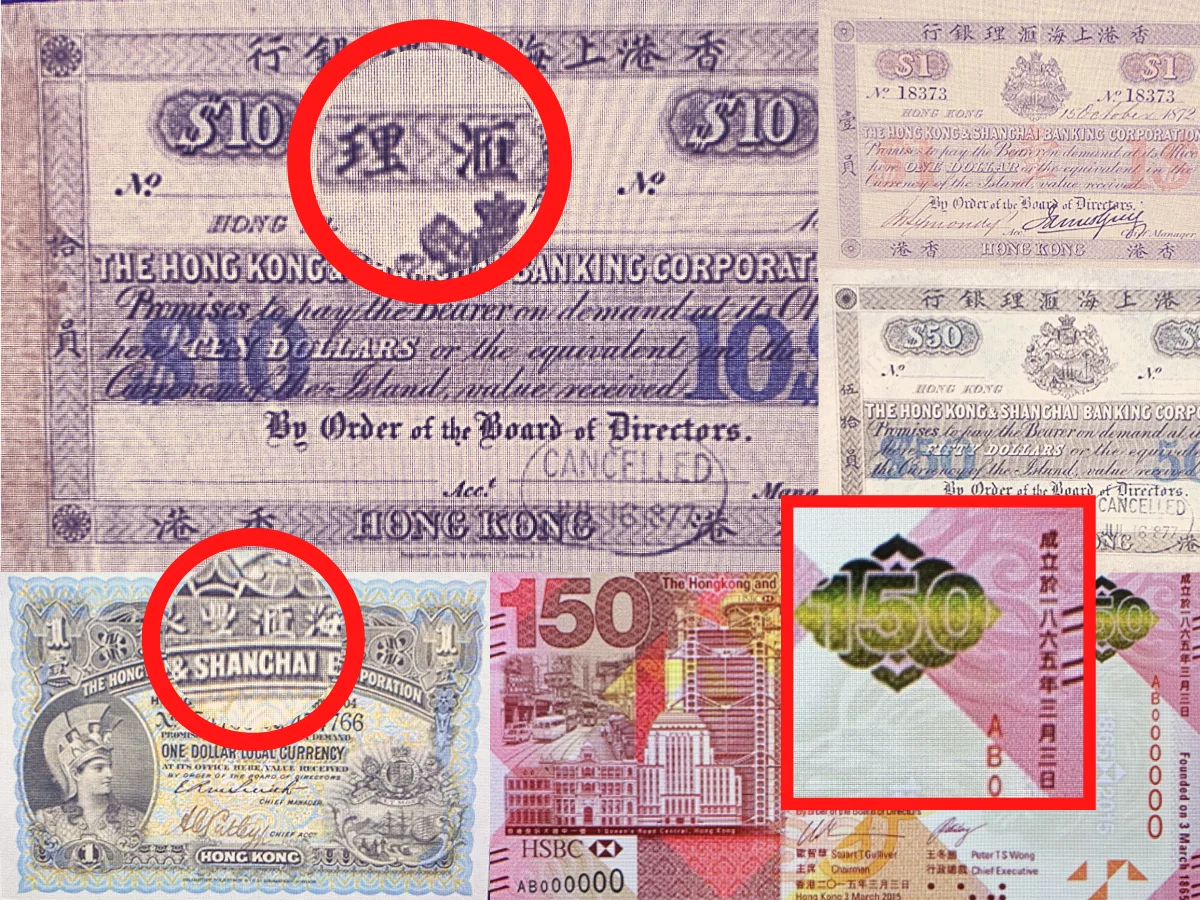
After its incorporation under Hong Kong law in 1865, the bank became a note-issuing bank and began issuing banknotes that same year — and it remains one of Hong Kong’s note-issuing banks to this day.
Banknotes from different years also record the changes in the bank’s Chinese name. Notes issued after 1881 already carry the name 「滙豐」, used ever since.
1929
Arriving in Kowloon
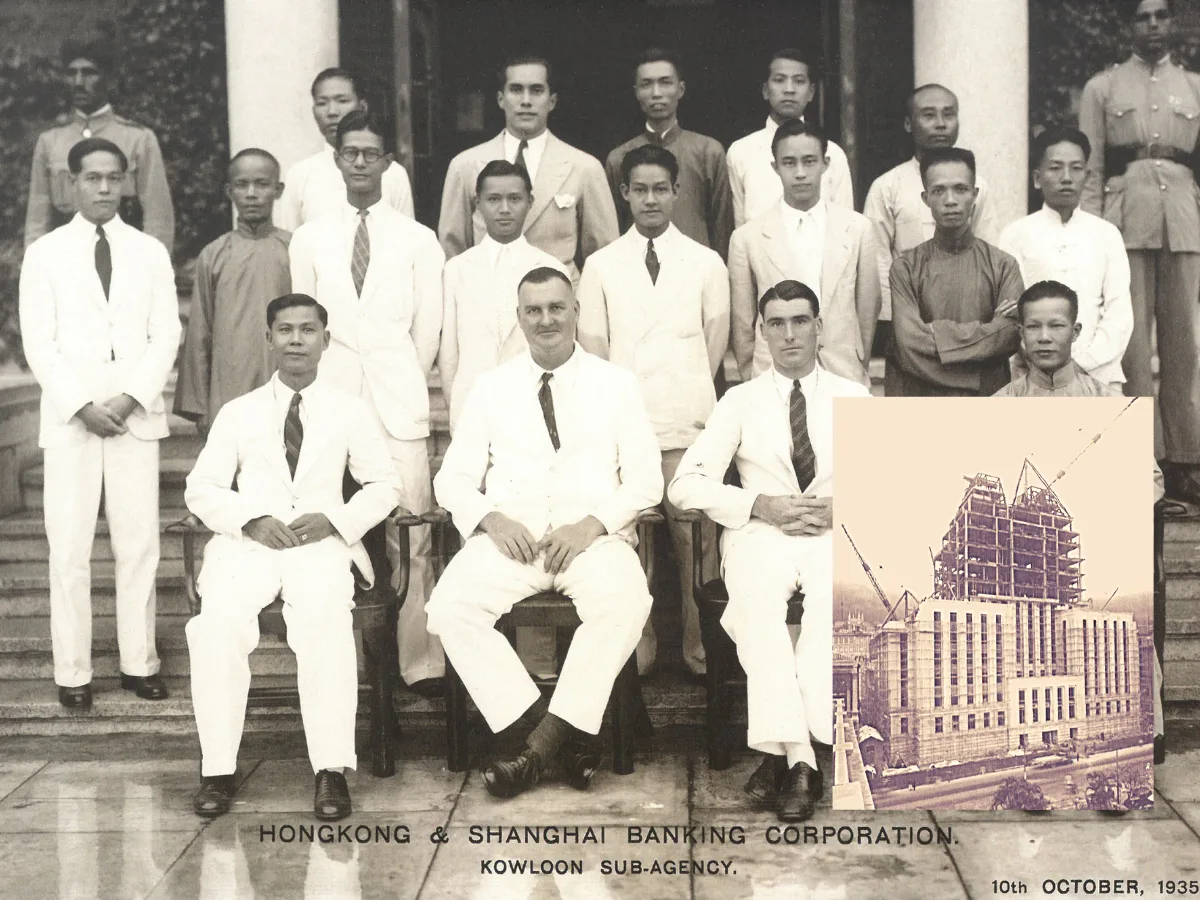
HSBC’s first branch “across the harbour” opened in The Peninsula hotel in Tsim Sha Tsui, becoming its second office in Hong Kong.
In 1935, HSBC moved into its head office at 1 Queen’s Road Central — then the tallest building in Hong Kong, and the first fitted with air-conditioning.
1941
The liberation of Hong Kong
On 16 December 1941, with the Japanese army about to take Hong Kong, HSBC moved its headquarters to London.
HSBC’s then chief, Sir Vandeleur Grayburn, was captured by the Japanese. He reportedly helped staff interned at Stanley by smuggling in money to buy food and medical supplies, and died of illness in prison in August 1943.
After the Japanese surrender at the end of the Second World War and the liberation of Hong Kong, HSBC moved its headquarters back in 1946 and provided loans to merchants for Hong Kong’s post-war manufacturing development; cotton mills and spinning mills sprang up everywhere, creating large numbers of jobs.
During the war, HSBC had been forced to sign unissued banknotes; the notes signed by senior HSBC staff under Japanese coercion became known as “duress notes” (逼簽鈔票). Soon after the duress notes entered circulation, the British government declared that it did not recognise them as Hong Kong legal tender.
With everything to rebuild after the war, the duress-note problem had to be resolved and confidence in the Hong Kong dollar restored as quickly as possible. The British government and HSBC ultimately decided to honour the value of the duress notes, gradually recalling and destroying them, so as to maintain confidence in — and the standing of — the currency in Hong Kong and across South China. Under their agreement HSBC first covered £1 million, equivalent to HK$16 million, with the balance advanced from Exchange Fund income. This resolution of the duress-note affair cemented the Hong Kong dollar’s regional leadership in currency issuance and monetary management, and made HSBC a byword for the Hong Kong dollar.
1950-1967
Expansion
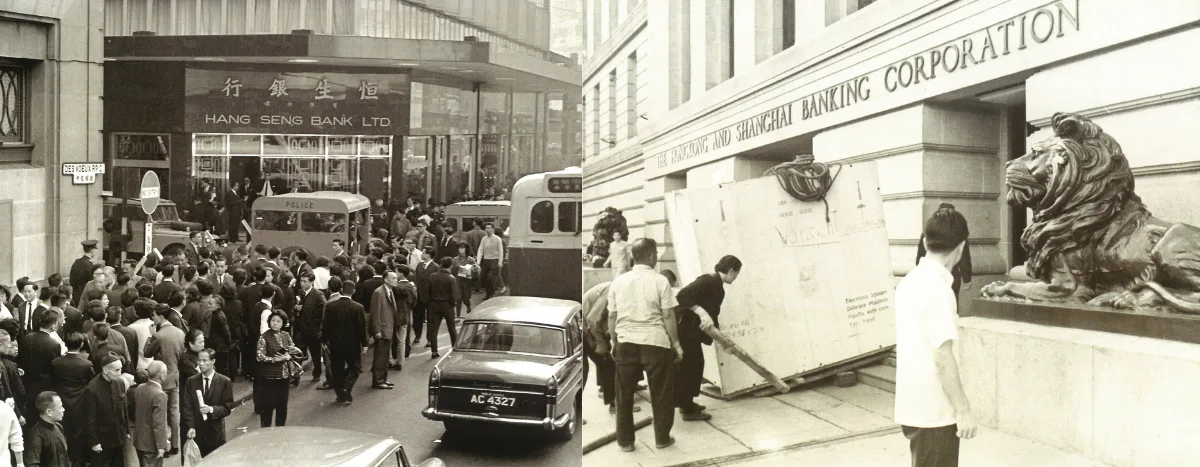
In the 1950s, HSBC began acquiring other banks around the world, including Hang Seng Bank in 1965 — which is why HSBC and Hang Seng share a common ATM network today.
In 1967, HSBC installed the first computer at its Hong Kong headquarters, named the “IBM360”. It transformed the way the bank operated: customers could now handle their banking at any branch.
HSBC
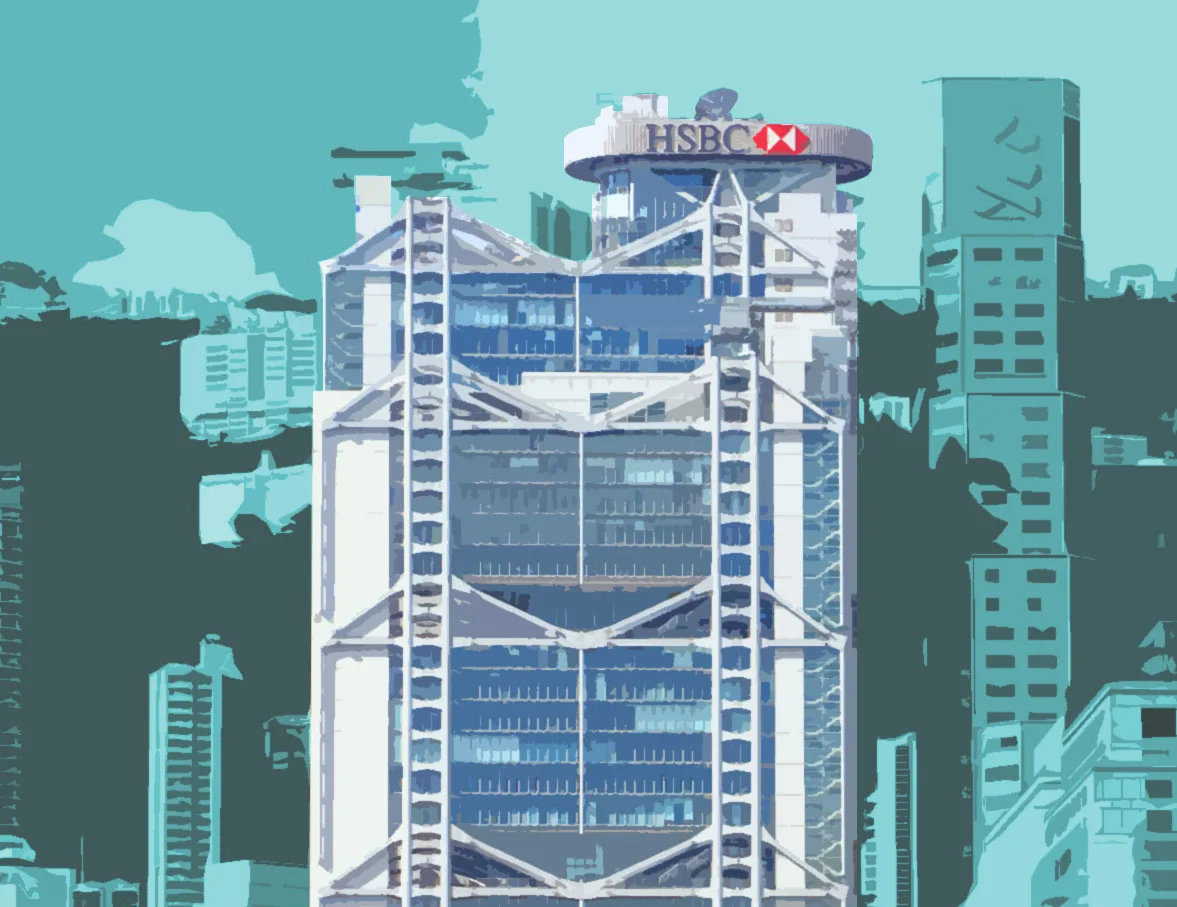
In 1986, the new HSBC head office designed by the celebrated British architect Norman Foster was completed — the HSBC Main Building that stands in Central today. It went on to become a Hong Kong landmark, appearing in many travel photographs and news clips introducing the city.
Before Hong Kong’s return to China, the bank was generally known to the public in English as “Hong Kong Bank” or “Hong Kong and Shanghai Banking Corporation”.
In 1998, after the handover, the group unified the English branding of its banks worldwide as “HSBC” — the English name of the Hong Kong bank included — and adopted globally the hexagon logo everyone sees so often today (though Hang Seng Bank was unaffected).
Source: hsbc.com
https://www.about.hsbc.com.hk/-/.../140530-hsbc-our-story_chi.pdf
The Story of the Lions
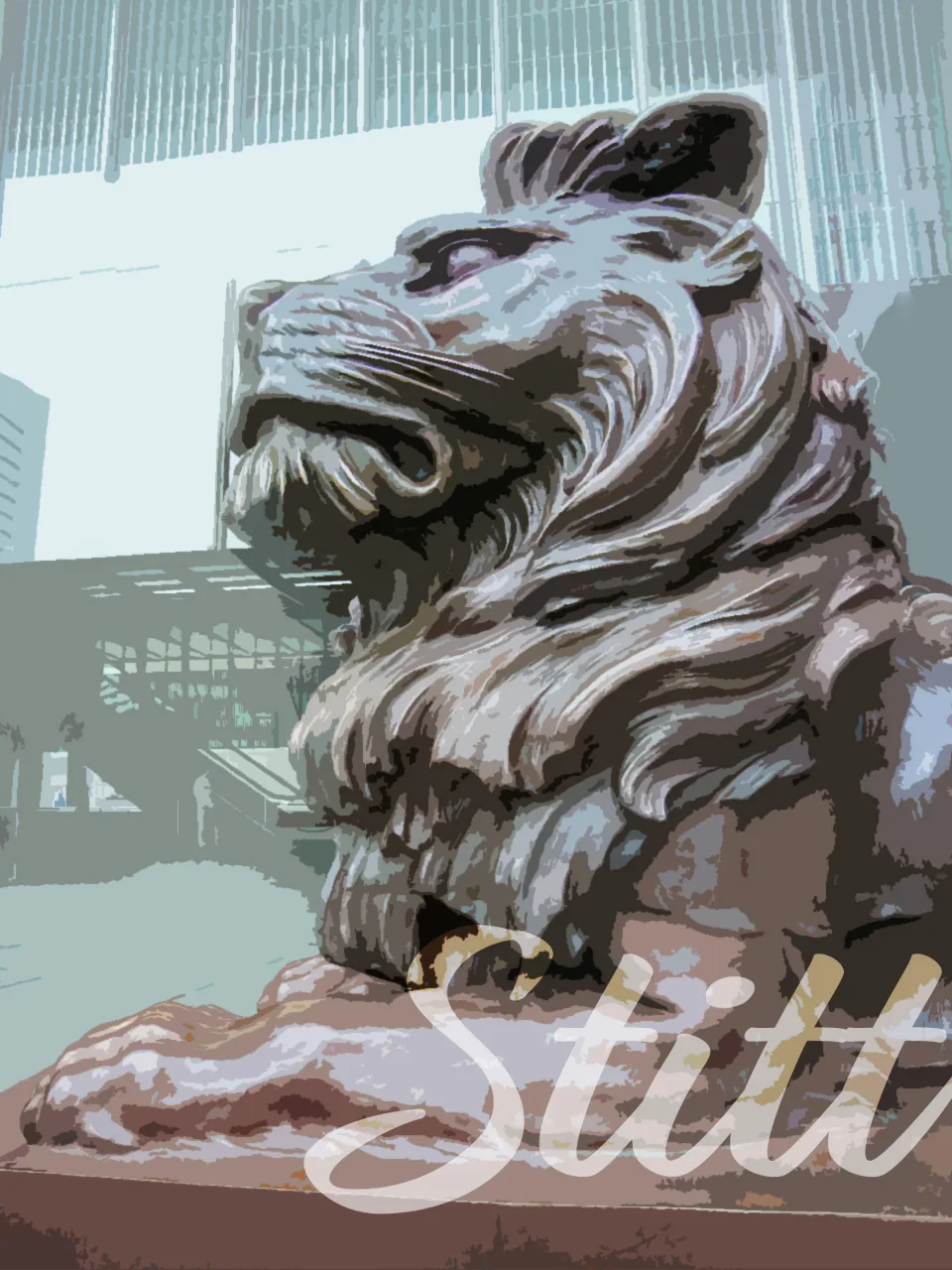
The two male bronze lions placed outside the main entrance of HSBC’s Hong Kong headquarters were in fact cast after the pair of bronze lions standing outside the HSBC building in Shanghai. During the war against Japan the lions were carried off to Osaka, narrowly escaping being melted down for war materiel. Recovered after the war, they were shipped back to Hong Kong in 1946 and returned to HSBC. In the 1980s, while the bank rebuilt its headquarters, the lions were moved temporarily to Statue Square, returning to their original site in 1985 once the new main building was complete. In late October 2020, after suffering damage in early 2020, the two bronze lions completed the first stage of restoration and went back on public display.
Of the two, the one on the left roaring with open mouth is Stephen; the one on the right, mouth closed, is Stitt — named after two well-known senior HSBC executives, Alexander G Stephen and Gordon H Stitt. Standing before the headquarters, the HSBC Lions reinforce the brand image that “the lions guard not only HSBC, but the city itself”. The HSBC lions also appear on the Hong Kong dollar banknotes the bank issues, and in the designs of its credit and ATM cards.
HSBC’s history on display
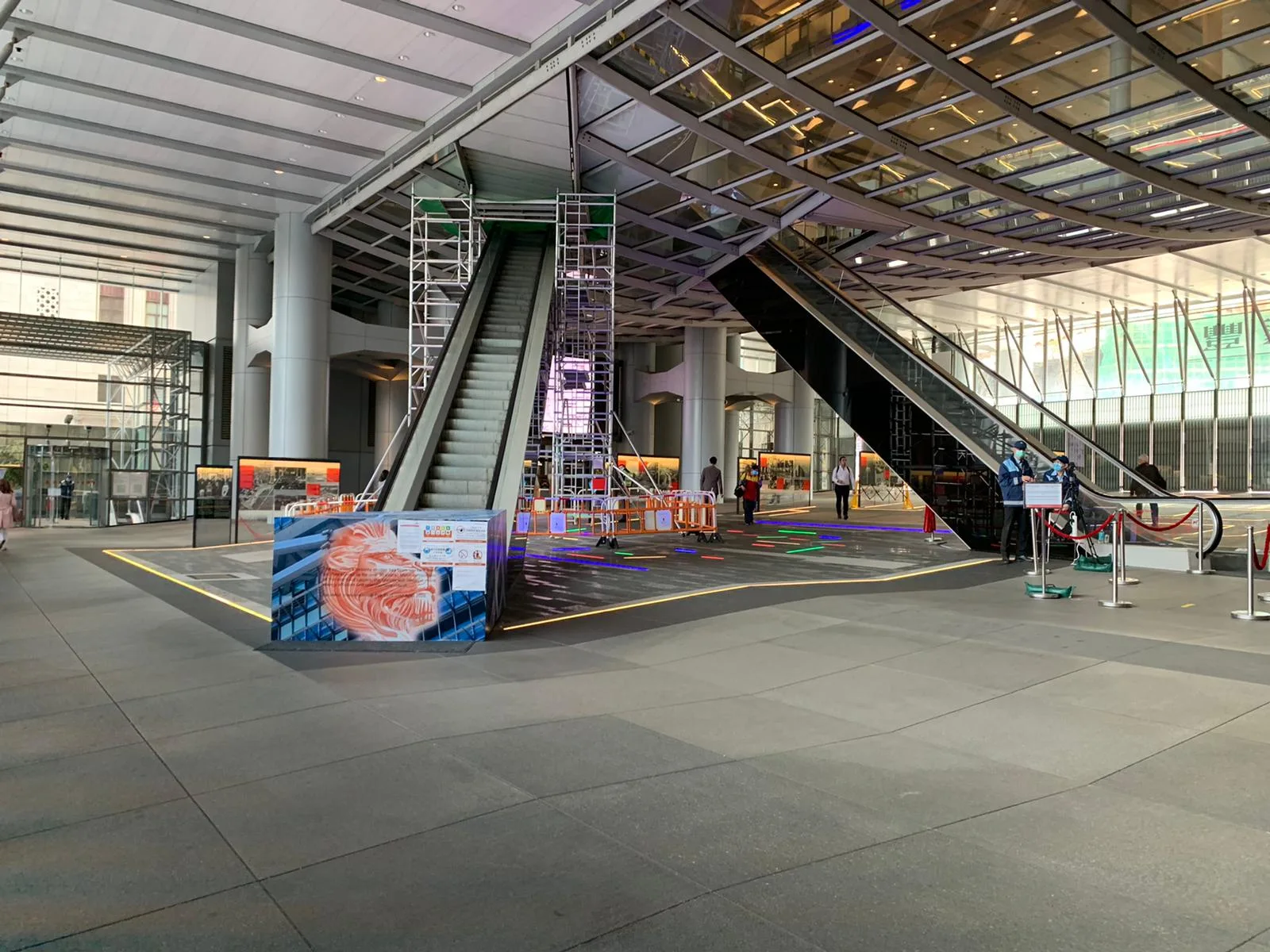
Anyone interested in experiencing HSBC’s history can visit the ground floor of the HSBC Main Building in Central to see the bronze lions in person and view display panels on the bank’s past; markers on the floor show the sites of the successive HSBC buildings through the eras, revealing at the same time how Central’s shoreline has been extended outwards.
Location: G/F, HSBC Main Building, 1 Queen’s Road Central, Central
Opening hours: 24 hours
Source:
https://www.hsbc.com/who-we-are/our-history/history-timeline
https://history.hsbc.com/collections
https://www.about.hsbc.com.hk/zh-hk/hsbc-in-hong-kong
hk01 【滙豐獅子】細說獅語 鎮守總行逾80年被破壞 二戰時險被熔 2020-01-02
滙聚豐采150年, published by HSBC
《滙豐集團 今昔史話》
HKMA Information Centre exhibition gallery
《點石成金: 打造香港金融中心的里程碑》
國際香港本傳 https://www.youtube.com/watch?v=T2KrfT7UjZc&t=0s
滙豐銀行總部 https://www.etnet.com.hk/mobile/tc/lifestyle/archive/timetraveller/71440
https://www.etnet.com.hk/www/tc/diva/art/feature/29104
https://www.facebook.com/tsewaii/posts/2895811157372116/
https://www.dezeen.com/2019/11/27/norman-foster-hsbc-building-hong-kong-bank/
Published in Aug and Updated in Dec 2020 by Hong Kong Brand Museum 香港品牌博物館