Ocean Park Hall
Hong Kong Ocean Park
Hong Kong people once pulled together to achieve something remarkable: they turned the “seahorse park” at Wong Chuk Hang
into one of Asia’s foremost theme parks. Ocean Park Hong Kong has been operating since 1977, becoming a collective memory for several generations of Hong Kong people and inspiring much local culture. The brand has survived several operating crises and, like Hong Kong’s own development, has faced plenty of highs and lows. Ocean Park has not only grown up alongside Hong Kong people; it has also witnessed how a once profoundly local international brand lived through rise and decline.
A homegrown Hong Kong brand that once touched the world
Touching the world, starting from home
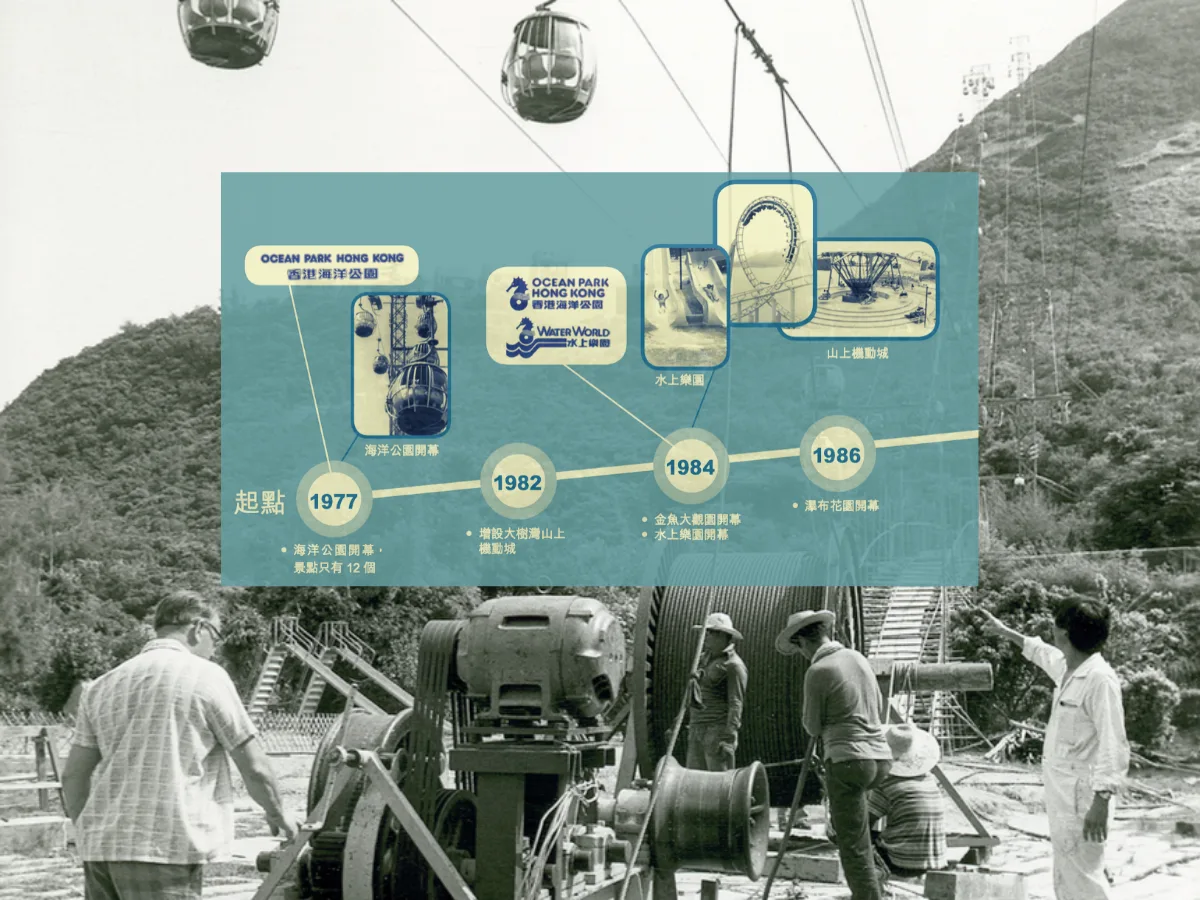
1977
Over the past few decades, Hong Kong has had its share of amusement parks — including the now-vanished Lai Yuen (荔園) amusement park, Tiger Balm Garden (虎豹別墅), Kai Tak Amusement Park (啟德遊樂場), the Ming Yuen (名園) pleasure grounds in North Point, and Foon Lok Shing (歡樂城) and the Ching Lung Water Park (青龍水上樂園) in Tai Wai. These parks carried the memories of Hong Kong people who grew up in different eras.
Of them all, only Ocean Park, it seems, became a world-class theme park.
In 1977, Ocean Park Hong Kong was formally established, funded by the Jockey Club on land granted free by the government. It cost HK$150 million to build in its early years, centred on a large seaside aquarium, and at the time it had only twelve attractions.
After Hong Kong’s return to China in 1997, Ocean Park was for a time shunned by visitors because of its ageing facilities. Hong Kong went through SARS in 2003, and then faced the Disneyland park that opened in 2005; yet through brilliant commercial and brand strategy, Ocean Park achieved eleven consecutive years of profit, won back the affection of Hong Kong people, and became one of the city’s best-loved brands.
Later, under China’s policy of opening up individual travel, the park welcomed huge numbers of mainland tourists, at one point driving attendance to new peaks — while at the same time a theme park once full of “Hong Kong character” gradually faded. With the anti-extradition bill movement of 2019 and the COVID-19 pandemic of 2020, the park was forced to close its doors; combined with the government’s influence over the park’s management, the brand faced an unprecedented crisis.
From a park
into a brand
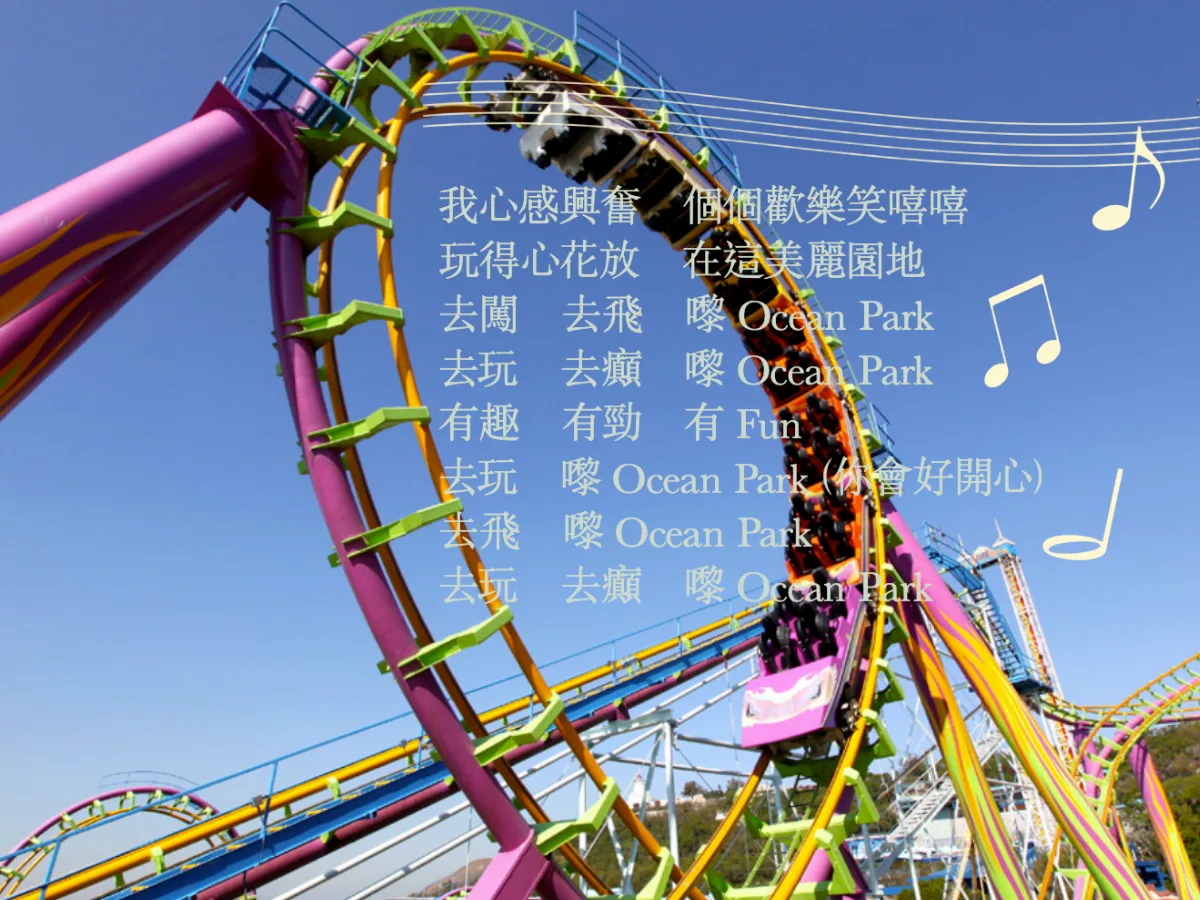
去玩 去癲 嚟 Ocean Park (“Come play, go wild — come to Ocean Park”)
In 1984, Ocean Park entered its “Come play, go wild — come to Ocean Park” era. The park’s second-phase development works, completed between 1982 and 1984, brought the various attractions at Tai Shue Wan and the thrill rides on the headland into service. From 1984, Ocean Park ran television adverts introducing its water park and thrill rides, all set to that jingle every household knew by heart.
In 1987, Ocean Park separated from the Jockey Club and became a self-financing, not-for-profit organisation. To keep growing, the park could no longer be merely an aquarium; it had to become a tourism and entertainment destination — and so began the era of building Ocean Park as a brand. To sharpen its appeal, the park opened the Middle Kingdom (集古村) heritage village, a shark aquarium and more thrill rides, with new attractions opening almost every year.
In 1989, Ocean Park recorded 2 million visitors for the first time. In the early 1990s, after the Middle Kingdom, the shark aquarium and more rides opened, attendance climbed higher still.
The first brush with closure
The Allan Zeman era
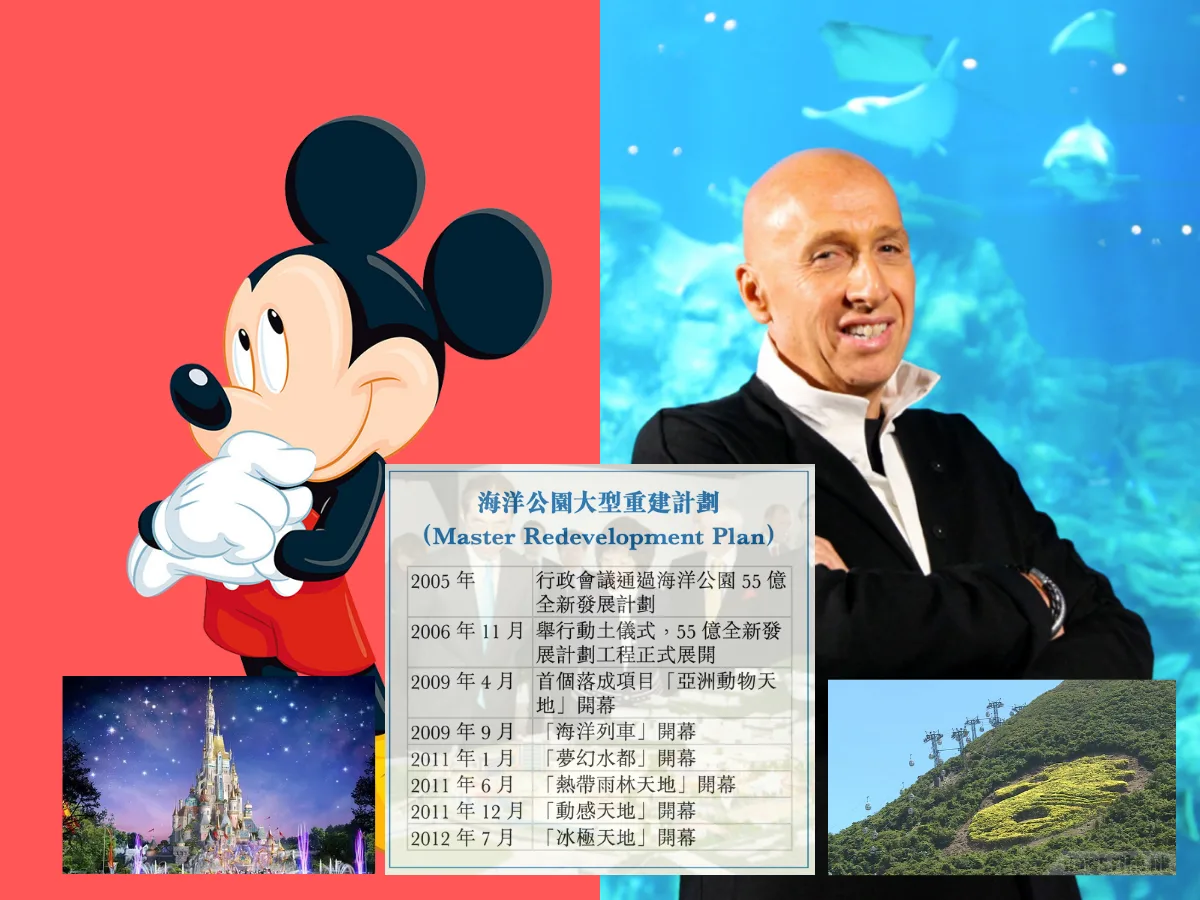
In 2004 the government appointed Allan Zeman — known as the father of Lan Kwai Fong, the nightlife district — as chairman of the Ocean Park board. He recalled in an interview with the programme 廣告101 (“Advertising 101”): “Around 2004, everyone at Ocean Park was anxious and pessimistic. Disneyland was under construction on Lantau, while the park faced ageing facilities and years of losses. The outlook was so uncertain that even the newly appointed advertising agency ‘sacked’ Ocean Park and defected to the Mouse. Staff feared the park would fold, and the Hong Kong government was deciding whether Ocean Park should carry on operating or shut its gates for good.”
Various options were floated at the time; because Ocean Park is built against a hillside, some even suggested relocating the entire park. But the park’s team believed this geographical weakness was also its strength: visitors could enjoy beautiful views of sea and mountains, and the cable car became a signature attraction.
To resolve the crisis, the park launched a HK$5.55 billion Master Redevelopment Plan (MRP) that successfully brought Ocean Park back to life; the sweeping rebuild lifted Ocean Park from “seahorse park” to world-class theme park.
As for the original seahorse logo that still stands on the hillside at Wong Chuk Hang, it had in fact already been replaced in 2000, before SARS, by the mascot Whiskers the sea lion (威威獅令).
Hong Kong people’s
Ocean Park
SARS in 2003 left the park in a state where, as they said, “no one would come even for free.” Between 2003 and 2014, Ocean Park undertook a series of reforms and succeeded in becoming “culturally relevant” — becoming Hong Kong people’s Ocean Park. During that decade of change, Ocean Park won visitors’ affection because it was “made in Hong Kong.”
Ocean Park became Hong Kong people’s favourite brand in those years because it rolled out a series of local promotions inseparable from Hong Kong culture, along with active animal conservation and education work; Ocean Park became a young, creative brand.
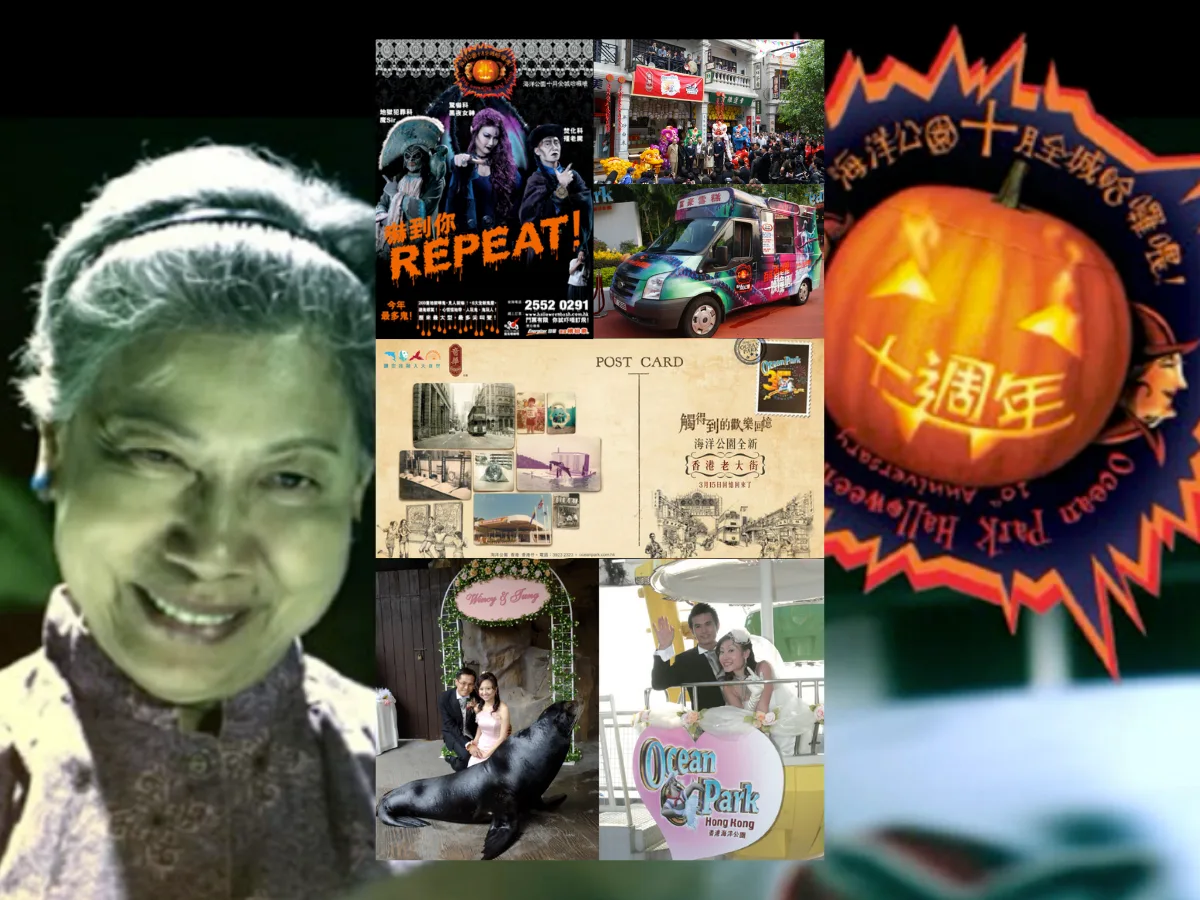
One major achievement was unquestionably sweeping Halloween culture across the whole of Hong Kong, making Ocean Park’s October “Halloween Bash” (十月全城哈囉喂) one of the largest Halloween events in the world. The Halloween Bash grew into a citywide sensation, expanding year after year until it became one of Ocean Park’s annual set pieces.
Over the years, Ocean Park successfully localised Halloween, deliberately weaving in a wealth of local elements to sharpen the programme’s appeal. In time, the Halloween Bash fused Hong Kong local culture with Halloween culture: the theme might be a foreign festival, but the haunted houses drew on a rich store of local cultural icons, history, ghost stories and the collective experiences of Hong Kong people, so local visitors threw themselves into it. The Halloween Bash forged a Halloween culture rich in Hong Kong character.
In 2012, Ocean Park’s reforms brought it the industry’s highest global honour: the Applause Award for the world’s best theme park. The award is judged by a panel of professionals from the international theme park and amusement park industry. After years of effort, Ocean Park Hong Kong had won the world’s recognition — and many Hong Kong people shared in the pride.
Did Hong Kong people change?
After the climb to the summit, in June 2014 the government abruptly announced that Allan Zeman would not be reappointed chairman of the Ocean Park board, and that deputy chairman Leo Kung Lin-cheng would take over. In 2020, the government appointed Lau Ming-wai of Chinese Estates Group as chairman.
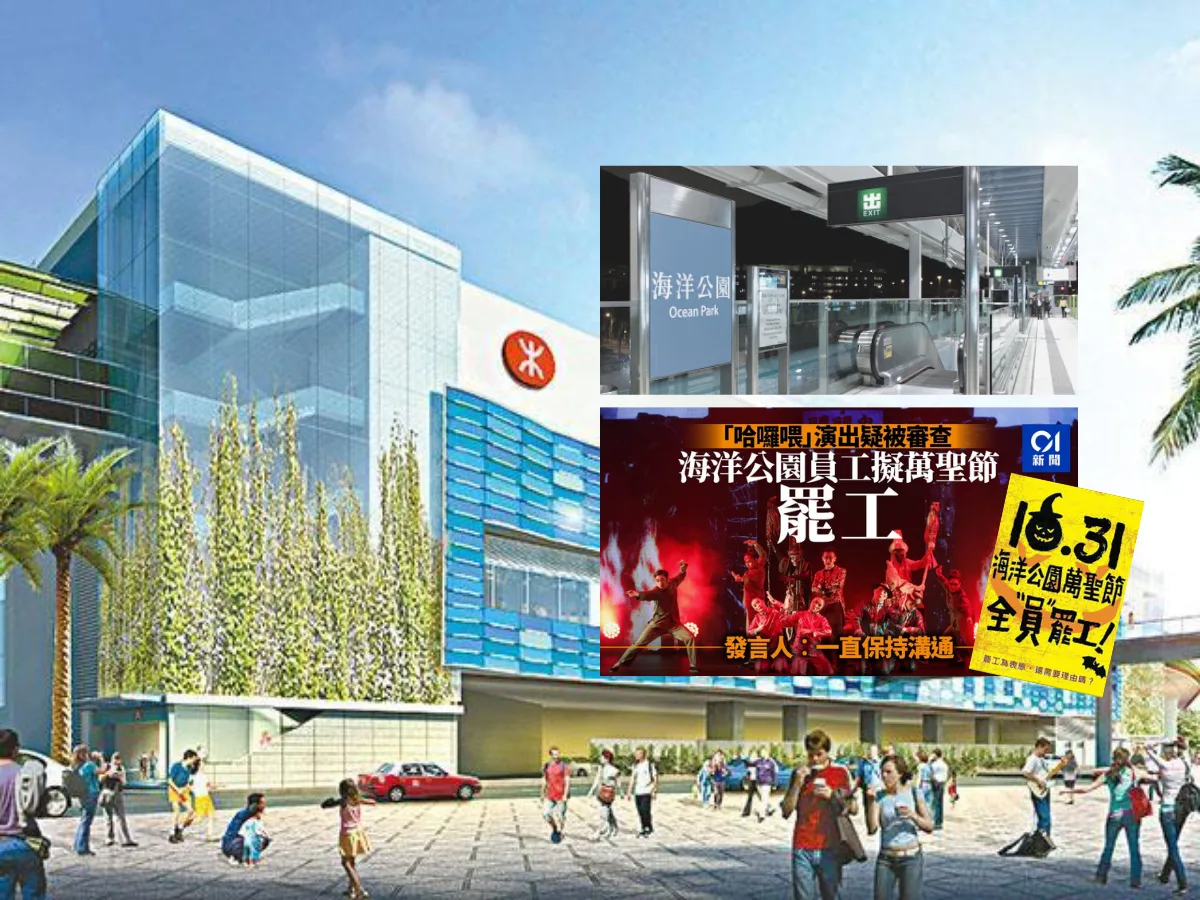
In 2016, the MTR South Island Line’s Ocean Park station opened; yet attendance had been falling steadily since 2014. Commentators noted that the rise in Hong Kong people taking the MTR to Ocean Park fell far short of the drop in mainland tourists arriving by tour coach, and losses mounted year after year.
At the same time, the strategy of depending on mainland tourists let a theme park once full of “Hong Kong character” gradually fade. During the anti-extradition bill movement of 2019, Ocean Park’s Halloween Bash was dragged into controversy, and in the end the “Halloween Fest” (哈囉喂全園祭) event on 31 October was cancelled. From then on, Hong Kong people’s feelings towards this long-loved Hong Kong brand changed.
The name remains —
the substance stripped away?
The COVID-19 pandemic from 2020 battered the tourism industry, and the brand faced its gravest closure crisis yet.
In early 2021, the government held a press conference announcing that Ocean Park would undergo a sweeping transformation. Chairman Lau Ming-wai stated plainly that Ocean Park would no longer be a theme park, and would instead concentrate on education and conservation work.
The plan drew no small amount of rueful public comment. A Hong Kong theme park brand that had once been the pride of Hong Kong people and won countless international awards was all but discarded in the development plan.
Even the government’s press-conference slides omitted the logo representing the Ocean Park brand. Before the name “Ocean Park” disappears, this one-time best theme park in the world has already become a collective memory that Hong Kong people find themselves mourning.
Sources:
《愛上香港 – 海洋公園品牌策略與marketing策劃》 (Falling in Love with Hong Kong: Ocean Park’s Brand Strategy and Marketing Planning) (2012)吳博林
【海洋公園危機】海洋公園曾連續11年賺錢 盛智文是如何做到? (The Ocean Park Crisis: Eleven Straight Profitable Years — How Did Allan Zeman Do It?) (2020)經濟日報 2020/05/14
https://www.news.gov.hk/chi/2021/01/20210118/20210118_145619_963.html
https://www.thinkhk.com/article/2021-01/18/46446.html
有線新聞直播記者會 2021/01/18 (i-CABLE News live press-conference broadcast, 18 January 2021)
Published in Jan 2021 by Hong Kong Brand Museum 香港品牌博物館