Vitasoy Hall
Vitasoy International Holdings Limited
Vitasoy is regarded as the world’s first soya milk (豆奶) product to be successfully manufactured at scale and sold at a low price. It was created before the Second World War to address the poor health of the general public, and after the war drew the attention of the United Nations Children’s Fund (UNICEF). Vitasoy had the soya milk market to itself for nearly 40 years; not until 1982 did the Hi-C (陽光) soya milk made by the Coca-Cola company appear, and it never posed much of a threat.
Vitasoy’s founder did not stop at working out how to make soya milk: he developed his own sterilisation methods to extend the shelf life of the bottled drink, and devised the “hot Vitasoy” cabinet to meet market demand. Members of the Lo family who once worked at Vitasoy went on to create Hong Kong’s homegrown fast-food culture: the helms of Café de Coral (大家樂) and Fairwood (大快活), like Vitasoy’s, are held by members of the Lo family to this day.
Vitasoy the
Hong Kong inventor
Opening opposite
Dairy Farm
In Hong Kong, “Vitasoy” has long been the very word for soya milk. A comfortingly warm bottle of Vitasoy at recess on a winter’s day is a collective memory for generations of Hong Kong people. The “Vita” of 維他 comes from the Latin word for life, and echoes the vitamins the human body cannot do without. The meaning of “Vita” in fact reflects the hope of founder Lo Kwee-seong (羅桂祥) that the soya bean — cheap yet high in nutritional value — could give the toiling masses of pre-war Hong Kong, so many of them in poor health, a health-improving substitute for milk.
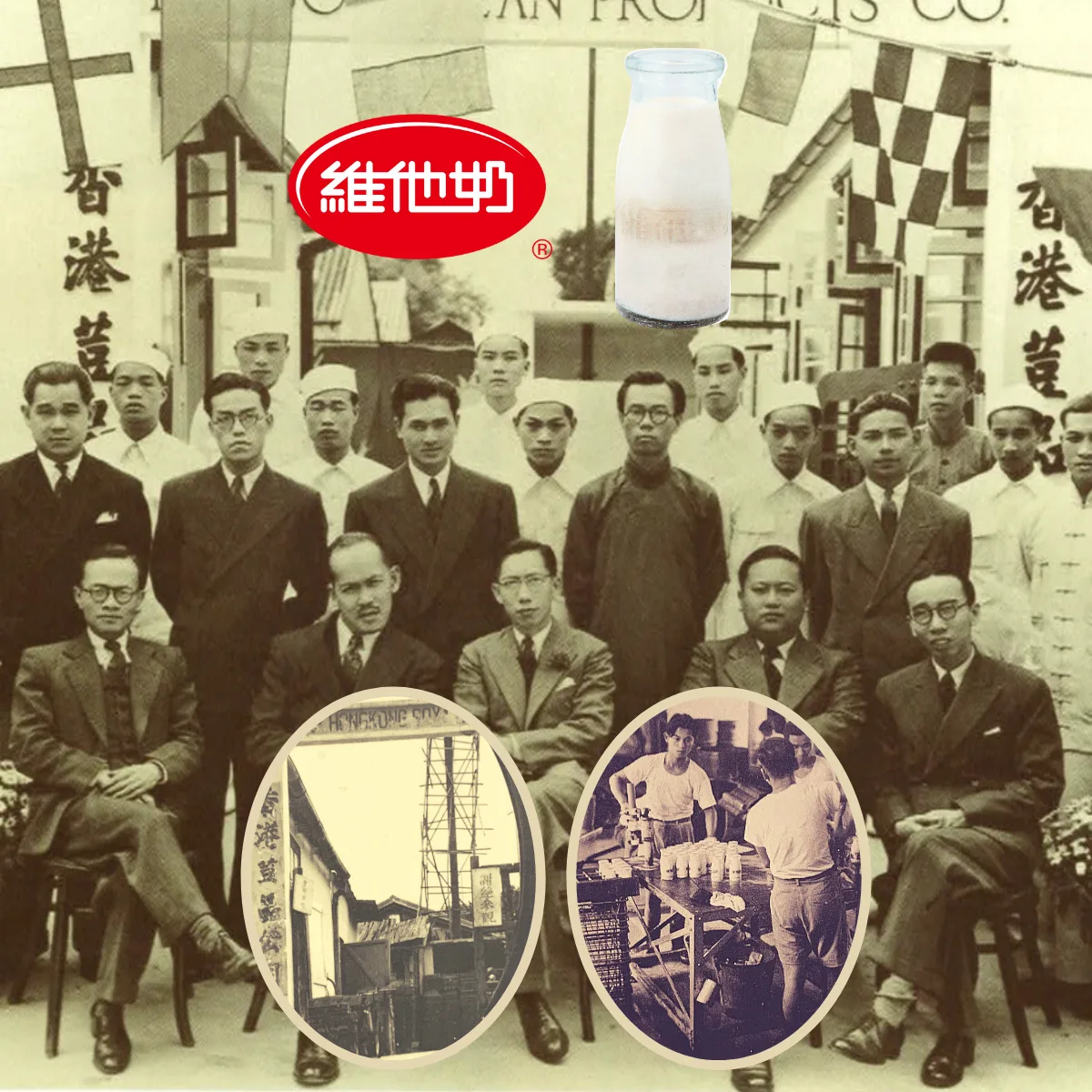
Lo’s proposal was at first given little weight by the government, but in 1938 the newly appointed Director of Medical Services, Selwyn-Clarke, looked on the Vitasoy concept rather differently. And so, under the name of The Hong Kong Soya Bean Products Company (香港荳品公司), Vitasoy finally opened for business in 1940 in Causeway Bay, directly opposite the then grand premises of Dairy Farm. The fortunes of Vitasoy and Dairy Farm diverged sharply: by the 1980s, the Vitasoy company had become not only Hong Kong’s largest producer of milk drinks but also a supplier of milk for the dairy products of the Nestlé milk company. (For the story of Dairy Farm, see the Dairy Farm Hall.)
As for why Vitasoy’s English name today is Vitasoy and not Vita Milk — the name Vita Milk lasted only three months before the government objected, on the grounds that “milk” could only mean the milk of animals. Vitasoy was accordingly renamed “Sunspot”, and in 1953 became “Vitasoy” — the name used ever since, and marketed around the world.
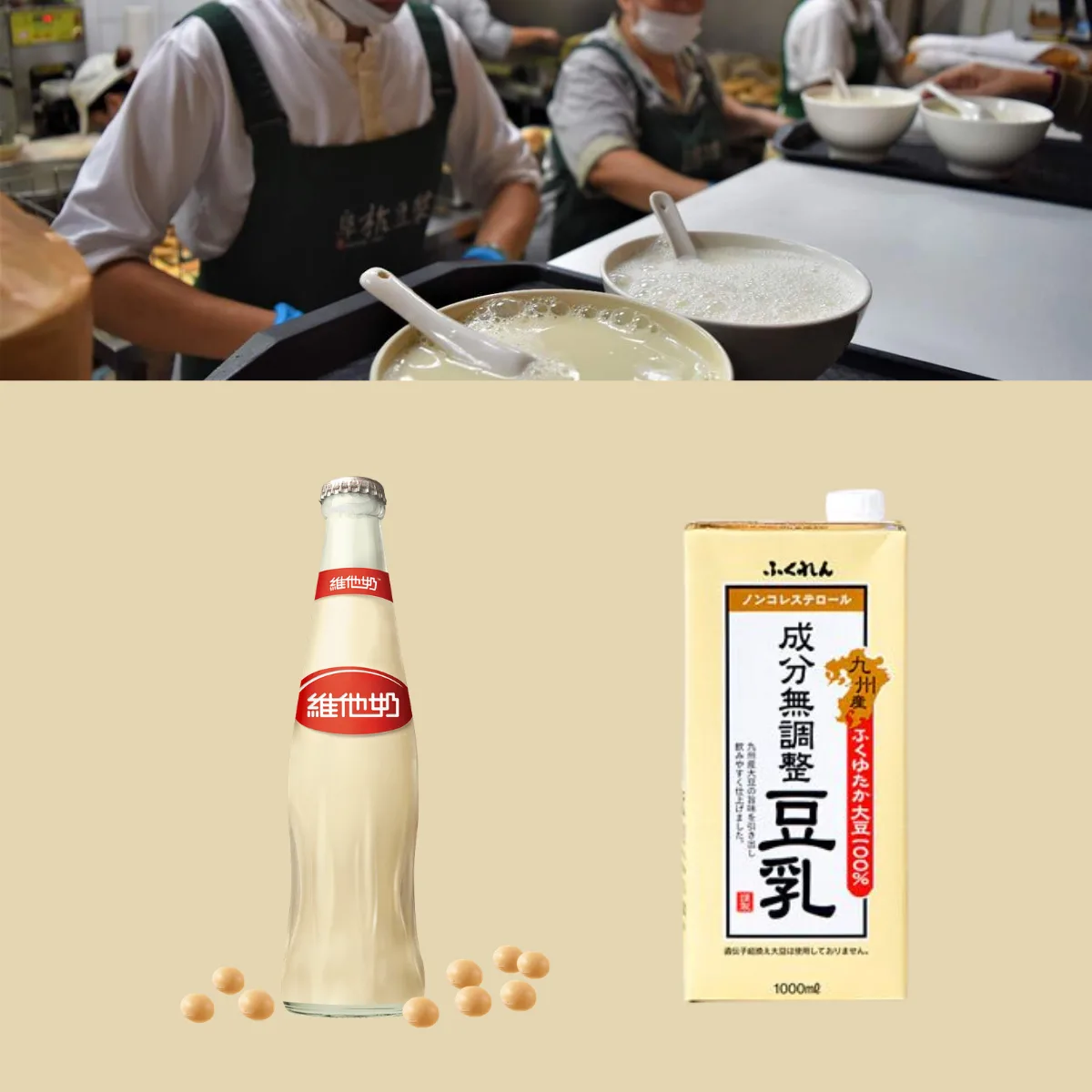
Soya milk (豆奶) vs dau zoeng (豆漿) vs tōnyū (豆乳)
Vitasoy sold poorly at first. One reason was that its sales method copied Dairy Farm’s daily deliveries to well-to-do subscribing households and failed to attract customers; another was the older generation’s mistaken belief that Vitasoy was the same as traditional dau zoeng (豆漿, Chinese-style soya milk).
Dau zoeng was everyday fare for northerners, but southerners regarded it as hon leung (寒涼, “cooling” in Chinese dietary belief) — a drink that could make you ill. The reason is that traditional dau zoeng is made by soaking soya beans and then boiling them, giving a rich bean flavour; but if the beans are not cooked for long enough, components of the raw bean such as saponin are not broken down, producing stomach upsets — which folk usage labelled “cooling”.
It is said that Lo Kwee-seong himself was once earnestly urged by an old woman to stop selling Vitasoy, because doing people such harm was mou yam gung (無陰功) — downright wicked. Vitasoy, however, was made by high-temperature steam cooking, and so suffered none of dau zoeng’s “cooling” ills. But as a new product concept, Vitasoy could hardly change the public’s traditional understanding in a short time.
With Japanese products popular in Hong Kong in recent years, 豆乳 (tōnyū) — the Japanese term, likewise meaning a drink made from soya beans — has entered the picture. Media reports have explained that unadjusted tōnyū resembles unsweetened dau zoeng, an additive-free soya-bean drink with a stronger bean taste, while adjusted tōnyū is more like Vitasoy-style soya milk, flavoured to go down more easily.
Vitasoy at school
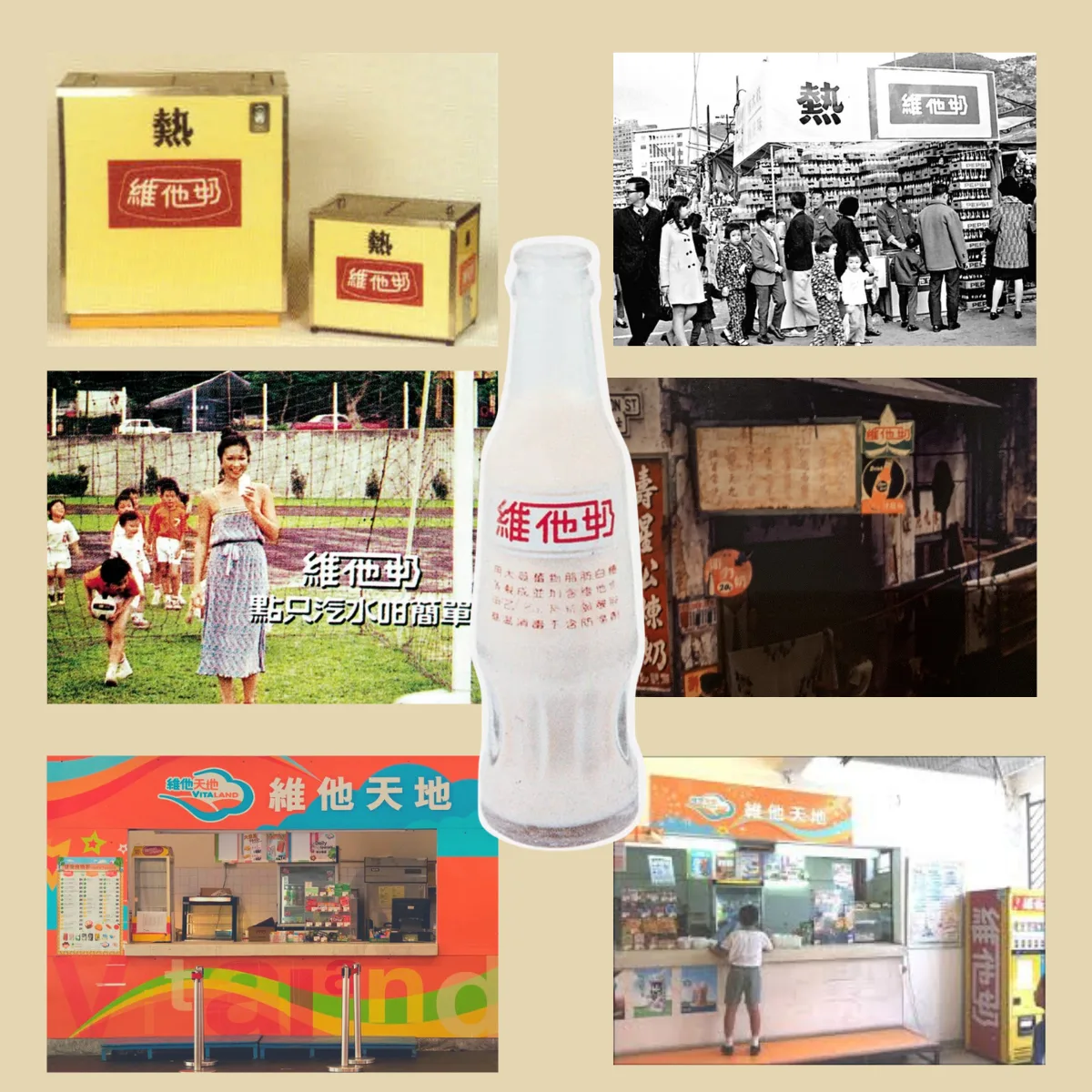
After the Second World War, almost every school sold Vitasoy. Besides its low price, one reason was that the government had used a United Nations subsidy for supplying milk to schoolchildren to buy Vitasoy for local pupils, which proved excellent publicity. Lo Kwee-seong’s faith in Vitasoy’s nutritional value was likewise the driving force behind its energetic cultivation of school sales.
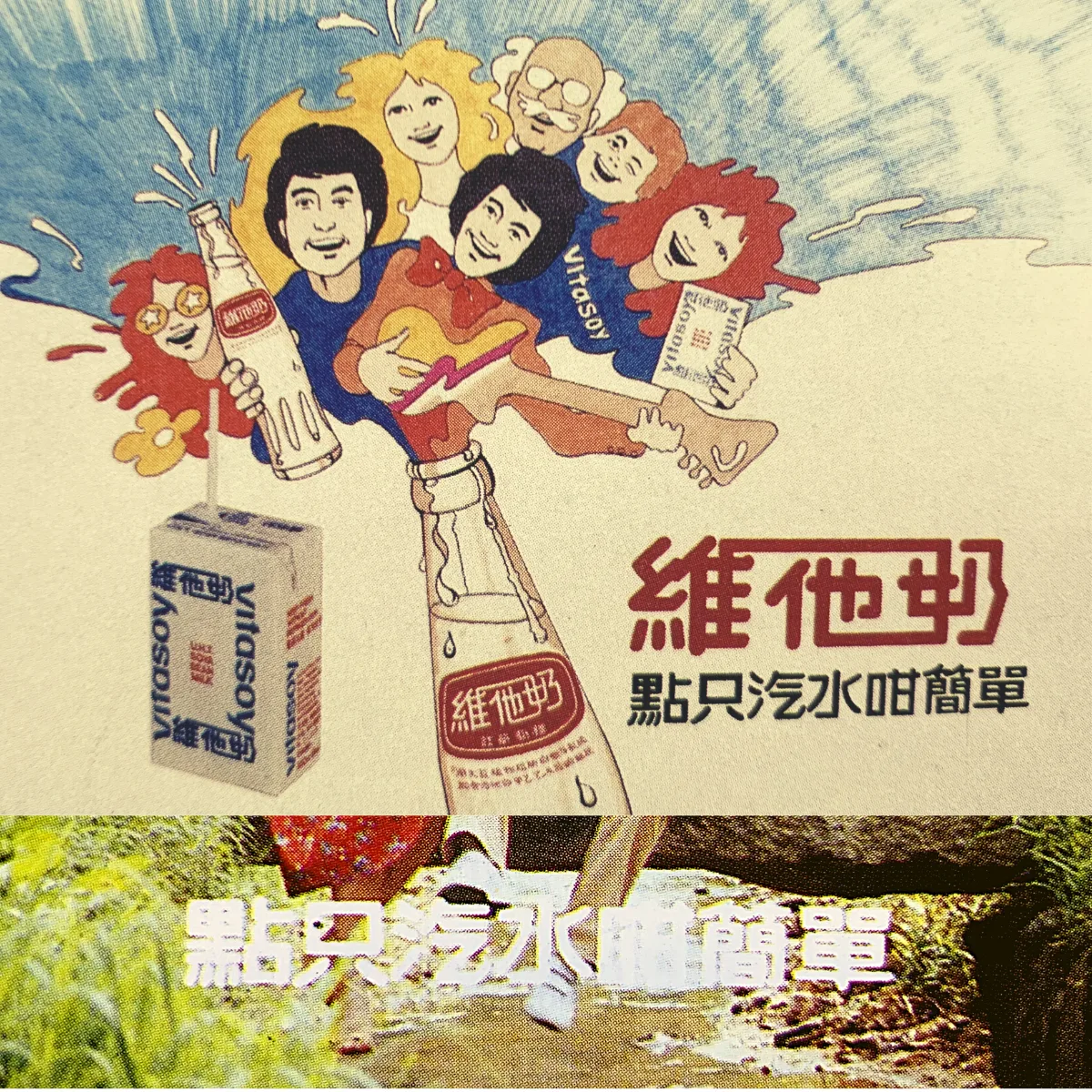
In the 1970s Vitasoy had a classic advertising slogan: 點只汽水咁簡單 (“Not as simple as a soft drink”). In fact, as early as the post-war years Vitasoy had shed the milk-style delivery model and switched to selling the soft-drink way, at si do (士多, corner shops — from the English word “store”) and similar outlets. As it happened, Watsons soft drinks, then the biggest name, could not keep up with demand, and Vitasoy was thus able to move into the soft-drink sales points, especially those near schools. More important still, Vitasoy developed its own way of producing soya milk in soft-drink form: once sterilised it kept for half a year and did not have to be cleared daily — the turning point in Vitasoy’s development.
During the Japanese occupation of Hong Kong, Lo Kwee-seong’s family took refuge in northern Guangdong, where they ran the “Vita dining car” (維他餐卡), serving nutritious dau zoeng, dim sum and other food to the teachers and students of the Pui Ching, Pui Ying, Pooi To and True Light schools, who had fled to the region to continue their studies after Guangzhou was occupied. This is why Vitasoy has also placed such weight on bringing nutritious soya milk to school campuses in Hong Kong.
Since 1991, Vitasoy has run tuck shops in primary and secondary schools under the Vitaland (維他天地) name, along with a lunch-ordering service.
Eu Yan Sang・
Café de Coral・
Fairwood
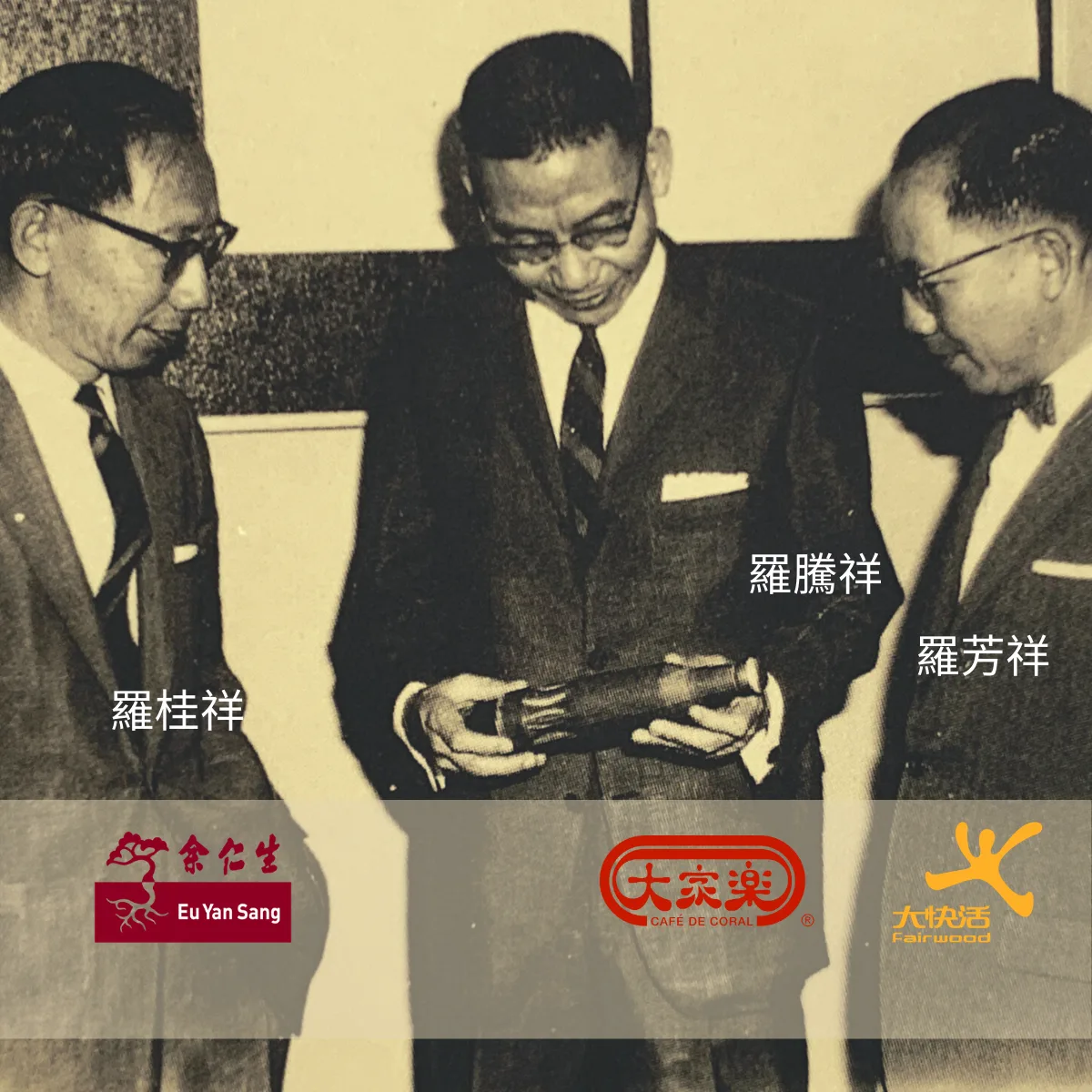
When Vitasoy first opened in 1940, founder Lo Kwee-seong worked on it only part-time; his day job was working for Eu Tong Sen, the big boss of Eu Yan Sang (余仁生). The two were on good terms — into the 1950s and 60s, Lo would still borrow Eu Tong Sen’s Tai Po villa, Sirmio, for residential staff training.
Day-to-day production and sales, meanwhile, were handled by his younger brother Lo Fong-seong (羅芳祥), ninth-born in the family. Lo Fong-seong was the later founder of Fairwood.
In 1953, once Vitasoy had solved its sterilisation problems and sales multiplied, Lo Kwee-seong invited his eighth-born younger brother Lo Tang-seong (羅騰祥), who had studied aircraft engineering, to join Vitasoy, where he improved many production techniques. Lo Tang-seong was the later founder of Café de Coral.
In their early days, both Café de Coral and Fairwood served “Vita soft drinks” rather than the more popular Coca-Cola — the founders’ family ties may well explain why.
Vitasoy beyond Hong Kong
In 1964, amid food shortages in poor countries, Lo Kwee-seong was invited to an international conference in Tokyo to speak on his experience of cheaply producing protein-rich soya milk. Afterwards, Nestlé of Switzerland, Unilever of Europe, General Foods of the United States and other companies approached Vitasoy about jointly developing foreign markets. Vitasoy ultimately partnered with the Monsanto company, but in the end the new markets could not be opened up.
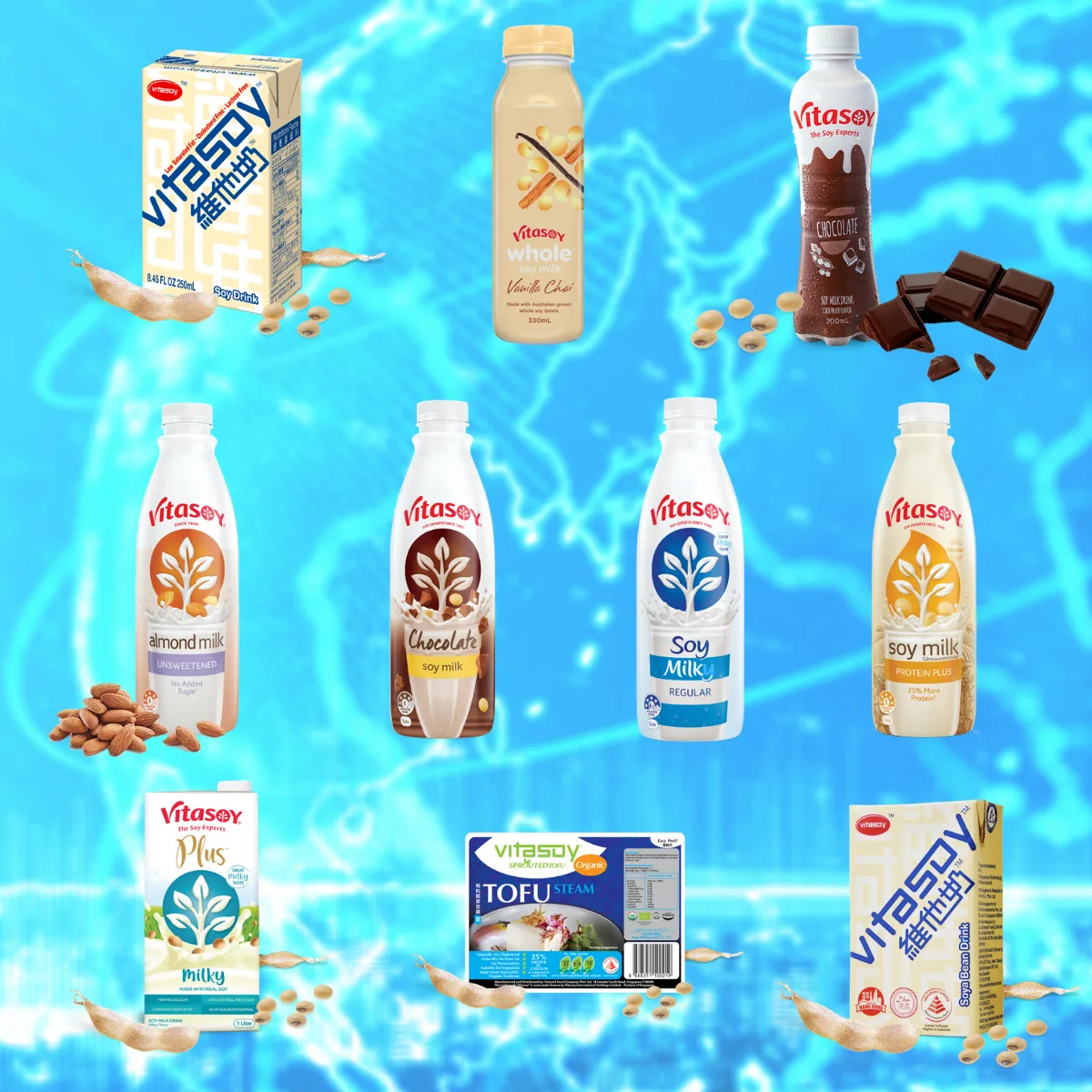
In 1975, Vitasoy introduced paper-carton packaging, which cut transport costs and did away with the on zeon (按樽, returnable-bottle deposit) arrangement — and so became the opening for export overseas. By the early 1980s, Vitasoy was on sale in the Chinatowns of Britain, the United States, Australia and Canada. Today the Vitasoy group’s products go well beyond soya milk; besides Hong Kong it has plants in mainland China, Australia and Singapore, and its Hong Kong-made products are exported to many countries around the world.
So is Vitasoy
a soft drink or not?
Vitasoy has described this fizz-free soya milk as a 汽水 (hei seoi, “soft drink”) at every level: in the advertising slogan 點只汽水咁簡單, in naming the department that produced Vitasoy the “soft drinks department”, and even throughout 厚生與創業 : 維他奶 (一九四零至一九九零), the book the Vitasoy company itself published in 1990, which describes Vitasoy as a 汽水.
Judging from the slogan created in 1974 by the advertising agency Young & Rubicam (Y&R) — the original English read “Not as simple as a soft drink”, with the Chinese finally fixed as 點只汽水咁簡單 — when the Vitasoy company said 汽水, it may all along have meant “soft drink”: at the time, a general term for any chilled non-alcoholic drink, including fruit punch, tea, fruit juice and lemonade, rather than what most Hong Kong people now take 汽水 to mean — a carbonated drink with “fizz”, such as cola or soda water. By that logic, soya milk too counts as a soft drink — that is, a kind of 汽水.
Visiting the Vitasoy plant
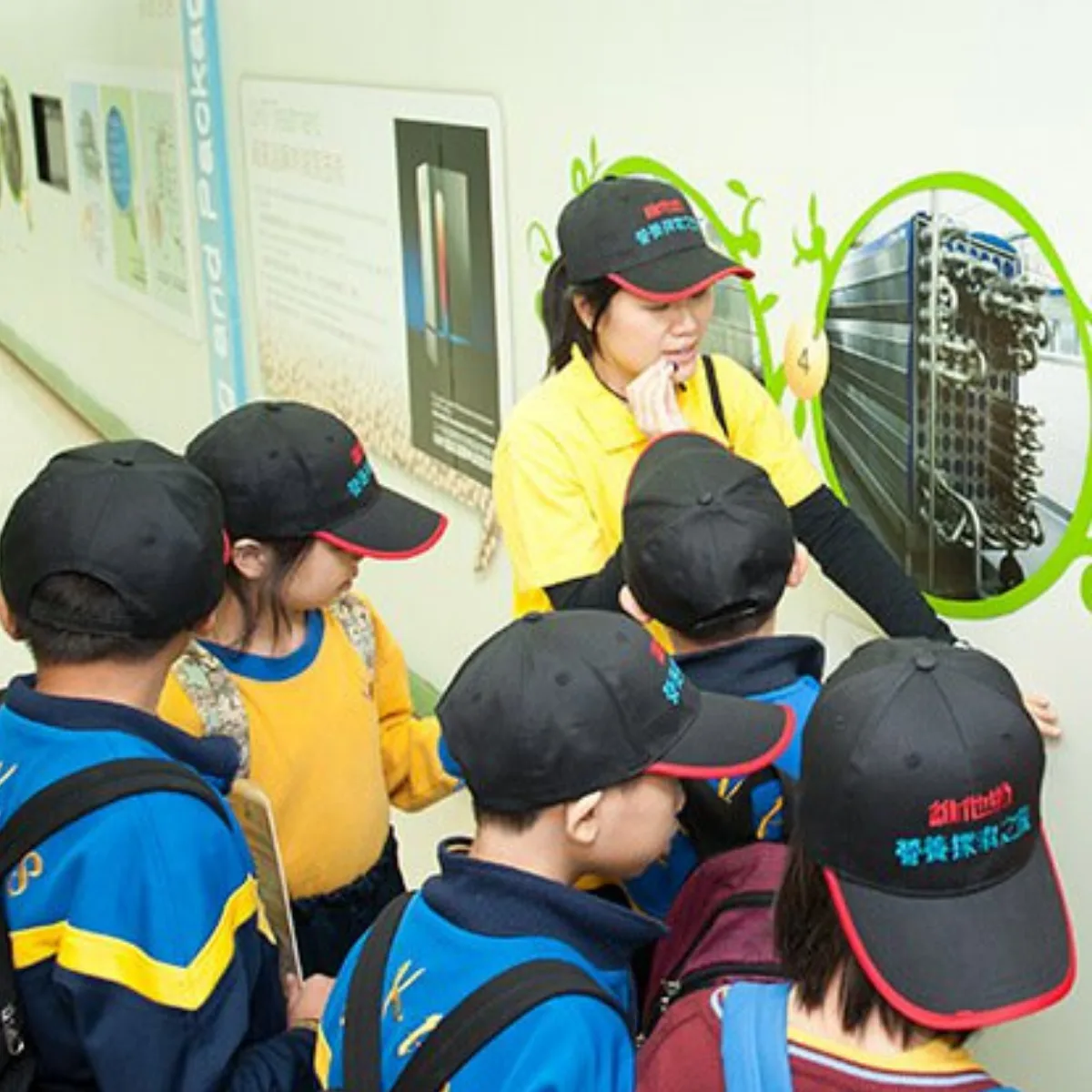
Vitasoy’s website notes that during the summer holidays each year, it accepts applications from groups to visit the Vitasoy plant. Visits include a tour of the factory and an introduction to the Vitasoy story. Those interested in learning more of Vitasoy’s history can apply online.
Address: 1 Kin Wong Street, Tuen Mun, New Territories, Hong Kong
Eligibility: primary school pupils aged 6–12, arranged through schools or organisations; each group at least 30 and at most 50 people
Email: info@vitasoy.com
Website: https://www.vitavitasoy.com/tc/visit-vitasoy/
Sources:
https://hk.appledaily.com/local/20100309/PUTSSSABZTTU5FO2WLNFWM5PKI/
https://hk.appledaily.com/culture/20081021/7KIXV2I7F6IA3HXC5F45ALZRII/ [archived]
https://hk.on.cc/hk/bkn/cnt/lifestyle/20180817/bkn-20180817150039773-0817_00982_001.html
https://www.tounyu.jp/about/QA.html
https://www.ttv.com.tw/lohas/view/32078
厚生與創業 : 維他奶 (一九四零至一九九零)
蔡寶瓊
香港 : 香港荳品有限公司 1990
太古之道 : 太古在華一百五十年
鍾寶賢著
香港第一版 香港 : 三聯書店 香港有限公司 2016
「香港印象」展覽 @ 香港中文大學文物館
Published in Oct 2020 by Hong Kong Brand Museum 香港品牌博物館