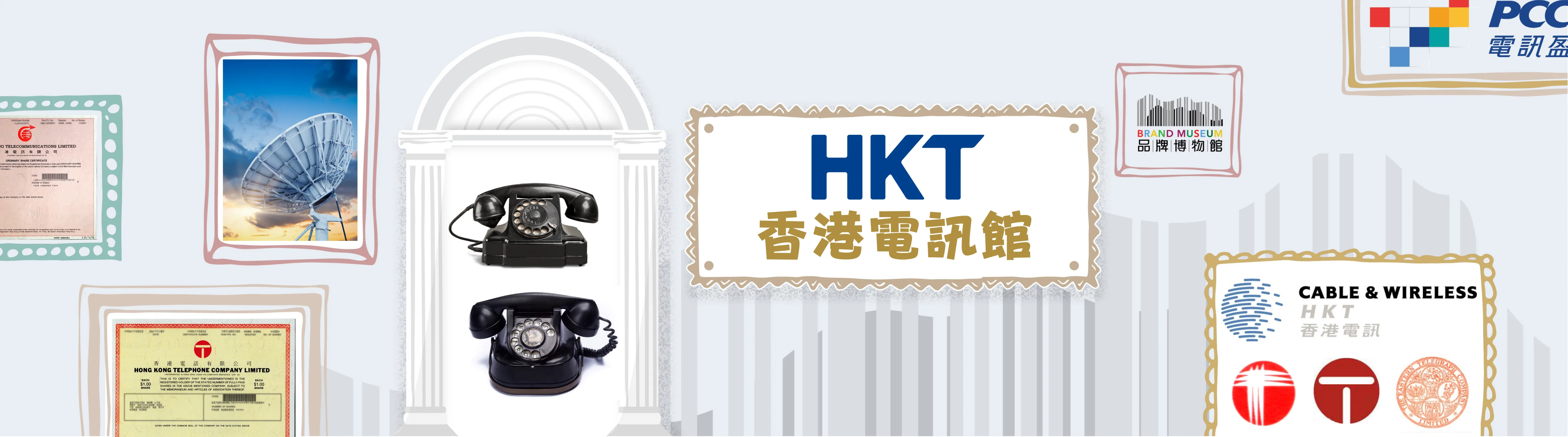
Hong Kong Telecom Hall
Hong Kong Telecom Limited
In Hong Kong’s colonial era, telecommunications infrastructure and services were controlled by the British government. Only in the 1980s, when mobile telephone technology arrived, and in the 1990s, as Britain prepared to hand Hong Kong back to China, did the industry change beyond recognition. In an age of fierce competition, telecom brands rose and fell, and through dramatic twists of acquisition, merger and reinvention, the single brand “Hong Kong Telecom” has gone through a thousand transformations.
Hong Kong Telecom
and
Hong Kong’s Telecommunications History
The Ancestor of Hong Kong Telecommunications
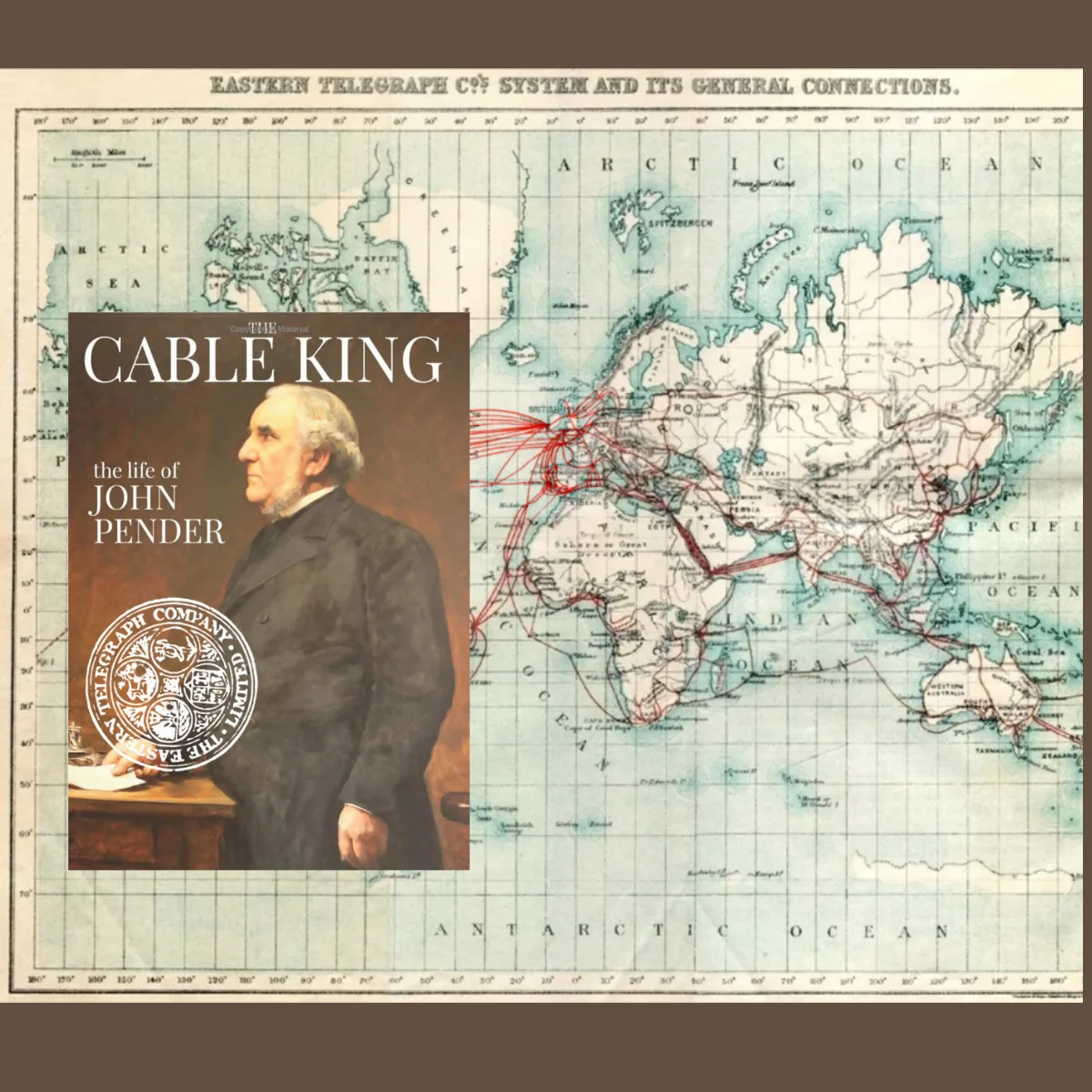
Britain’s Cable & Wireless (大東電報局)
In 1872, the British businessman John Pender merged several companies then operating international telegraph services over submarine cables to form the Eastern Telegraph Company (known in Chinese as 大東電報局, the forerunner of Cable & Wireless) — the world’s first international telegraph company, and the largest company in operation anywhere at the time.
Yet a year before its founding, on 1 April 1871, Hong Kong’s first submarine telegraph cable had already come ashore at Telegraph Bay (鋼線灣), near today’s Wah Fu Estate, connecting to Shanghai. This first submarine telegraph line in East Asia was laid by Hong Kong’s earliest telegraph operator, the Danish Great Northern Telegraph Company; at 9:45 am on 14 June the same year, the Governor received the first telegraph message transmitted from London.
The first telegraph line within Hong Kong itself was laid by Jardine Matheson, connecting its head office at East Point, Causeway Bay with its branch in Central.
In 1901 the Italian engineer Marconi succeeded in transmitting messages by wireless. In 1929 the Eastern Telegraph Company merged with Marconi’s Wireless Company and was renamed Imperial and International Communications, before taking the name Cable & Wireless in 1934, which it keeps to this day.
The Chinese name, however, never changed: under the direction of the British government, 大東電報局 — Cable & Wireless — dominated more than a century of Hong Kong’s telecommunications development.
The Telephone Age
Hong Kong Telephone & Cable & Wireless
Telephone service reached Hong Kong people in 1882, operated by the Oriental Telephone & Electric Company. Central became the earliest place in the Far East to use telephone service, its subscribers mainly stockbroking firms. Paul Chater (遮打), who had close ties with the government and with groups such as Jardines, is said to have been among the very first telephone users.
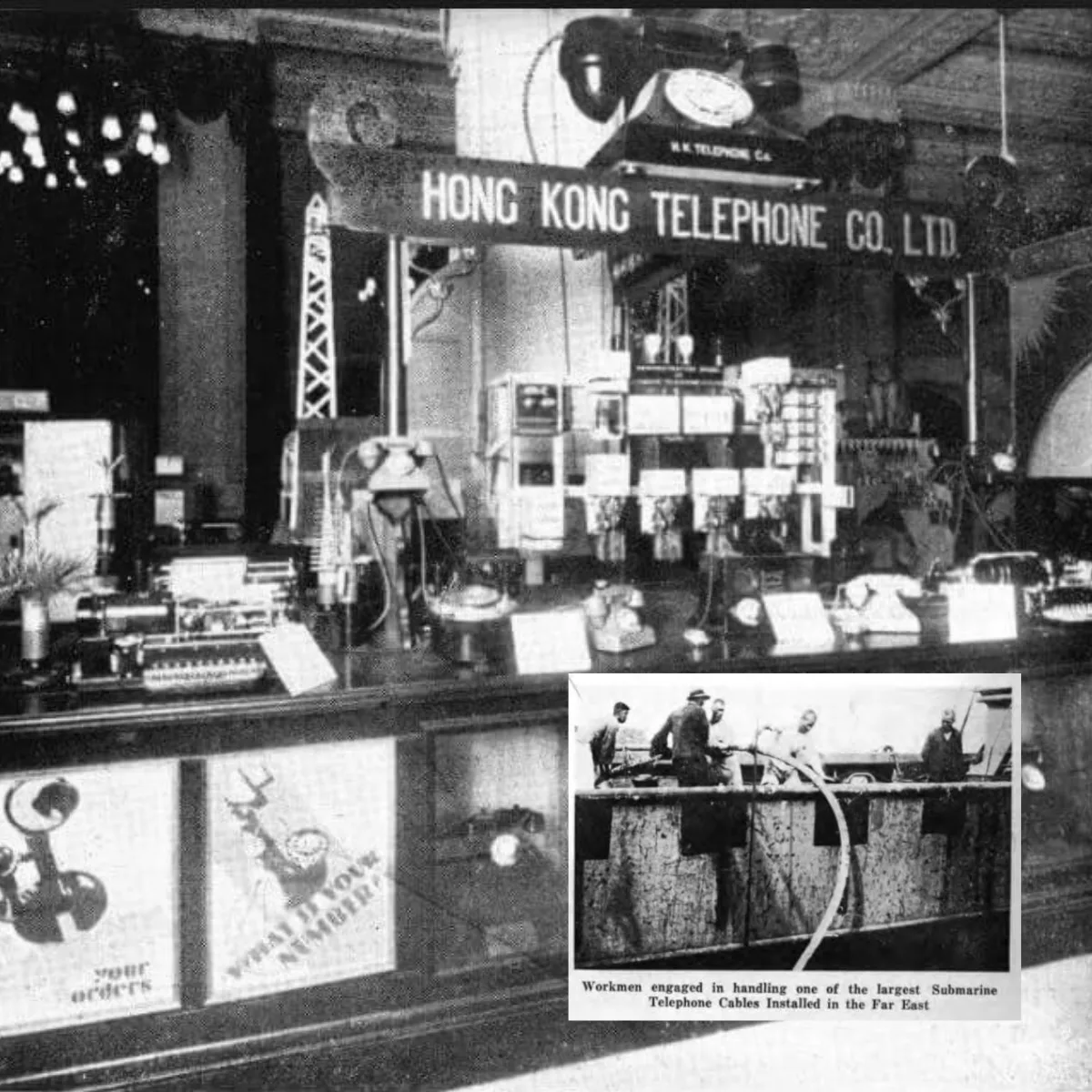
In 1925 the “Hong Kong Telephone Company” (香港電話公司) acquired the Oriental Telephone & Electric Company — by then renamed the China and Japan Telephone and Electric Company — and began operating Hong Kong’s local telephone service under an exclusive franchise, becoming the territory’s only telephone company.
Local telephone service in Hong Kong was thus a Hong Kong Telephone Company monopoly, and no other telephone company appeared until 1995.
As for Hong Kong’s overseas connections, these were taken over by Britain’s Cable & Wireless from 1936. The government formally granted it an exclusive franchise in 1962, so that anyone wanting to send a telegram or place a long-distance call abroad had no choice but to go to Cable & Wireless.
Hong Kong Telephone and CSL
Cable & Wireless (Hong Kong) acquires Hong Kong Telephone
In 1981 Cable & Wireless restructured and was formally incorporated in Hong Kong as “Cable and Wireless (Hong Kong) Limited” (大東電報局(香港)有限公司), with the British government as its largest shareholder. In 1983, Cable & Wireless (Hong Kong) acquired the “Hong Kong Telephone Company” from Hongkong Land, of the Jardines stable — from then on, Hong Kong’s communications both internal and external were entirely in Cable & Wireless hands.
The 1980s, however, were the dawn of the mobile telephone, and the government no longer granted Cable & Wireless the mobile communications business on an exclusive basis.
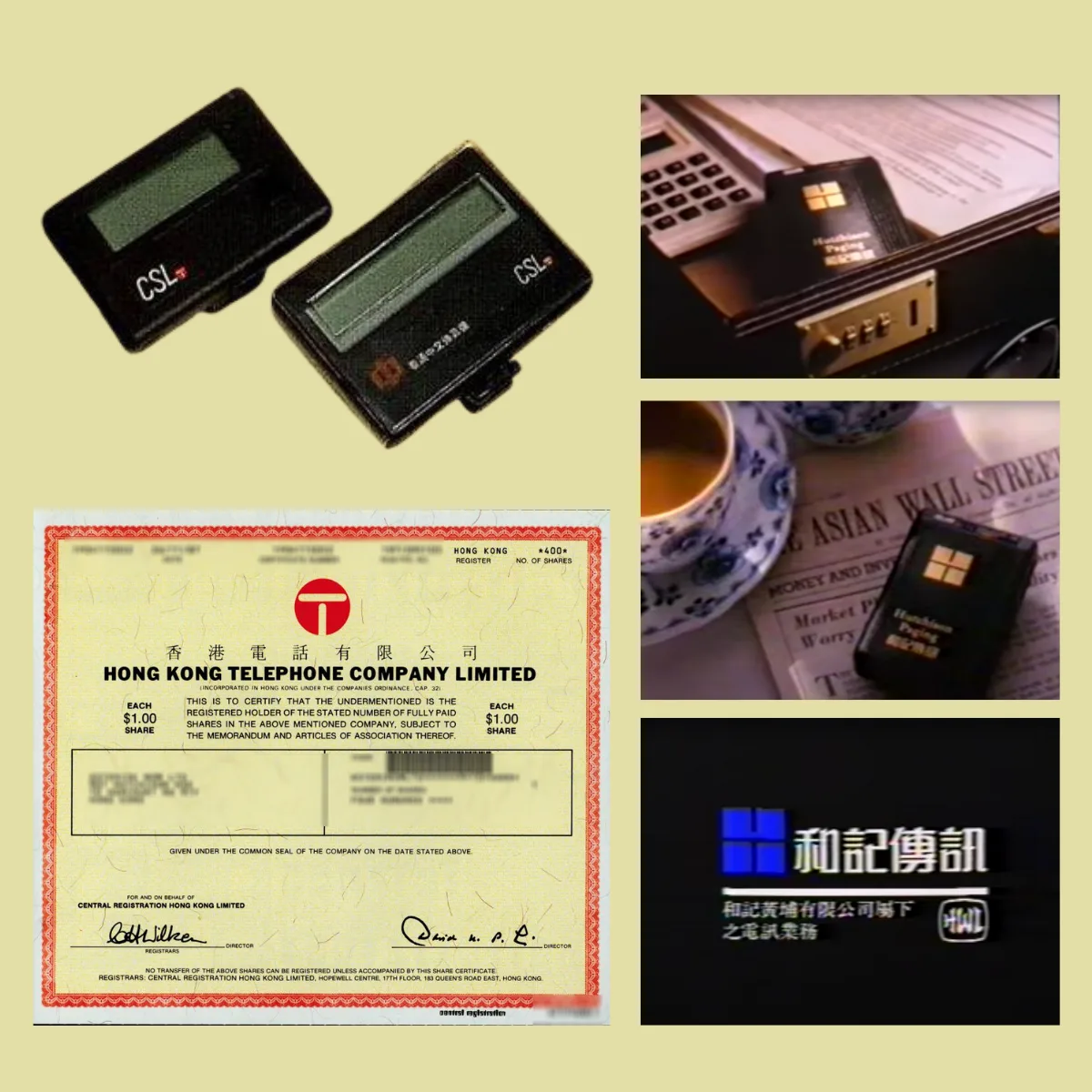
In 1984 the Hong Kong Telephone Company began operating mobile communications services as CSL (Communication Services Limited). The same year, a subsidiary of Hutchison Whampoa expanded into the pager and mobile phone market as “Hutchison Paging” (和記傳訊), whose television commercials are fondly remembered to this day.
From then on, starting with wireless communications, different telecom brands appeared in Hong Kong — no longer the exclusive preserve of “Cable & Wireless” and “Hong Kong Telephone”.
The Birth of a Giant
Hong Kong Telecom
In 1988, Cable & Wireless (Hong Kong) and the Hong Kong Telephone Company merged to form “Hong Kong Telecom” (香港電訊).
Two years later Hong Kong Telecom restructured — chiefly, analysts said, to face the opening of the market. With Hong Kong soon to be returned to China, Cable & Wireless (Hong Kong) was also renamed “Hong Kong Telecom International Limited” (香港國際電訊有限公司), shedding its British colouring.
The group’s non-franchised businesses — telecom products, business communications systems, mobile telephony and so on — were placed under “Hongkong Telecom CSL” to compete with other telecom brands in the open market, opening a new chapter for the industry.
In 1995 the government licensed three local fixed-network companies: Hutchison Whampoa’s “Hutchison Communications”, Wharf’s “New T&T Hong Kong” (香港新電訊) and New World Development’s “New World Telephone” (新世界電話). “Hong Kong Telecom” was no longer the only fixed-line telephone company.
In 1995 Hong Kong Telecom established the company IMS to develop interactive multimedia services, and in 1996 launched its internet service under the name “Netvigator” (網上行).
Throughout this period Hong Kong Telecom faced fierce competition across its various service markets — from Hutchison Paging, City Telecom (CTI, which later grew into “Hong Kong Broadband Network” 香港寬頻), SmarTone (數碼通) and others.
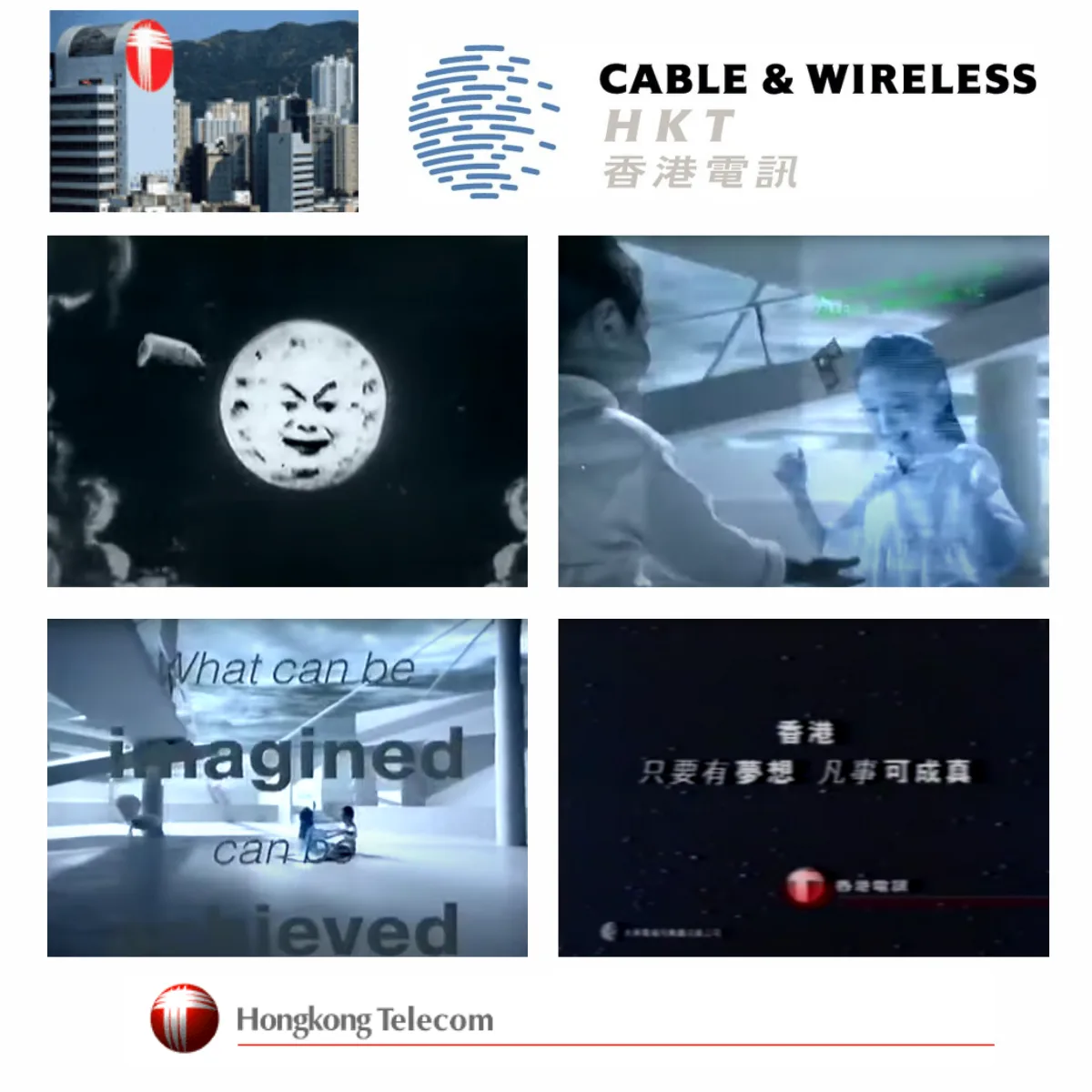
In 1999, Hong Kong Telecom’s English name was changed from “Hong Kong Telecom” to “Cable & Wireless HKT”.
The Richard Li Whirlwind
Telecoms Enter the Dot-com Age
PCCW
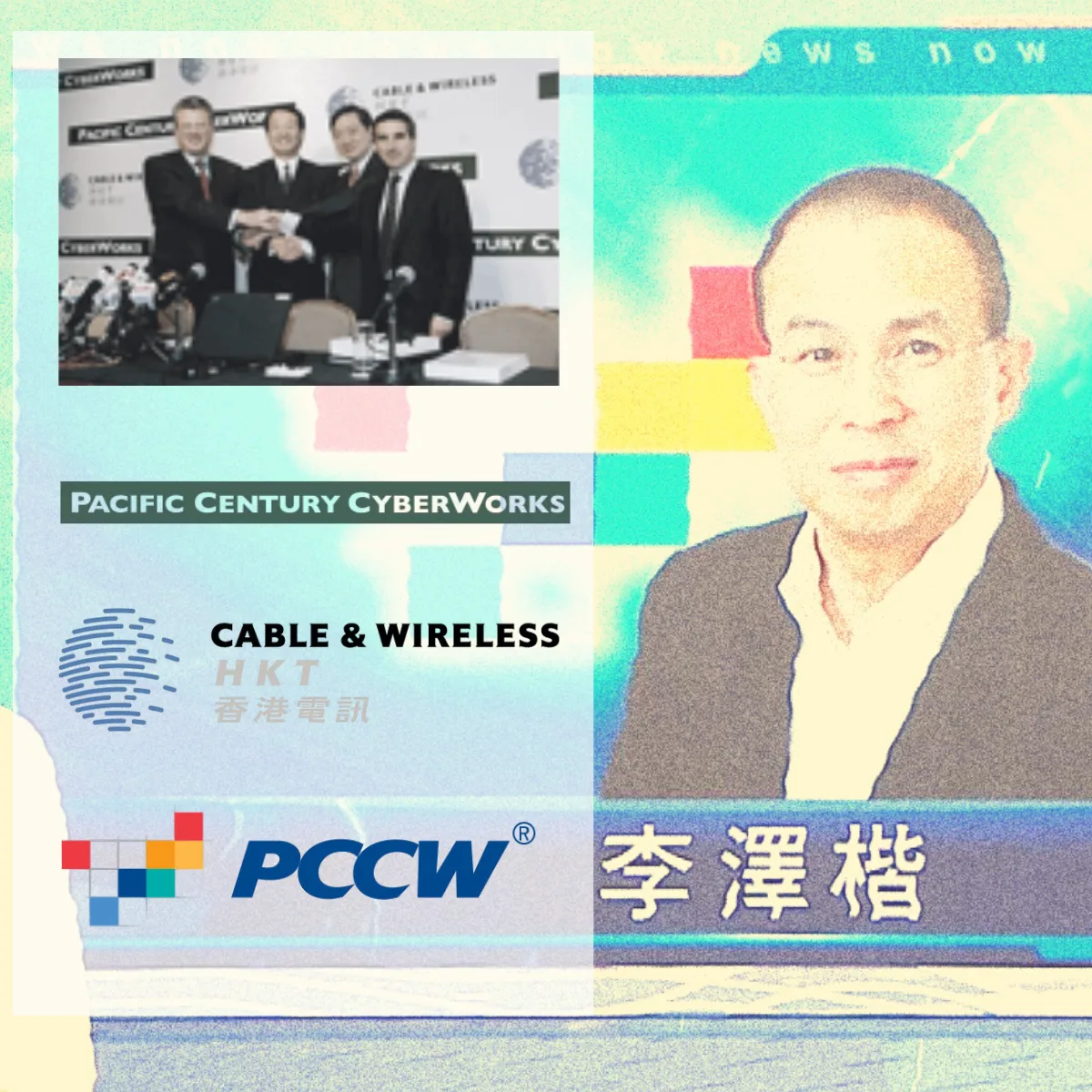
In 2000, Cable & Wireless sold Hong Kong Telecom to “Pacific Century CyberWorks” (盈科數碼動力), which the following year was renamed “PCCW” (電訊盈科). Cable & Wireless itself continued to run communications businesses in Central and South America.
The takeover not only set off heated debate among Hong Kong Telecom’s shareholders; Richard Li’s purchase of the flagship telecom enterprise, as a son of Li Ka-shing, also stirred concerns of market dominance alongside Li Ka-shing’s own Hutchison Pagingmunications.
Yet Richard Li, as a Hongkonger, had beaten “SingTel” (Singapore Telecommunications) to acquire Hong Kong Telecom from Cable & Wireless — one of the rare feel-good stories of post-handover Hong Kong. The emergence of PCCW also signalled that Hong Kong was keeping pace with global trends, as the local telecom industry plunged into the dot-com age.
After PCCW was formed, the global dot-com fever receded and its share price fell more than ninety per cent from its peak. Because this wiped out the assets of many elderly shareholders who had bought the old “Hong Kong Telecom” shares for their steady dividends, it became a story on the social news pages.
Commentary continued for years afterwards, including the view that shareholders of the day had been blindly intoxicated by the fame of Richard Li’s father Li Ka-shing, assuming PCCW would perform like Cheung Kong — and so made the wrong decision.
In any event, local telecom and dot-com brands continued to flourish. With the opening of the market and the advance of technology, the monopoly advantage bequeathed to Hong Kong Telecom by 20th-century British colonial policy gradually faded away.
In 2002 PCCW sold CSL to the Australian carrier “Telstra”. Three years later, however, PCCW acquired “Sunday” and re-entered mobile telephony as “PCCW Mobile”.
The PCCW era’s
“Hong Kong Telecom”
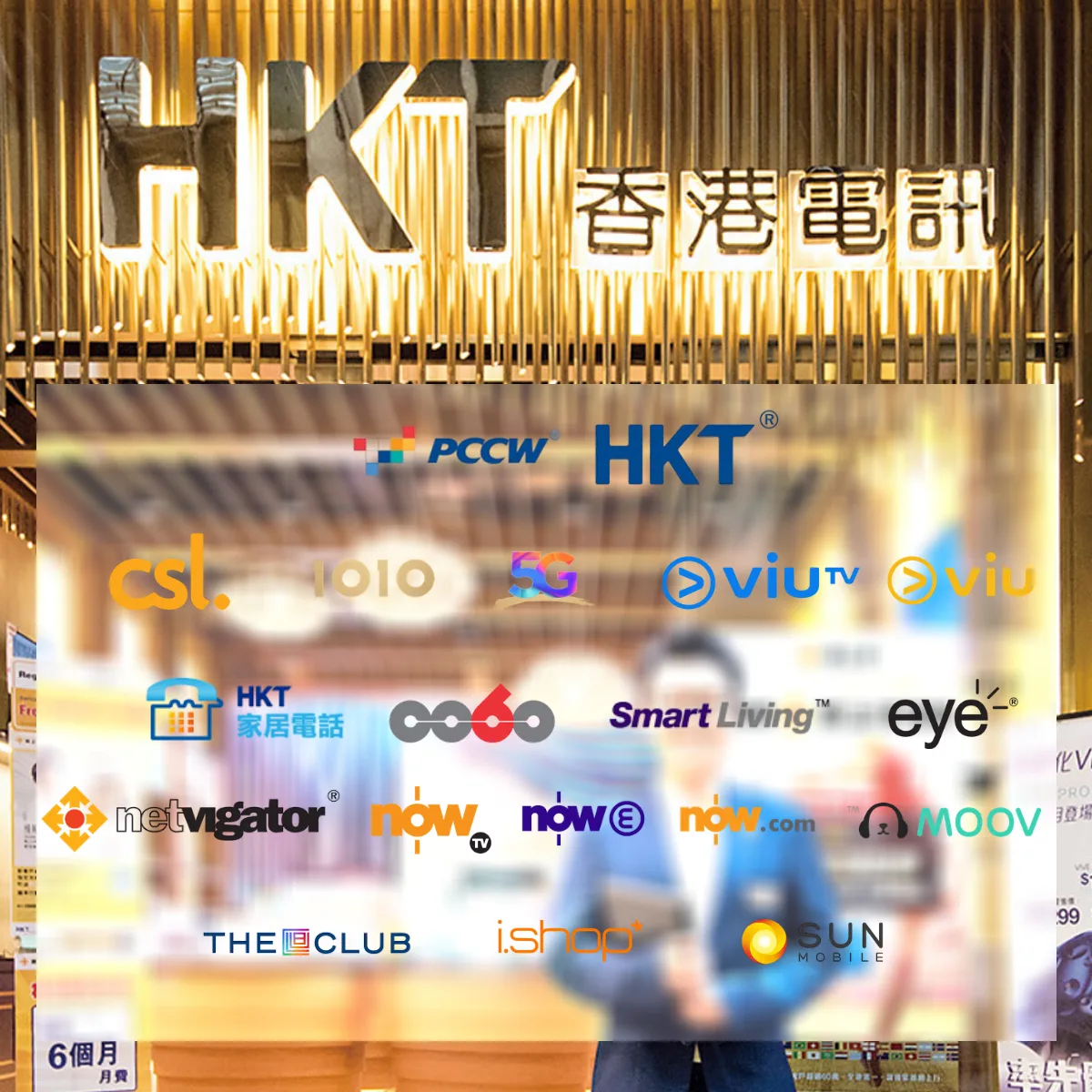
After PCCW appeared, the name “Hong Kong Telecom” seemed to vanish from public view. Then in 2008 PCCW reorganised its businesses and created “PCCW-HKT” — HKT for short, with the Chinese name 香港電訊 (Hong Kong Telecom) — to manage its telecom operations, with brands including “HKT home telephone”, the IDD service “0060”, “Netvigator” (網上行) and “now”.
In 2013 it bought back the “CSL” it had sold in 2002 and transferred PCCW-HKT’s mobile subscribers to “CSL”. “New World Mobility” (新世界傳動網), which had merged with CSL in 2006, was renamed “Sun Mobile” and continued operating. Together with CSL’s “1010”, Hong Kong Telecom now offered mobile services under three brands in all.
But with so many brands under PCCW-HKT, each facing different competitors in different businesses, the “Hong Kong Telecom” signboard seemed to carry little advantage in the fray, so its marketing generally spotlights individual brands. Even for the most traditional fixed-line telephone service, PCCW brands it in English as “HKT home telephone” — the four characters 香港電訊 (Hong Kong Telecom) may survive only on the shopfront signs of PCCW-HKT stores.
* Hong Kong Telecom was separately listed in 2011 in the form of a business trust, with PCCW remaining its major shareholder; the bills of its various brands’ customers still carry the footnotes of Hong Kong Telecom subsidiaries
PCCW-HKT
The Telecommunications Gallery at the Hong Kong Science Museum
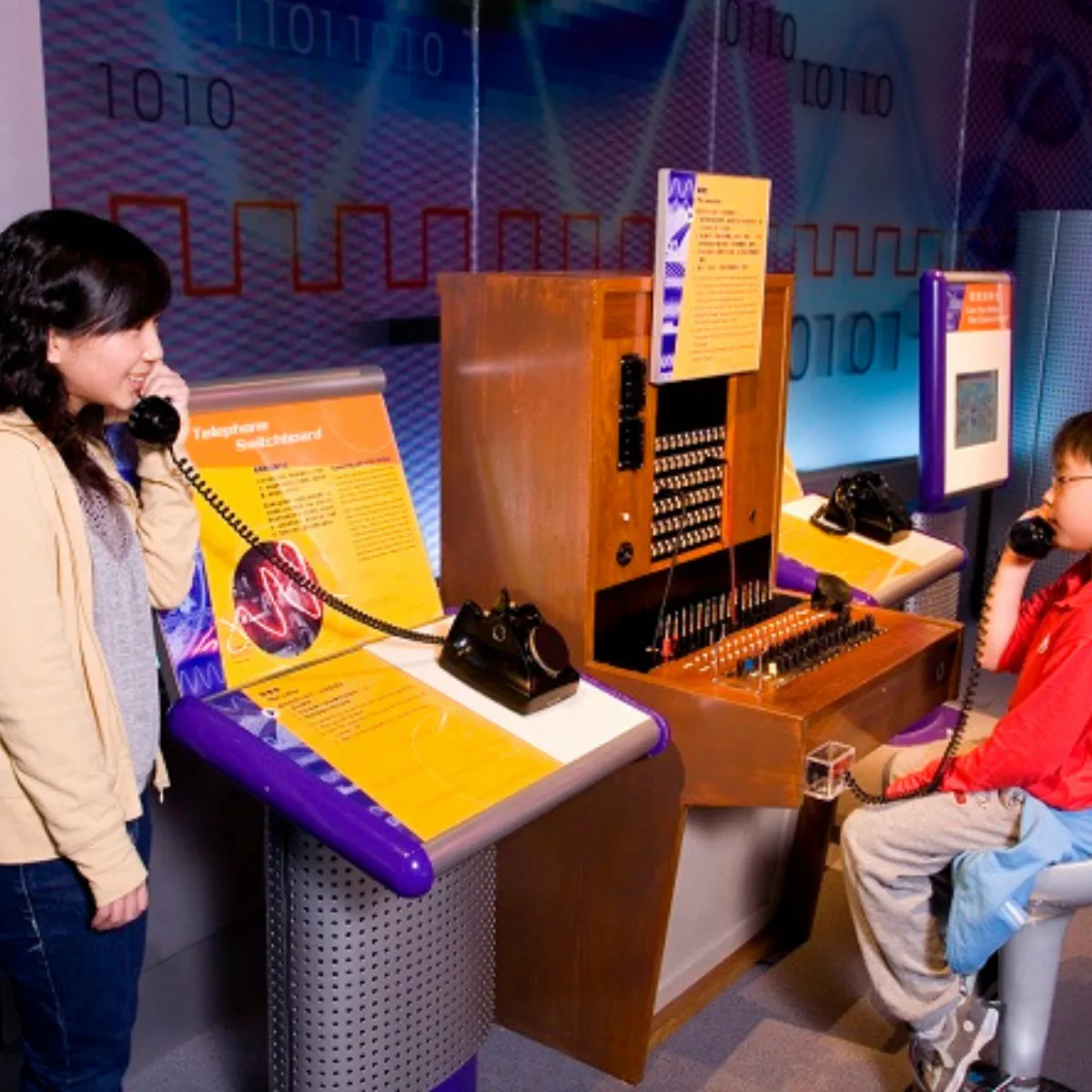
Anyone interested in the ways people communicated in the old Cable & Wireless days — or curious to see a rotary-dial telephone — can visit the Telecommunications Gallery on the second floor of the Hong Kong Science Museum; details at https://hk.science.museum/zh_TW/web/scm/pe/telecom.html. Various telecom brands also mount occasional exhibitions on the evolution of telecommunications technology.
Hong Kong Science Museum
Address: 2 Science Museum Road, Tsim Sha Tsui East
Opening hours: 10 am to 7 pm, closing at 9 pm on weekends and public holidays (closed on Thursdays)
Admission: HK$20 (free admission on Wednesdays)
Sources:
通訊年代 = Communication
黃慕嫻
香港 : s.n. 1997
香港企業併購經典 = Merger & acquisitions
馮邦彥編著
香港增訂版 香港 : 三聯書店香港有限公司 2017
港股經典收購戰 [Classic takeover battles of the Hong Kong stock market]
呂志華著
香港 : 明報出版社 1993
盈動兼併香港電訊 [Pacific Century CyberWorks’ takeover of Hong Kong Telecom]
馮邦彥
初版 香港 : 明報出版社有限公司 2000
香港商戰風雲錄 [Chronicles of Hong Kong’s business wars]
藍潮著
初版 香港 : 名流出版社 1997
香港志. 第一冊, 總述, 大事記 [Hong Kong Chronicles, Volume 1: Overview and Chronology]
香港地方志中心
香港 : 中華書局香港有限公司 2020
https://tel_archives.ofca.gov.hk/zh/telecom_fact/milestones/main.html [archived]
https://hkt.com/about-hkt/company-profile/milestones?locale=zh
https://www.cwc.com/live/past-present/our-history.html
https://www.sunmobile.com.hk/notification.jhtml
https://i.shop.pccw.com/ [archived]
“The Hong Kong Story” exhibition, Hong Kong Museum of History (香港歷史博物館「香港故事」)
Published in Oct 2020 by Hong Kong Brand Museum 香港品牌博物館