Dragonair Hall
Dragonair
Cathay Dragon — wound up by its parent company Cathay Pacific at the end of 2020, and formerly known as Dragonair — can fairly be called the true Hongkongers’ airline in the history of Hong Kong aviation. Airlines have always been commercial brands of national standing, and for over a century Hong Kong sat in the gap between British and Chinese rule;
Dragonair was born at the very moment when Hongkongers’ identity and role mattered most.
A Hong Kong Brand That
Mirrored the Fate of Its People
Hongkongers’
Own Airline
Cathay Pacific has long been hailed as the airline of the Hong Kong people, and the public might assume that Cathay — or even “Hong Kong Airlines” — originated in Hong Kong. In fact Cathay began as an Australian-American venture, founded after the Second World War by an Australian pilot and an American pilot, and later acquired by the British-owned Swire group (for Cathay’s background, see the Cathay Pacific Hall). Hong Kong Airlines, meanwhile, came into being when mainland China’s HNA Group acquired CR Airways and renamed it; beyond the name, its brand image and membership programme carry a strong flavour of a mainland Chinese carrier, and the livery on its fuselage and tail is identical to that of China’s Hainan Airlines.
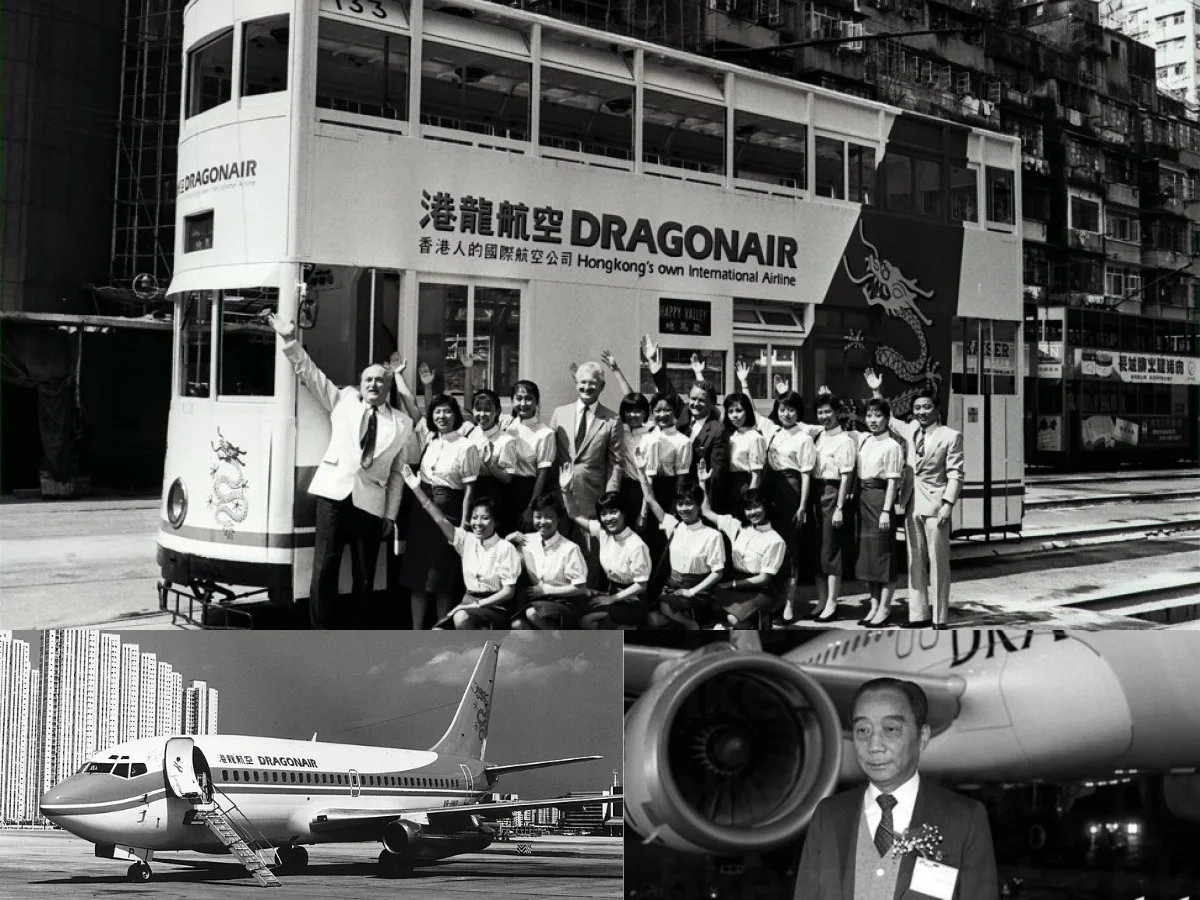
Dragonair, by contrast, was founded in May 1985 under the leadership of Hong Kong businessman Chao Kuang-piu (曹光彪), together with fellow local tycoons such as Pao Yue-kong (包玉剛) and Henry Fok Ying-tung (霍英東), combined with a measure of Chinese capital. These Hong Kong magnates, hailed at the time as “patriotic businessmen”, saw an opportunity: after the 1997 handover to China, air-traffic rights would no longer be controlled by the British government. By founding a local airline they hoped to contribute to China while breaking the long monopoly of the British-owned Cathay Pacific, and to win back the skies for Hong Kong people. Dragonair can therefore be called a Hong Kong people’s brand in the truest sense.
In the Sky,
But Not on the Ground?
At its maiden flight Dragonair owned just one Boeing 737-200. People joked that Dragonair was “in the sky but not on the ground” (天上有,地下無) — once its only aircraft took off, no Dragonair plane was left to be seen on the ground. When Dragonair bought its second aircraft, the joke was amended to “half in the sky, half on the ground” (天一半,地一半).
In its early years Dragonair operated under the pre-handover British Hong Kong government. Newly issued aviation policy stipulated that each route could be operated by only one local carrier, and this exclusive right was allocated on a first-come, first-served basis. Dragonair could therefore only fly routes Cathay had not yet taken up; passenger numbers were naturally lower and profits thinner, leaving Dragonair in sustained losses and posing no threat to Cathay. Many commentators argued that the British Hong Kong government was using policy to protect the interests of Cathay, part of the British-owned Swire group.
Times changed. After Cathay acquired Dragonair, the fleet kept growing; by mid-2020 Dragonair operated 48 Airbus aircraft across three types — the A320, A321 and A330.
Caught Between Britain and China
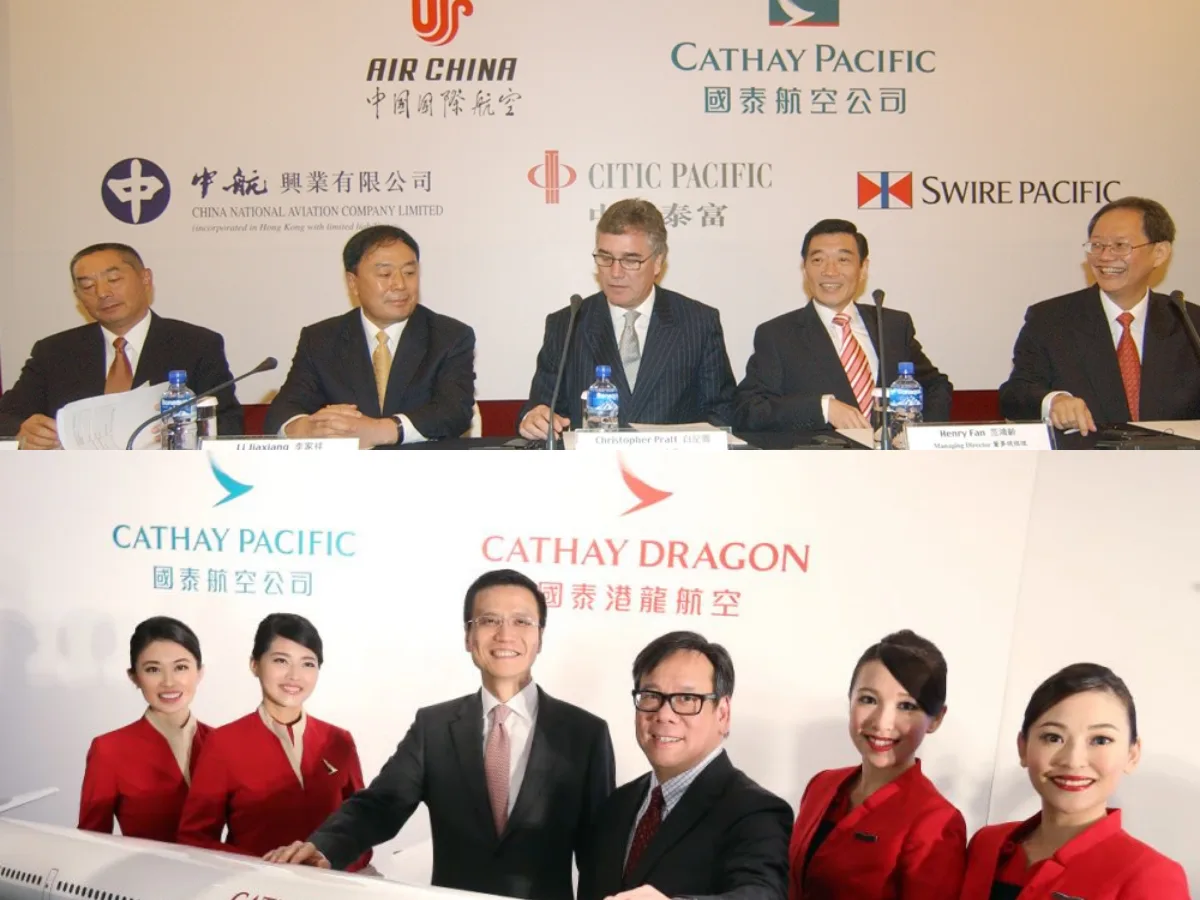
Constrained by British Hong Kong policy, Dragonair lost money year after year in its early days. From 1990, before the handover, Cathay Pacific and its parent Swire took the opportunity to acquire, in stages, 35% of Dragonair’s shares. In 2006, after the handover, Cathay Pacific — in which the parent company of Air China had by then taken a stake — joined with other major shareholders such as CITIC Pacific to buy out the remaining Dragonair shares, and Dragonair became a member of the Cathay family.
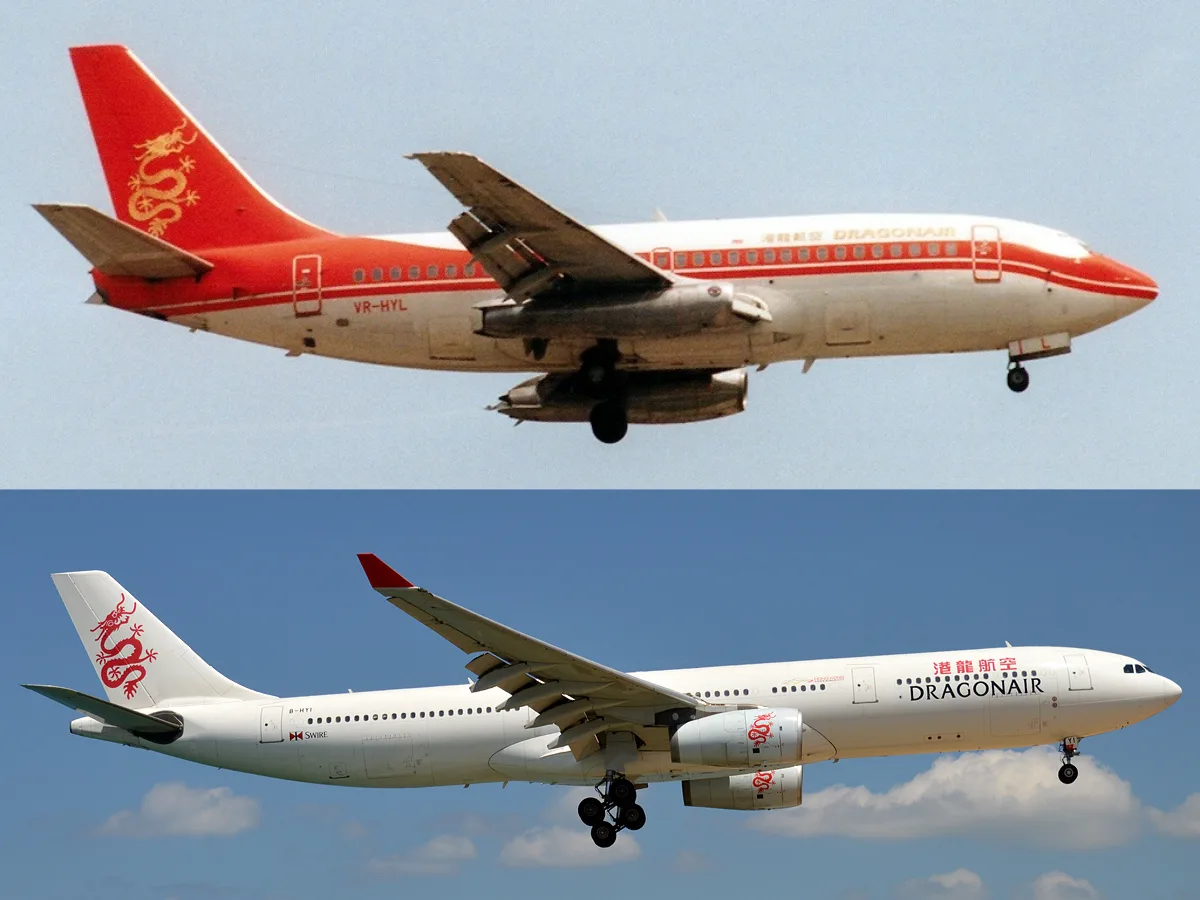
In 2016 Cathay announced that Dragonair would be renamed “Cathay Dragon”. The logo changed from the original red flying dragon to a red upswept-wing motif bearing Cathay’s strong corporate image; the old tail livery was replaced, with only a small flying-dragon emblem retained near the front of the fuselage. From “flying dragon” to “shark’s fin” — “Dragonair 港龍” had formally passed into history.
Hongkongers’ First Choice
for Flights to China
There was a time when it was common for Hong Kong people to head north to work in mainland China; around the handover, Hongkongers could be found all over the country. “Fly to the mainland, fly Dragonair” spoke for many of them. In those days the service and food on mainland carriers generally lagged behind Dragonair’s, whose cabin crew won a devoted following with warm, friendly service, the familiar sound of Cantonese, and in-flight meals better suited to Hong Kong tastes.
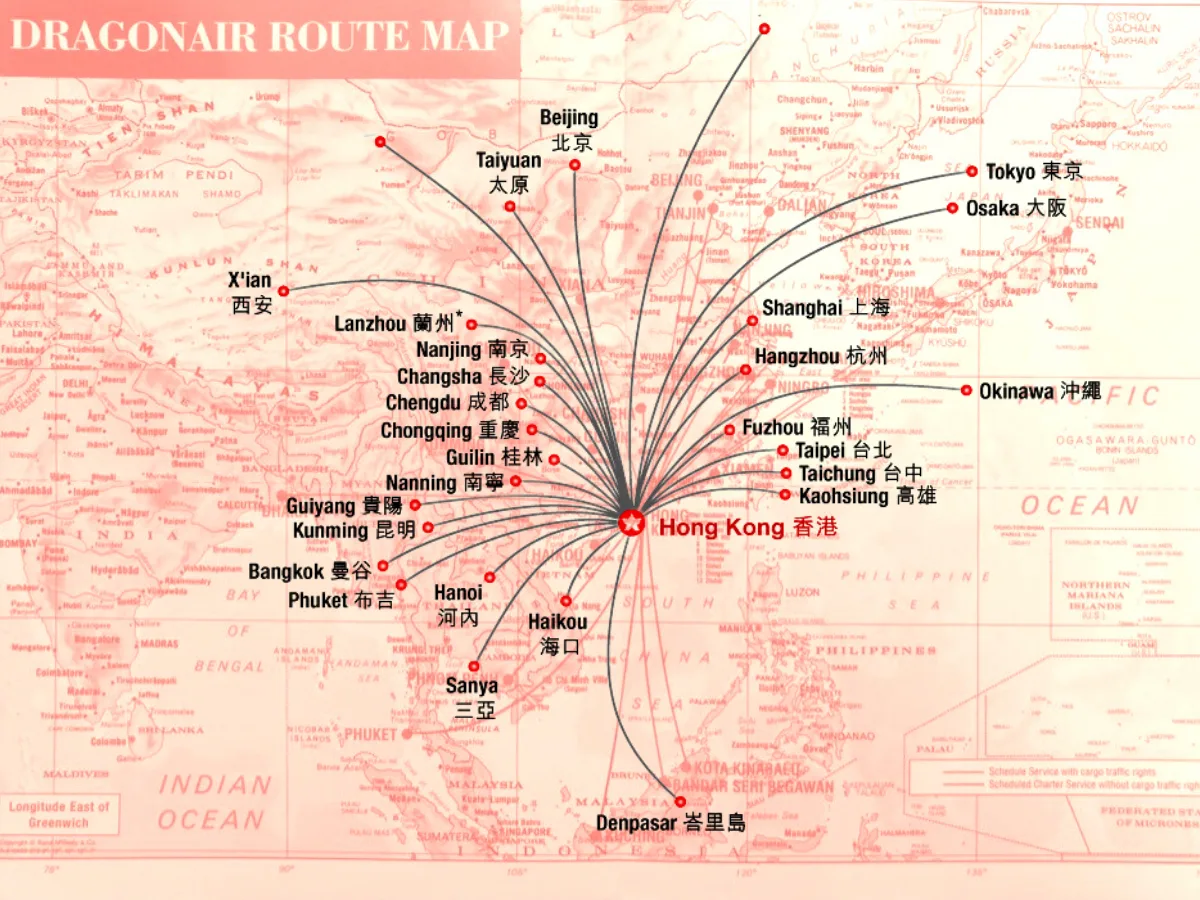
Before it ceased operations Cathay Dragon flew 46 routes, half of them to first-, second- and third-tier cities in mainland China, along with destinations in East and South-east Asia such as Fukuoka in Japan and Phuket in Thailand. Dragonair was positioned as a regional carrier specialising in short-haul China and Asian routes, complementing Cathay Pacific’s intercontinental network and countering the rapid expansion of rival Hong Kong Airlines in the China market.
Under this division of labour, Dragonair became the first-choice airline for many Hong Kong people on business trips to the mainland or short leisure trips nearby.
More “Hong Kong” than Hong Kong Airlines
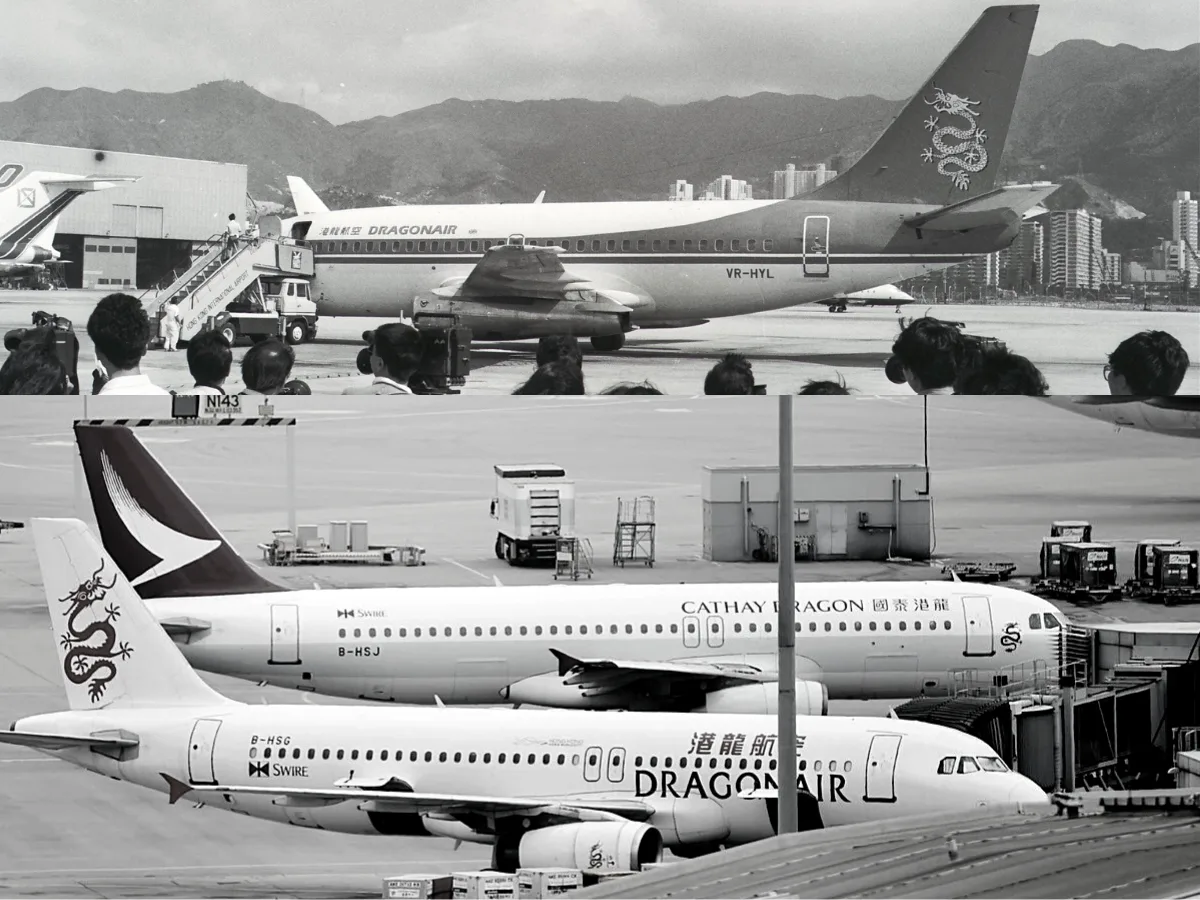
Dragonair set Hong Kong records of its own at both the old airport in Kowloon City and the new one at Chek Lap Kok.
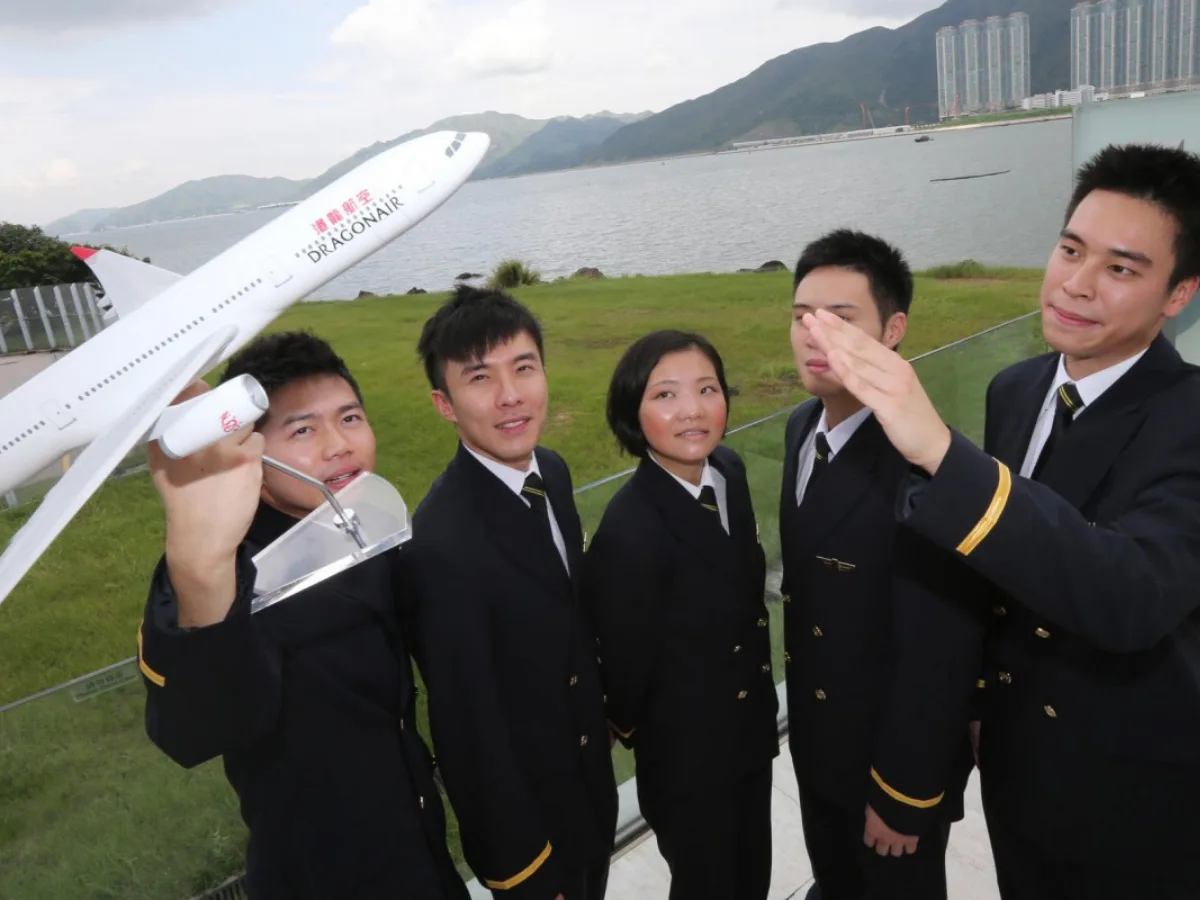
In 1986, Dragonair became the first Hong Kong airline to train local pilots. Before its closure it had one of the higher proportions of local pilots among airlines here: reportedly nearly half its pilots were Hongkongers, compared with only about twenty per cent at Cathay over the same period.
In July 1998, a Dragonair aircraft operated the last scheduled flight to land at the old Kai Tak Airport.
In May 1999, a Dragonair flight from Shanghai to Hong Kong became the first scheduled flight to land on the second runway of Hong Kong International Airport at Chek Lap Kok.
In 2016, amid Cathay’s rebranding, a creative naming competition was held for Dragonair’s headquarters building; the winning entry, 「國泰港龍大廈」 (“Cathay Dragon House”), even set off heated discussion among netizens.
These memories, built by Dragonair, belong only to a true “Hong Kong airline”.
If Fate
Could Be Chosen
Is the fate of the Dragonair brand a portrait of the Hong Kong people themselves? From its founding by Hong Kong businessmen, to the stakes taken by British-owned Swire and Cathay, to becoming Hongkongers’ first choice for flying to the mainland, Dragonair’s pulse always beat together with Hong Kong’s.
In recent years Cathay has been criticised for poor management and falling service quality and efficiency, and — like the brand name itself — the criticism was hung on Dragonair too. After the renaming to “Cathay Dragon” the brand did not rise to new heights; instead it was beset within and without, facing decline.
Cathay Dragon became the first local airline to close under the COVID-19 pandemic. Cathay Pacific announced that Cathay Dragon would cease operations from 21 October 2020, to public dismay. Most of its routes were reportedly to be taken over by parent company Cathay Pacific and sister brand HK Express, all subject to government approval — yet many commentators questioned whether the closure of Cathay Dragon was tied to political manoeuvring over the reallocation of air-traffic rights.
After 35 years of serving Hong Kong people, Dragonair thus came to an imperfect full stop. Both its founding and its closing seem bound up with the political environment — a microcosm of what Hong Kong people have lived through over the decades. Does the ending of Dragonair also bear witness that Hongkongers’ days of glory have passed? Those who once flew Dragonair so often must be feeling a great deal.
Sources:
《航空新舊聞》趙予杰
《從啟德出發》吳詹仕
《香港舊事重提》江啟明著
《香港歷史散步》丁新豹主編
《香港走過的道路》劉潤和、高添強著
《航空知識精讀》Kevin Tse 著
百姓半月刋編輯委員會, 1987
頭條日報 (Headline Daily)【國泰大裁員】創立35年曾「天上有地下無」 港龍停運成歷史
經濟日報 (Hong Kong Economic Times)【國泰裁員】港龍航空35年走進歷史 紡大王創立、曾是港人飛內地首選(附今昔圖輯)
HK01 【衝上雲霄】落實機師本土化 從拓展航空專業學位開始
大學線 (U-Beat Magazine) – 人變情未變 港龍飛行35載成歷史
Cathay Pacific website
Cathay Pacific 2020 Interim Report
swirepacific.com
Published in Jan 2021 by Hong Kong Brand Museum 香港品牌博物館