Kee Wah Bakery Hall
Kee Wah Bakery Limited
Kee Wah Bakery began life in 1938 as a family-run si do (士多, a small corner store — from the English word “store”) on Shanghai Street in Yau Ma Tei. From the 1950s it launched a range of festive pastries: whether for Chinese New Year or Mid-Autumn Festival, bridal cakes for weddings, or gifts for friends and family, tong beng (唐餅, traditional Cantonese pastries) were never far away. The traditional pastries that have accompanied Hong Kong people through growth and change are more than a simple gai jai beng (雞仔餅, “chicken biscuit”) or gwong sou beng (光酥餅, a plain sponge biscuit): behind them stands the bakers’ love of their craft, and a stubborn devotion to traditional pastry-making that has kept the local tong beng trade thriving through the decades.
Hong Kong carries on
Chinese traditions
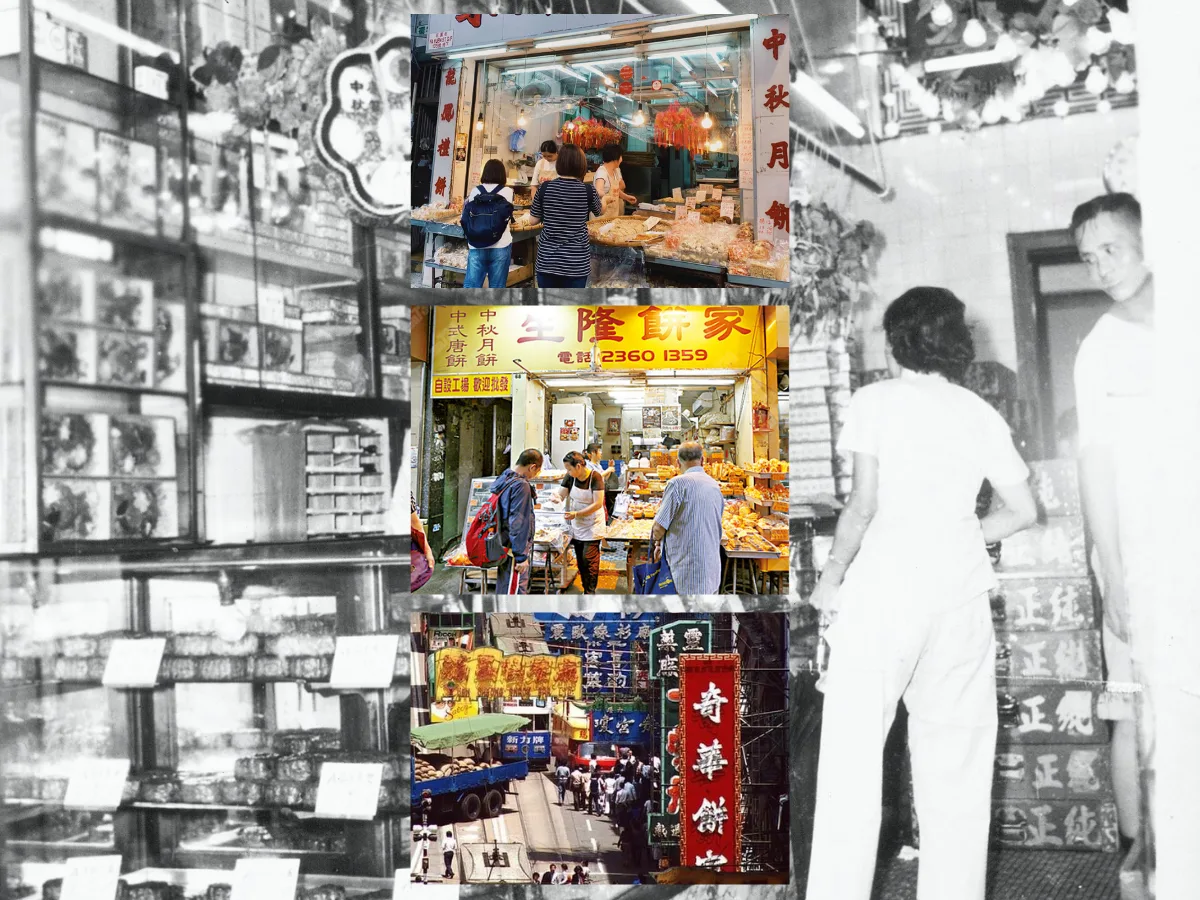
Chinese pastry shops are an indispensable part of the Hong Kong streetscape. The Hong Kong of old was full of small family-run businesses — si do corner stores, grocers, rice shops, bakeries, soya-product shops and more. Chinese cake and pastry making was one of Hong Kong’s important industries before the economy took off: affordable and filling, tong beng were widely popular with the public.
The growth of Hong Kong’s tong beng trade wove together many touching family stories. Many bakeries were family businesses, earning their living with the shop in front and the family home behind; many other people baked at home and sold their pastries on the street. Hong Kong’s pastry masters came from far and wide — signboards offering Cantonese, Chiuchow (潮州, Teochew) and Peking-style pastries could be seen everywhere, creating a golden age for the trade.
Even in the 21st century, old pastry shops can still be found across the districts — the Michelin-recognised Kee Tsui Cake Shop (奇趣餅家) in Mong Kok, and Sang Lung Bakery (生隆餅家) and Pat Sin Bakery (八仙餅家) in Sham Shui Po among them. Walk through these old neighbourhoods and the aroma of pastry and oil follows you down the street. Above the passers-by hang bakery signboards of red characters on white; underfoot are floors of green-and-white patterned ceramic tiles; an old ox-horn electric fan (牛角扇) and strings of small light bulbs hang from the middle of the shop, and handwritten price tags hook onto the trays. Scenes like these are now rarely seen in Hong Kong.
Now and then, the owner calls out warmly — “Fresh gai jai beng, straight from the oven!” — and carries a great tray of piping-hot tong beng out of the kitchen. The neighbours, it turns out, have timed it perfectly and come swarming in. Walnut cookies and lou po beng (老婆餅, “wife cakes”) vanish in an instant; the easy back-and-forth between customers and owner was simply daily life in an old-style pastry shop.
What these bakeries sold was never just delicious, ling laap laap (令立立, Cantonese for glossy and gleaming) tong beng — it was also the warmth of a neighbourhood, and a generation’s memories of old Hong Kong.
Leftover ingredients become
the start of an international brand
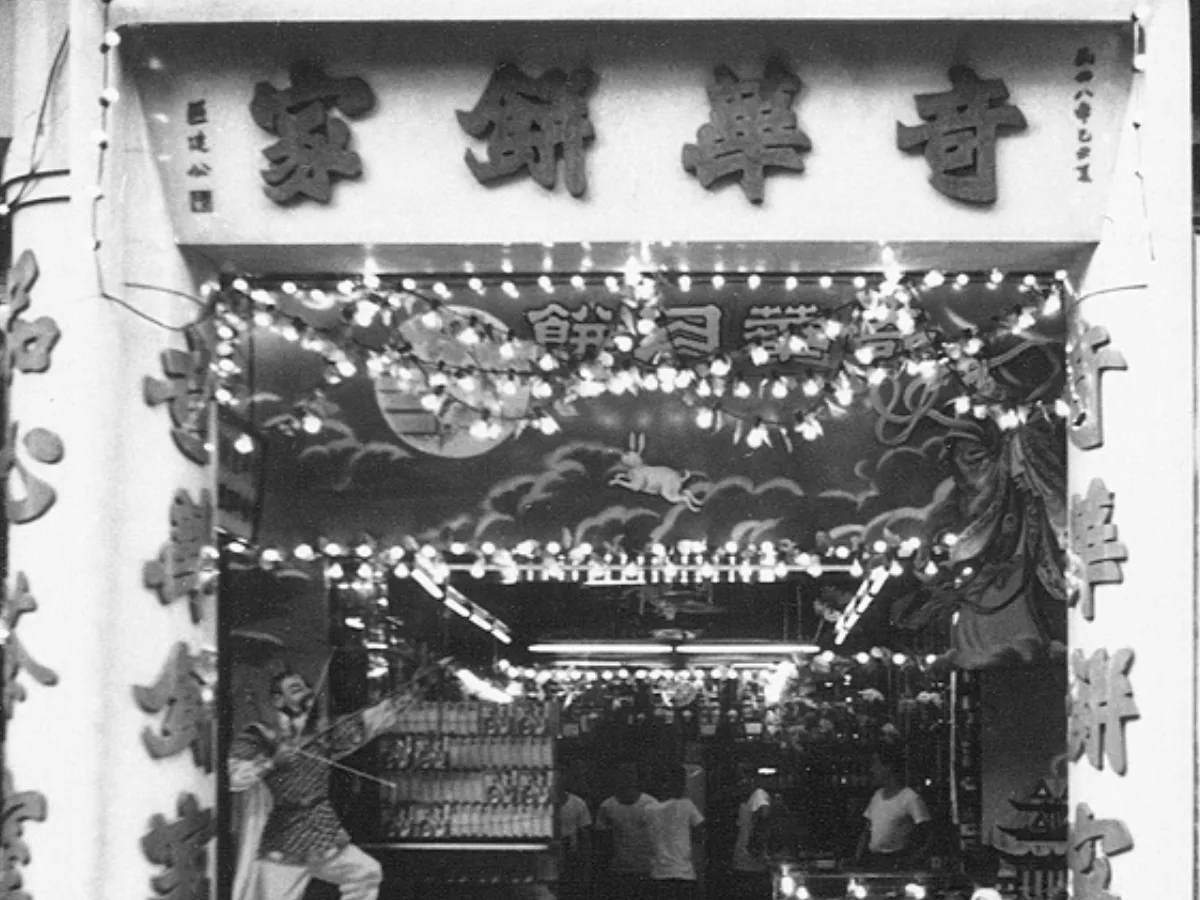
During the Japanese occupation of Hong Kong in the Second World War, resources were desperately scarce at a small sweets-and-groceries shop on Shanghai Street, Yau Ma Tei, and the shop assistants suggested using the leftover ingredients to make pastries for sale. Using bed boards as worktables and large iron cans as ovens, they turned what little they had into simple almond biscuits and gwong sou beng for sale. It was amid this hardship that Kee Wah gradually transformed from a sweet shop into a bakery.
After the war, Kee Wah Bakery opened a shopfront with an attached workshop on Shanghai Street, but like many other tong beng shops it carried on as a family business, grounded in core family values — using its pastries to bring family and friends together, and carrying Chinese traditions forward in Hong Kong under British rule.
Behind every tong beng shop, a simple gai jai beng or gwong sou beng holds not only Hong Kong people’s love of pastries but also the bakers’ devotion to their traditional craft — a resilience that has let Hong Kong’s tong beng trade withstand social change and competition from outside food cultures, endure through the decades, and even reach the international stage.
The “old cakes” that Western cakes could not steal away
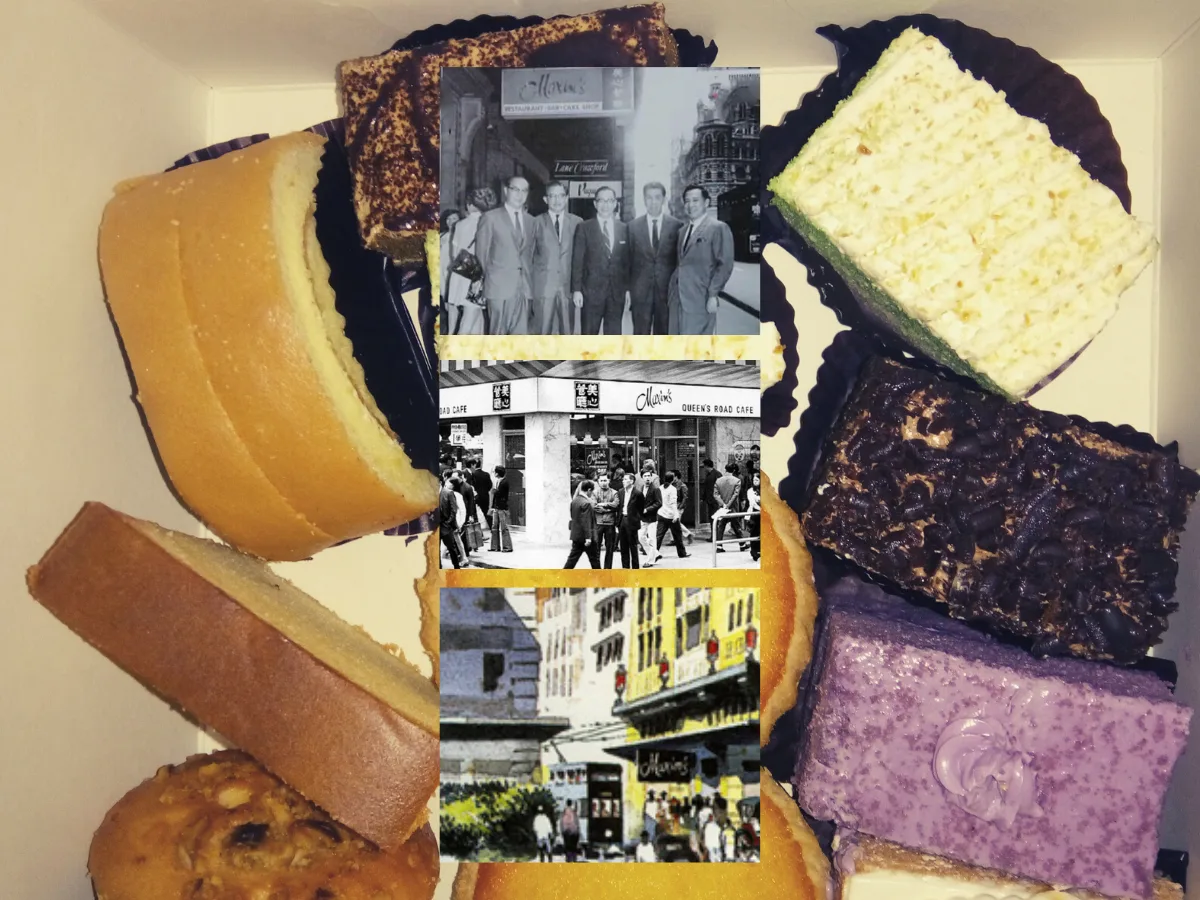
In the 1960s, as Hong Kong’s economy began to take off, Western-style cake shops and cafés sprang up and became quite the fashion. Maxim’s opened a Maxim’s bakery in 1964 and a Maxim’s coffee shop in 1966, both in Tsim Sha Tsui, selling Western cakes that proved popular with the middle and upper classes of the day — the embryo of what became Maxim’s Cakes.
To Hong Kong people at the time, Western cakes were something new. Western patisserie prized fine, elaborate work and endlessly varied flavours, sometimes made into cakes with seasonal fruit and topped with piped cream — a world away from traditional tong beng, made simply from butter, flour and leavening.
The showy variety of Western baking left most Chinese pastry shops labelled as old-fashioned, supported only by the older generation and struggling to win the appreciation of the young. In the 1980s, Maxim’s Cakes moved into the stations along the MTR lines — the Maxim’s cake shops in MTR stations numbered as many as 33, and with district branches the total reached some 70, making it the bread-and-cake chain with the most branches in Hong Kong at the time. The boom in Western cake shops spelled hard times for many small tong beng shops, which could not match Maxim’s in product range, operating resources or scale; add urban redevelopment and rent pressures, and traditional pastry shops closed one after another. Making tong beng was gradually becoming a sunset trade.
Hong Kong people’s
Mid-Autumn memories
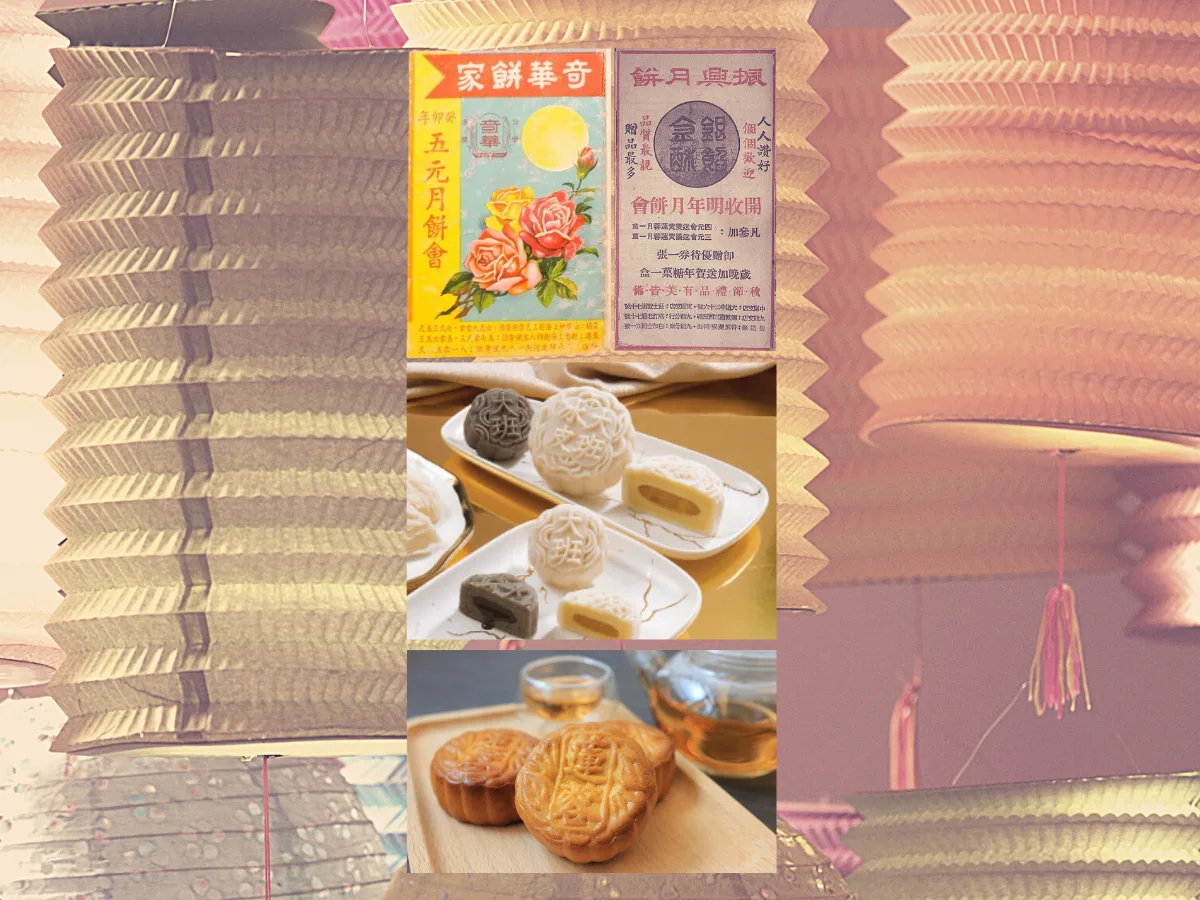
Mid-Autumn Festival each year is part of Hong Kong people’s collective memory. Every household prepares its own festive foods; on the day itself many office workers get off early, and the whole city sits in traffic rushing home for the festival. Lanterns fill the streets, and families gather under the full moon for moon-gazing and bo laap (煲臘, the once-popular Mid-Autumn pastime of melting candle wax) — everyone together, whole and reunited.
In the last century, demand for mooncakes at every Mid-Autumn was enormous: they had to be kept for family and friends, and given as gifts to bosses and relatives, and the outlay was considerable — hence the birth of the mooncake club (月餅會), a way of pre-selling mooncakes on monthly instalments. Kee Wah launched the market’s first mooncake club in the 1950s, and going to the bakery each month to pay into the club became a habit. The 1970s were the heyday of the mooncake club: at its peak Kee Wah could sell over ten thousand club subscriptions in a year. Even today, the bakeries that still keep their mooncake clubs receive several thousand orders each year. It is hoped that this old culture of buying and giving mooncakes can be passed down, as an expression of its traditional meaning and historical value.
Today, in a busy metropolis, traditional festivals have lost their old atmosphere, the public gives them less weight than before, and traditional mooncakes are not to everyone’s taste. Western bakeries joined the mooncake battlefield — Taipan Bread & Cakes (大班麵包西餅) broke new ground with its snowy mooncake (冰皮月餅), which within a few years had won the public’s affection. Many Chinese and Western bakeries, and even ice-cream brands, followed with new-flavoured mooncakes — ice-cream mooncakes, mango-pomelo-sago mooncakes, chocolate-cookie mooncakes and more — giving the public ever more choice.
A paper bag
that changed a Chinese bakery
Facing an unprecedented challenge from Western cakes, in the 1990s Kee Wah’s then helmsman, Mr Wong Chi-cheung (黃賜祥), drew from a single paper bag the insight that would change how a traditional tong beng shop did business — blending an innovative brand image into traditional craft.
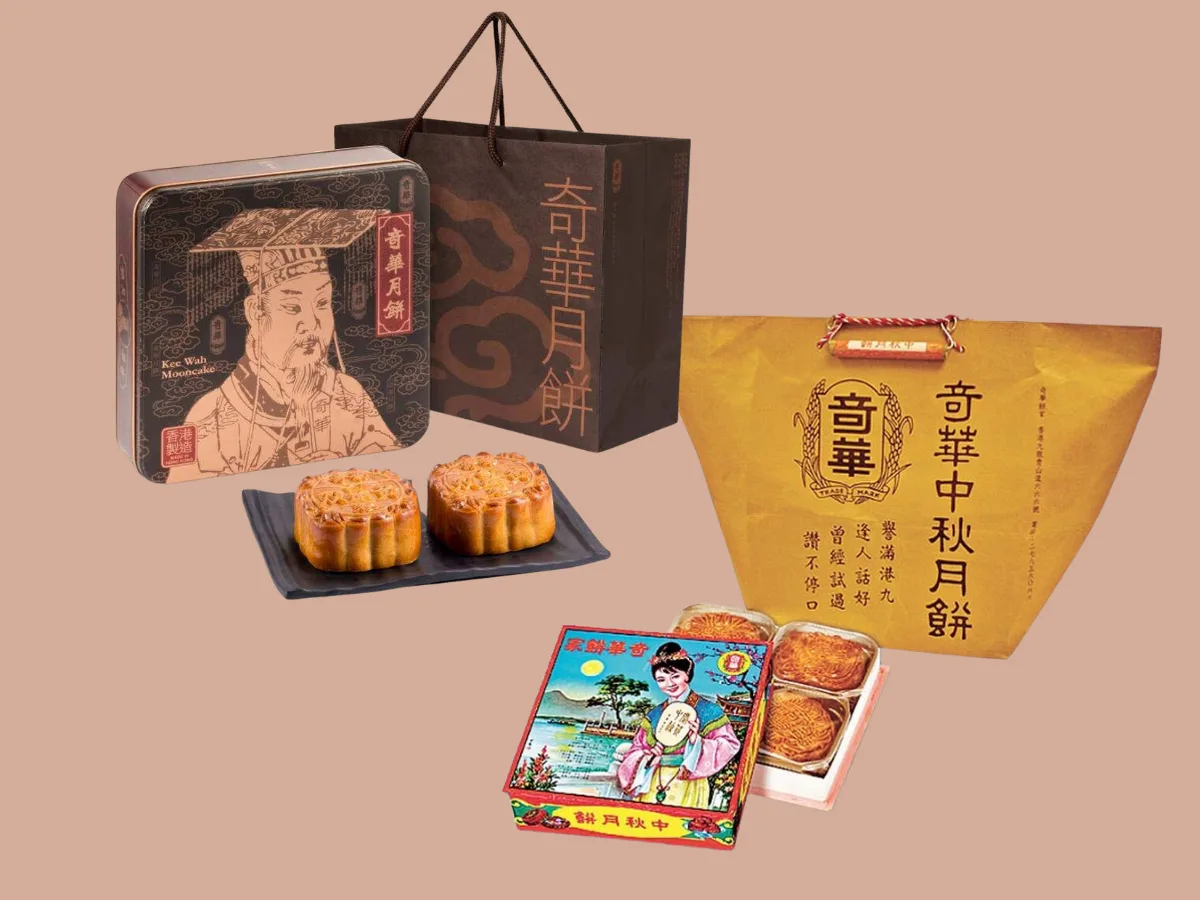
The story goes that at The Landmark in Central, Wong saw a fashionably dressed lady set aside the bakery’s own paper bag and carry two Kee Wah mooncakes in a fashion brand’s paper bag instead. Kee Wah’s packaging at the time was rather traditional: pastries came in a paper box printed with a portrait of the moon goddess Chang’e against a Chinese garden backdrop, paired with a paper carrier bag with bamboo-style handles — heavily “Chinese” in style, and seemingly out of step with the times.
In 1995, Kee Wah presented itself with an entirely new logo, product packaging, shop design and even staff uniforms, giving the traditional tong beng shop’s image a thorough refresh. Taking a brand-building approach, it developed many products fusing tradition and modernity, bringing its pastries to market with a more contemporary, more presentable face.
As Hong Kong’s eating culture came to prize health, the oil and sugar of traditional tong beng — and the high sugar and cholesterol of the double-yolk lotus-seed-paste mooncake — put many people off. Kee Wah noticed the shift in market demand, and to keep a place for Chinese pastries amid fierce competition it launched a range of low-sugar, high-fibre products; nudged by the market, the traditional bakeries too caught up with the trend for healthy eating.
Hong Kong finally has sau seon of its own
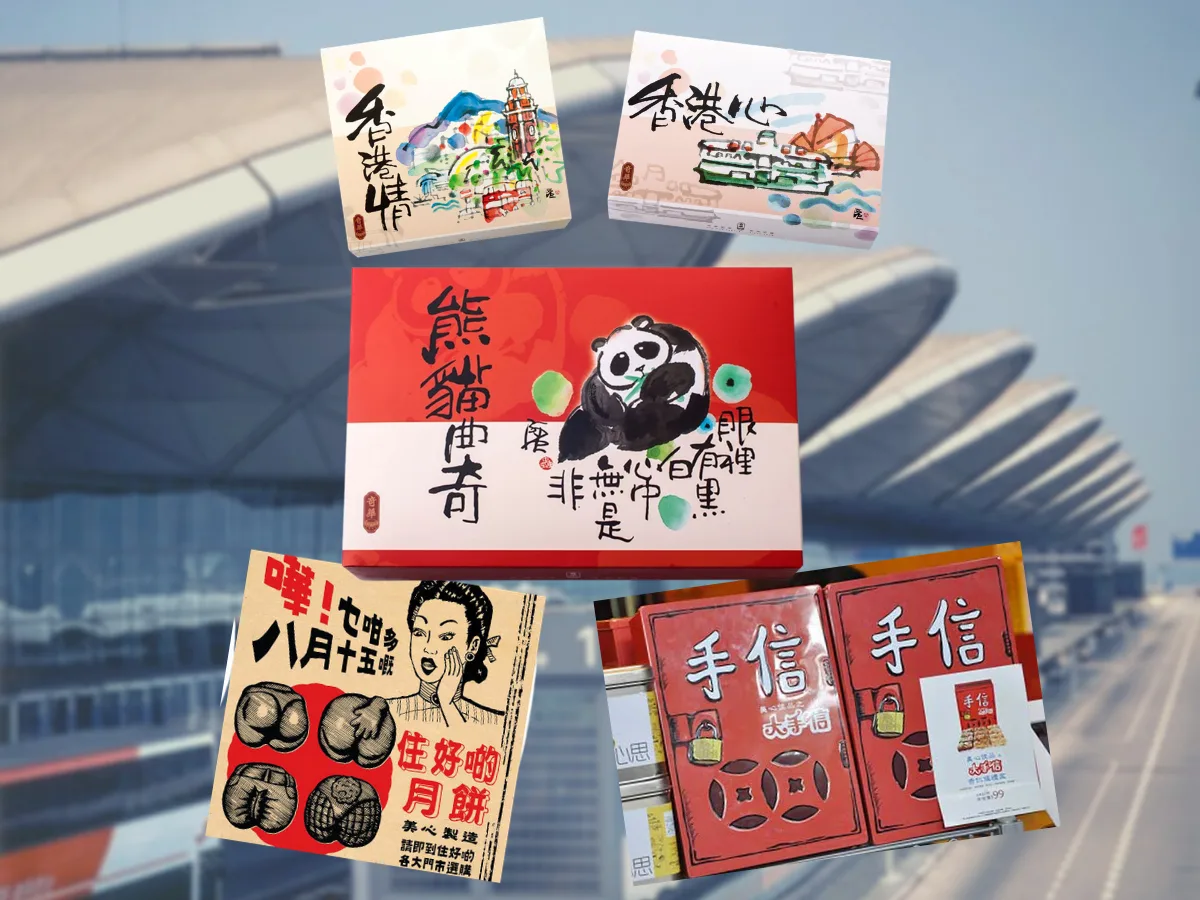
When Hong Kong people travel abroad, they love to buy sau seon (手信, gifts brought back from one’s travels) to take home. But when visiting friends and relatives overseas, what would they bring? Tea, dried fruit, or traditional snacks like oat cakes, lou po beng and egg rolls? In the 20th century, no big Hong Kong brand seemed to make products conceived as sau seon. In the 2000s, with the advertising slogan 「香港終於有手信」 (“Hong Kong finally has sau seon”), Kee Wah packaged the traditional bakery’s products into gift boxes, letting Hong Kong people and tourists carry Hong Kong’s traditional pastries to the whole world.
Kee Wah worked with the Hong Kong cartoonist Ah Chung (阿虫), bringing local aphorisms onto its product packaging. The panda cookie gift box produced with Ocean Park, for instance, carried the line 「眼裡有黑白 心中無是非」 (“black and white in the eyes, no quarrels in the heart”) — a phrase that brings a knowing smile to any Hongkonger. Kee Wah also collaborated with other Hong Kong brands such as the Star Ferry, using themes like 「香港心」 (“Hong Kong heart”) and 「香港情」 (“Hong Kong feeling”) to promote affection for Hong Kong through its packaging.
The sau seon market then seemed to catch fire, and many brands rich in Hong Kong character launched similar products. Many Hong Kong people vividly remember the products of Goods of Desire (住好啲): in 2020, in response to the pandemic, it designed face masks printed with the bauhinia and the days of the week written in Cantonese — Hong Kong character on full display. And many brands producing sau seon opened shops at the airport — convenient for visitors from abroad, though Hong Kong people enjoy browsing Hong Kong’s souvenir shops too.
A journey through Kee Wah Bakery’s history
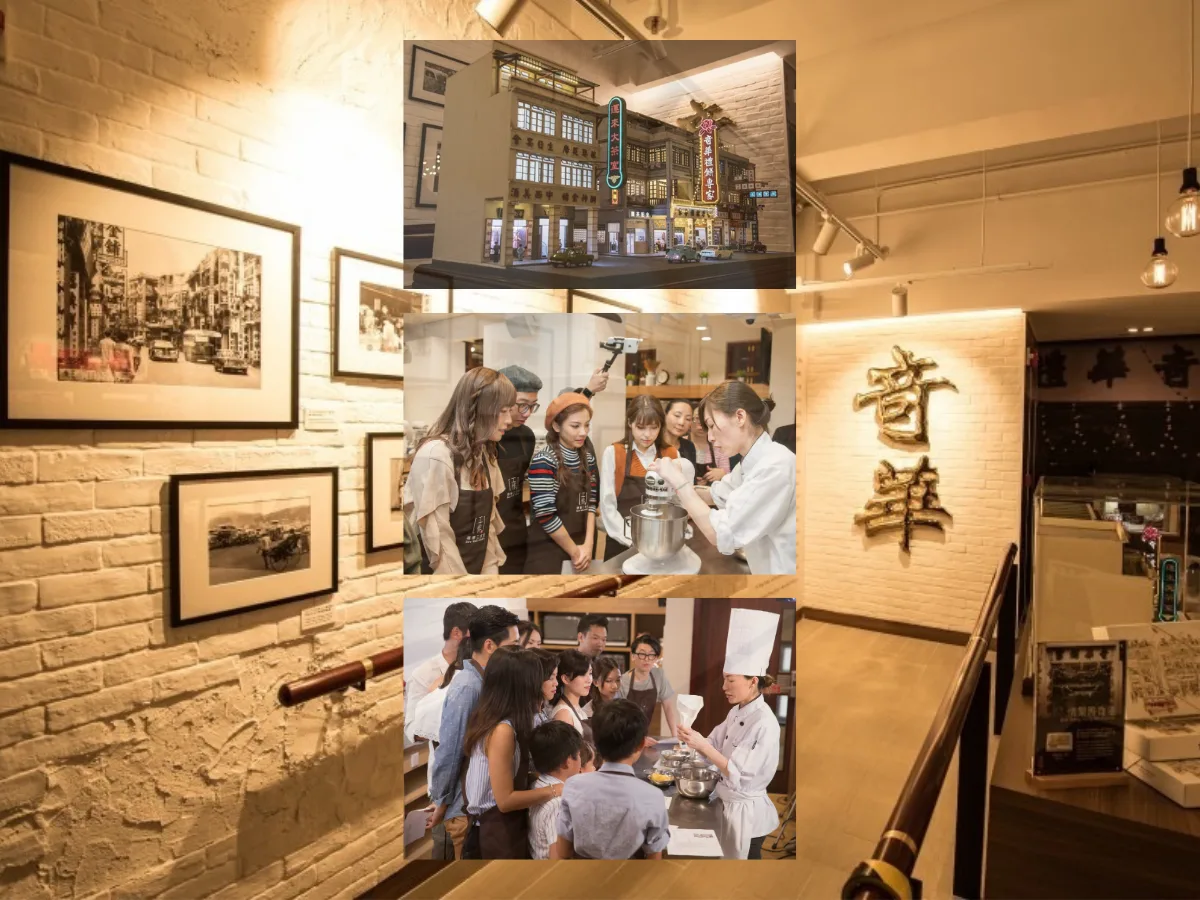
To savour Kee Wah Bakery’s classic flavours, beyond buying the bakery’s products you can also visit the Kee Wah flagship store, housed in a Grade III historic building in Wan Chai.
The revitalisation of historic buildings has become a matter of public concern in recent years: beyond preserving them, they should be put to fitting use. Step into the Kee Wah flagship store and wander its corridors, where old black-and-white photographs of the bakery hang on the walls, capturing the texture of daily life in earlier days. The miniature art models displayed inside feel like the exhibits of a small museum.
Kee Wah also holds workshops of different kinds from time to time, introducing how Chinese pastries are made — including parent-and-child classes, so that families can come to know and appreciate the charm of Chinese pastry, and pass the culture of tong beng on to the next generation.
Workshops: https://studio.keewah.com/frontend/web/index.php
Sources:
So Wai-sum and Chan Oi-yan (蘇慧心, 陳藹欣) (2004), 《一個名牌的誕生》 (The Birth of a Famous Brand), 明窗出版社有限公司, first edition
Victor Zheng and Gao Hao (鄭宏泰、高皓) (2016), 《創業垂統——華人家族企業發展特質與思考》 (on the development of Chinese family businesses)
https://keewah.com/hk/brand-story
【名人專訪】奇華第二代掌舵人黃錫祥 因一個紙袋接手家業 (Celebrity interview: Kee Wah’s second-generation helmsman took over the family business because of a paper bag)
https://inews.hket.com/article/2718232/【名人專訪】奇華第二代掌舵人黃錫祥%E3%80%80因一個紙袋接手家業
【香港製造】月餅都有分期付款?奇華第三代:50年代人人爭住供 (2018) (Made in Hong Kong: mooncakes by instalment? Kee Wah’s third generation on the 1950s rush to join mooncake clubs) https://bit.ly/3qWmliW
【回歸廿年】奇華:不甘心香港無手信 沙士期間生意反而更好 (2017) (Kee Wah: unwilling to accept Hong Kong had no sau seon — business actually improved during SARS)
http://www.etnet.com.hk/www/tc/news/topic_news_detail.php?category=hksar20&newsid=7449
懷舊餅舖草根食堂 (2016) (Nostalgic pastry shops, grassroots eateries) http://archive.am730.com.hk/article-314005
Published in Jan 2021 by Hong Kong Brand Museum 香港品牌博物館