Cathay Pacific Hall
Cathay Pacific
Airways Limited
Cathay Pacific was founded in 1946. Unlike Japan Airlines (JAL), QANTAS, British Airways or Singapore Airlines, its name carries no country, nor was it ever owned by a national government. Yet through Hong Kong’s British colonial era, and for nearly 20 years after the 1997 handover, the scale of its operations and its brand image made it, in the hearts of many Hong Kong people, effectively “Hong Kong’s own airline”.
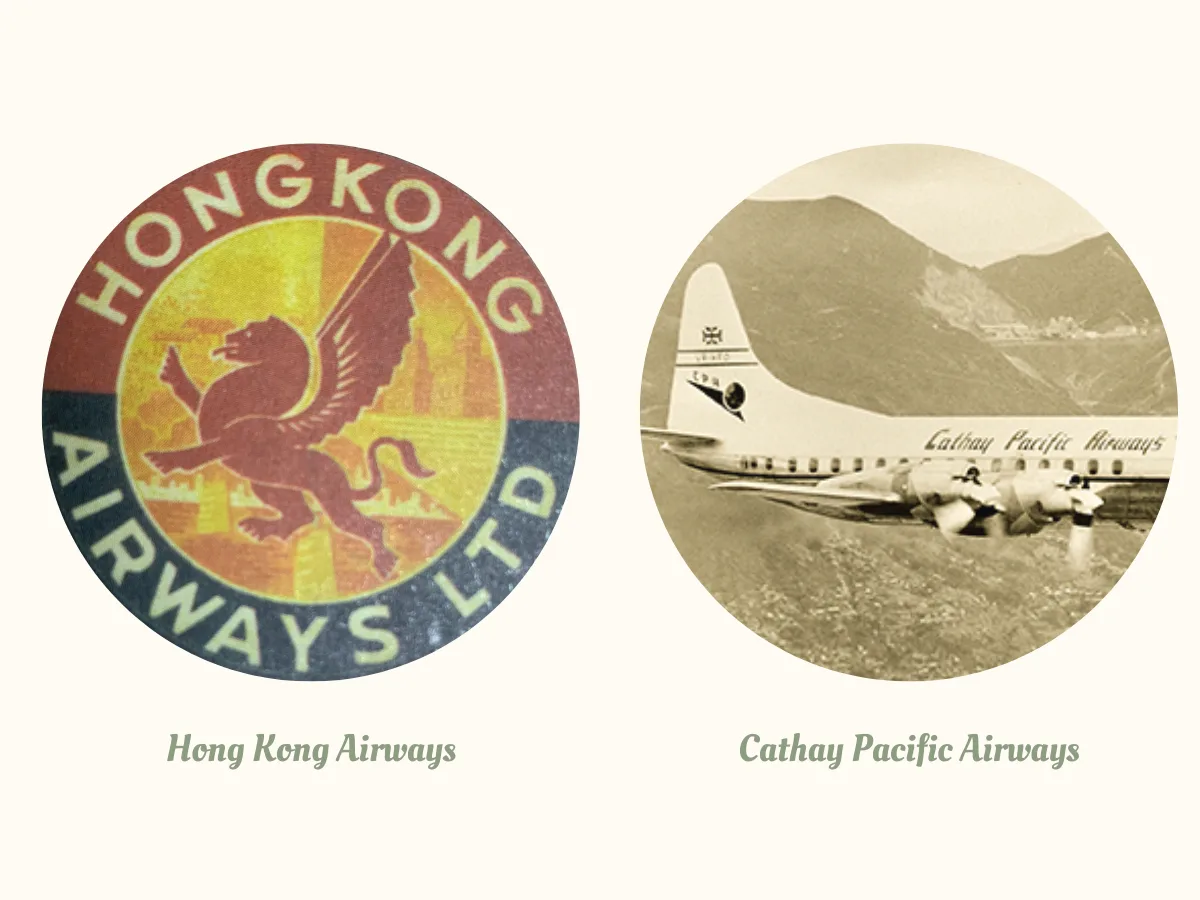
In fact, Cathay Pacific really does carry the soul of a “Hong Kong airline” within it — though not the “Hong Kong Airlines” founded in 2006 under China’s HNA Group. Back in the 1940s and 1950s, Hong Kong had, besides Cathay, another carrier: Hong Kong Airways Limited. The Hong Kong government used traffic rights to coordinate the routes of the two civil airlines of the day — put simply, Cathay flew south (operating routes to Southeast Asia, Australia and so on), while Hong Kong Airways flew north (operating routes to China, Japan, Korea and so on).
After the People’s Republic of China was established in 1949, China closed its doors and banned air links with Hong Kong, and Hong Kong Airways fell into operational difficulty. In 1958, Cathay Pacific was invited to absorb Hong Kong Airways, then held by the British Overseas Airways Corporation (BOAC). The name “Hong Kong Airways” disappeared from that point on, but Cathay Pacific carried on playing the role of “Hong Kong’s airline”.
“Pacific Air”?
The name “Cathay Pacific” came from the ideas of the company’s two founders. Not wanting to call it simply “Air Hong Kong”, they chose the more elegant word “Cathay”, which likewise means China (more precisely, it derives from “Khitan”, the people of northern China — the Liao dynasty you may have read about in history books, the word surviving in European languages as Kitai or Catai). They hoped the company would one day operate trans-Pacific routes to the United States, and so named it Cathay Pacific.
As for the Chinese name, it went from the earliest 太平洋航空 (“Pacific Air”) and 英商太平洋航空 (“British Pacific Air”) to the later 國泰太平洋航空 and 香港太平洋航空. The Chinese term 國泰 (“Kwok Tai”) was evidently an early-20th-century conventional rendering of the word Cathay — since the Latin, Italian and other continental European forms of Cathay are Kitai or Catai. At the time there were also brands such as the Cathay Hotel, Cathay Watch Company and Cathay Bank, none of them connected with Cathay Pacific. In 1950, Cathay Pacific formally adopted the Chinese name 國泰航空, which it has used to this day.
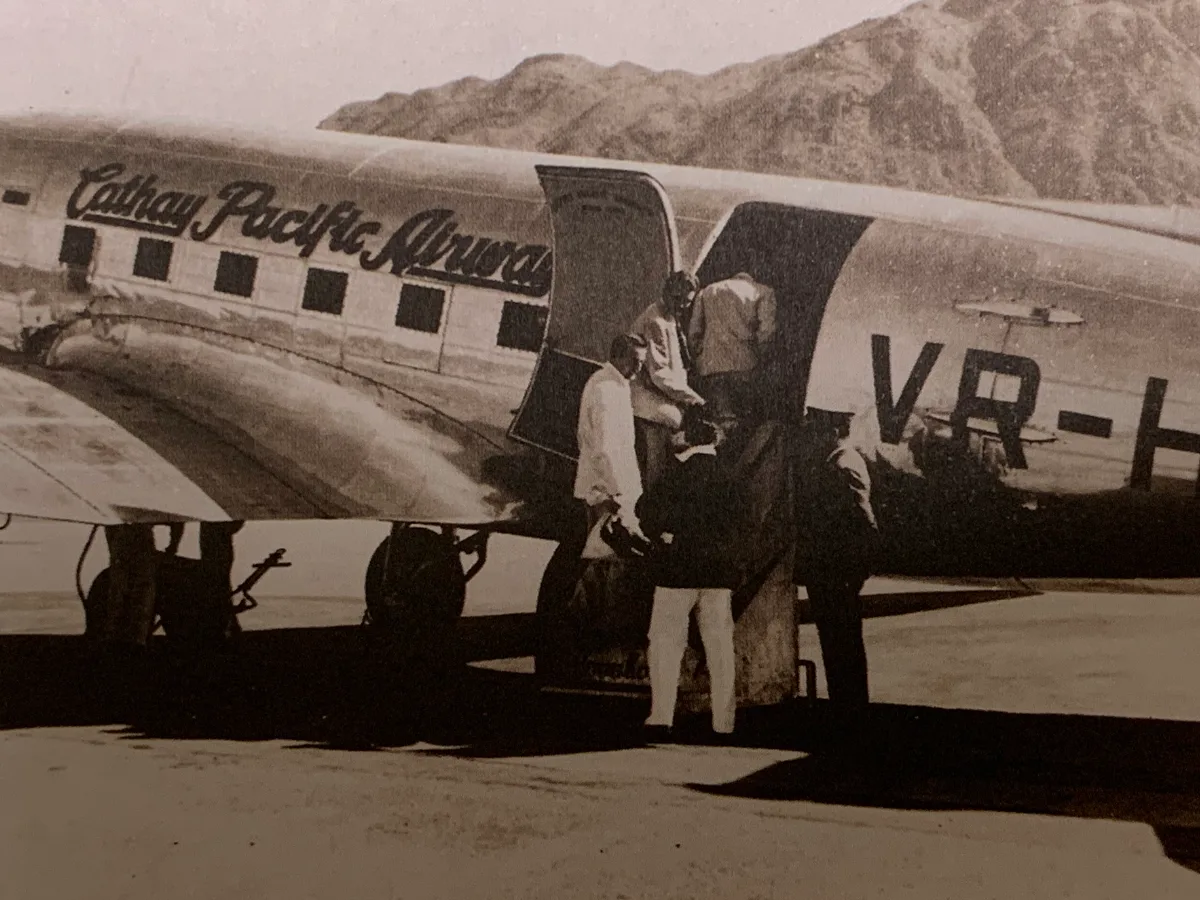
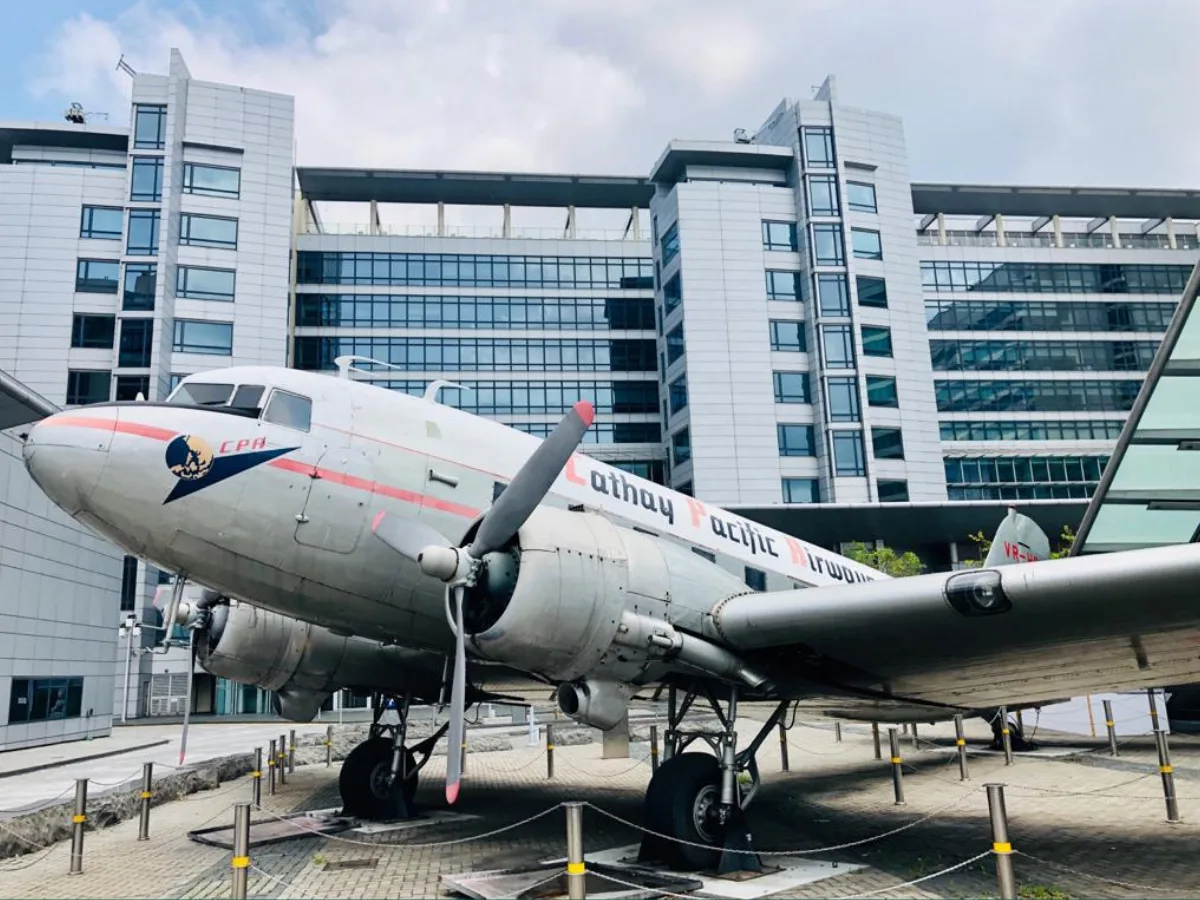
Pictured is Cathay’s first aircraft, named “Betsy”, now kept at the Hong Kong Science Museum for public viewing. You can also watch the Science Museum’s short video on YouTube: https://youtu.be/P7v1oFvI3tM
The Brushwing
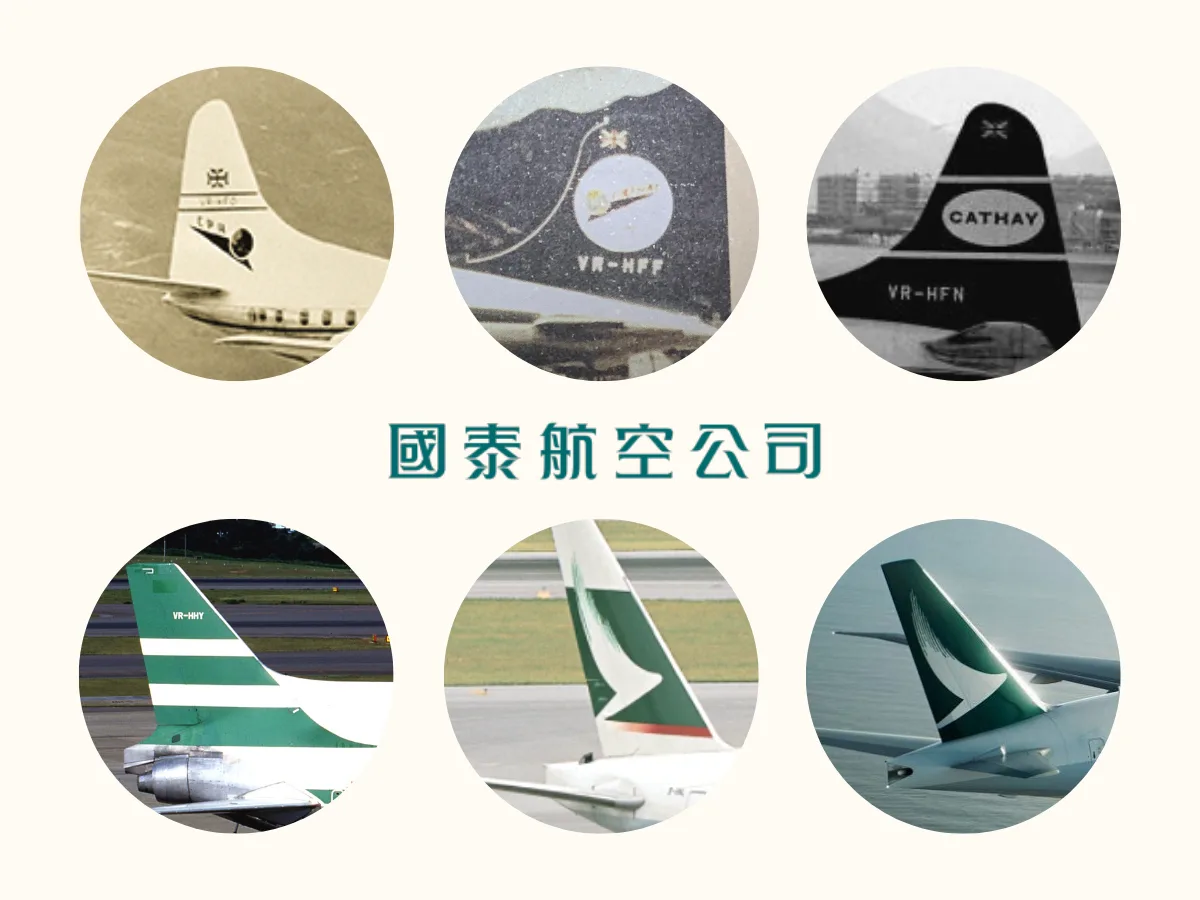
The Cathay Pacific logo has been through several changes, falling broadly into three periods. From the airline’s founding into the 1970s, the logo was built mainly around the English words “Cathay Pacific Airways” or the initials “CPA”. Through the 1970s and 1980s, green-and-white horizontal stripes served as the logo.
Then in 1994, Cathay overhauled its brand mark, launching the “brushwing” logo — a design fusing Chinese calligraphy with a bird lifting its wings in flight — to express the Asian character of the Cathay brand. It was fine-tuned again in 2015, with simplified colours and composition, and remains in use today.
A note on Hong Kong Airlines:
The “Hong Kong Airlines” founded in 2006 has no connection with Cathay Pacific. It came into being when China’s HNA Group acquired a stake in the then CR Airways and renamed it “Hong Kong Airlines Limited”. The English name is not the same as that of Hong Kong Airways Limited, the carrier Cathay Pacific acquired in 1958.
Related brands
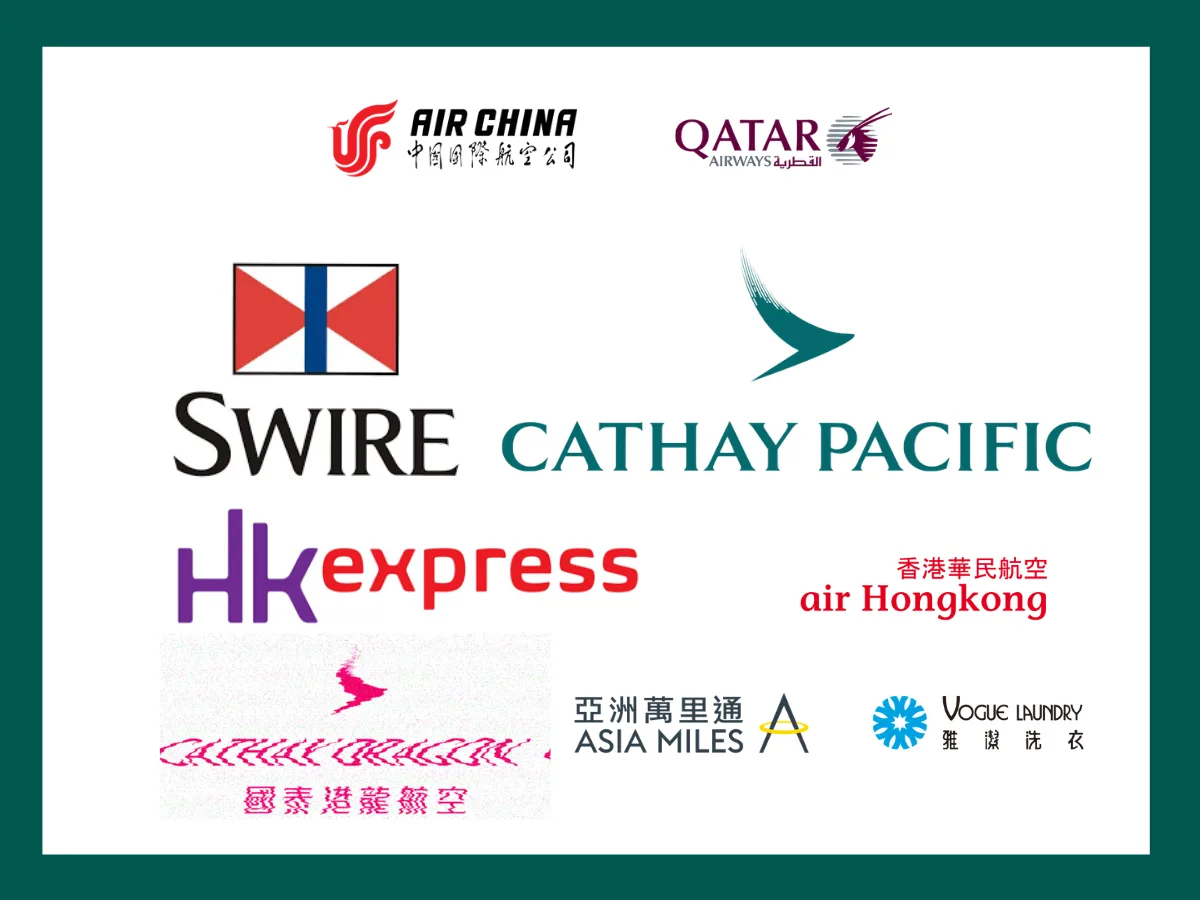
Cathay Pacific’s largest shareholder is the British-heritage Swire group, which is why Cathay aircraft carry the Swire logo on their fuselages. Since Butterfield & Swire acquired 45% of Cathay in 1948, it has run the airline ever since. Today Air China is the second-largest shareholder, Qatar Airways holds close to a tenth of the shares, and the Hong Kong government holds over 6%.
Besides operating Cathay Pacific itself, the Cathay Pacific group wholly owns several other brands, including HK Express, Asia Miles, the cargo carrier Air Hong Kong (香港華民航空) and the laundry business Vogue Laundry (雅潔洗衣).
Of these, HK Express and Cathay Dragon — which ceased operations in 2020 — both joined the Cathay Pacific group through acquisition, and so each has a brand story of its own.
Cathay’s first and second aircraft
Cathay’s first aircraft, “Betsy”, introduced above, is now kept at the Hong Kong Science Museum — do pay it a visit if you are interested. The Science Museum’s website is here: https://hk.science.museum/zh_TW/web/scm/pe/transport.html#/nogo [archived]
As for Cathay City near the airport, a replica of Cathay’s second passenger aircraft, “Niki”, stands outside the entrance, and can likewise be visited at any time. For details, see the Cathay website: https://discovery.cathaypacific.com/points-in-time/?lang=zh-hans
Sources: 《航空新舊聞》(Aviation News Old and New) by 趙予杰; 《從啟德出發》(Departing from Kai Tak) by 吳詹仕; the Cathay Pacific website; 《香港舊事重提》by 江啟明; 《香港歷史散步》edited by 丁新豹; 《香港走過的道路》by 劉潤和 and 高添強; 《香港金融風雲35載》edited by 陳景祥
Published in Sep 2020 and updated in Oct 2020 by Hong Kong Brand Museum 香港品牌博物館
Dragonair dies of the pandemic
In 2020, on top of living through the ravages of COVID-19, Hong Kong people watched a familiar brand succumb to the economic climate and disappear. In October, Cathay announced that Cathay Dragon would cease operations, with its routes planned to pass to Cathay Pacific and HK Express.
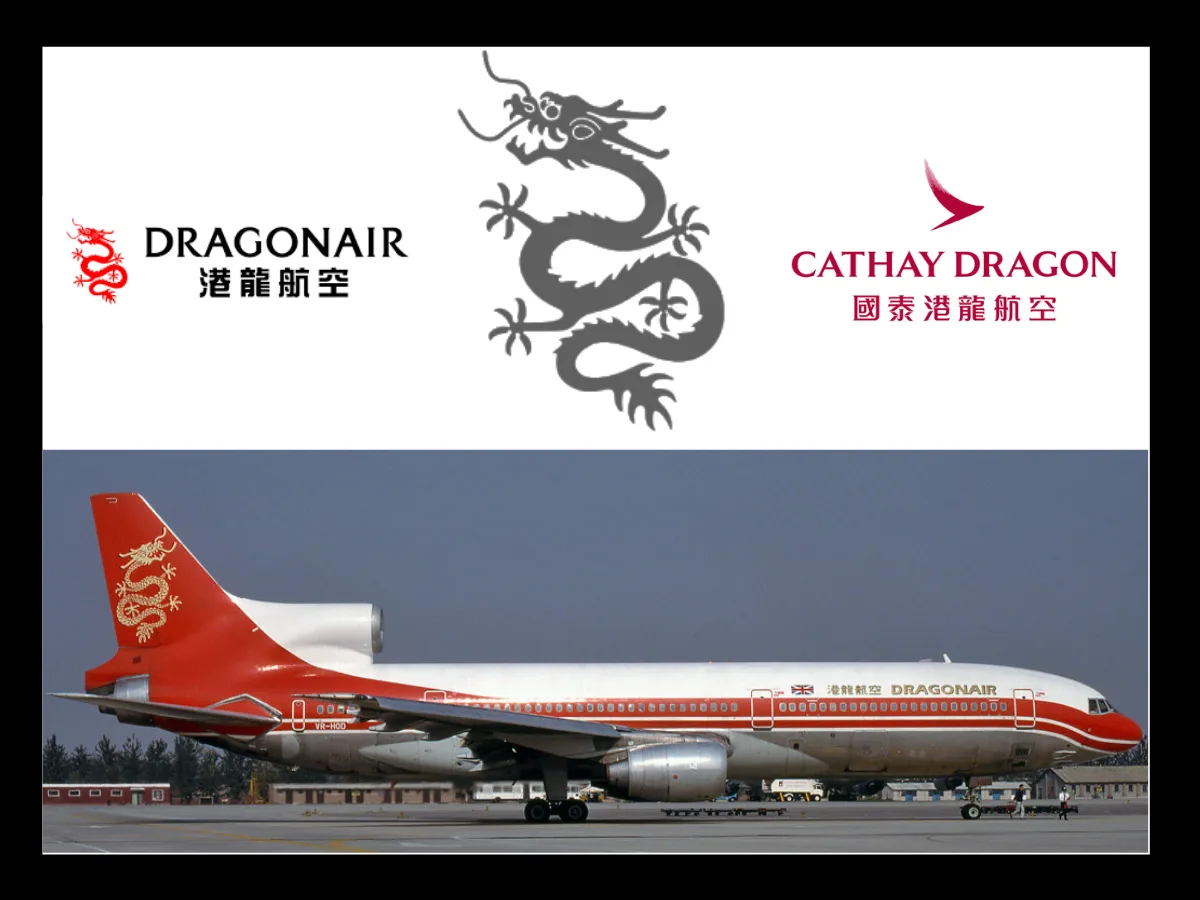
Cathay Dragon’s predecessor, Dragonair, was founded in 1985, initially with mainland Chinese backing — its shareholders included Bank of China, China Resources and China Merchants. Later, amid political manoeuvring, Sir Yue-kong Pao — a British national who had acquired Wheelock and The Wharf — became the largest shareholder, while the family of Chao Kuang-piu, Dragonair’s lead founder, became the second largest.
In 1990, the Swire group launched a takeover of Dragonair, whose operations were hobbled by the British Hong Kong government’s aviation policy, while at the same time inviting the Chinese state investor CITIC to take a stake in Cathay — positioning itself for the period after Hong Kong’s return to China.
After Cathay fully acquired Dragonair in 2006, the airline was renamed “Cathay Dragon” in 2016 and adopted a red version of the Cathay mark.
Dragonair’s aircraft gradually had their fuselage marks replaced, but the traditional red flying dragon still appeared on the nose. Even after the renaming, most Hong Kong people kept calling the airline “Kong Lung” (港龍) or “Dragonair” rather than “Cathay Dragon” — right up to the brand’s end, when much of the news coverage still reported the shutdown under the name “Dragonair”.
(For more of the “Dragonair” brand story, see the Dragonair Hall.)