MTR Hall
MTR Corporation Limited
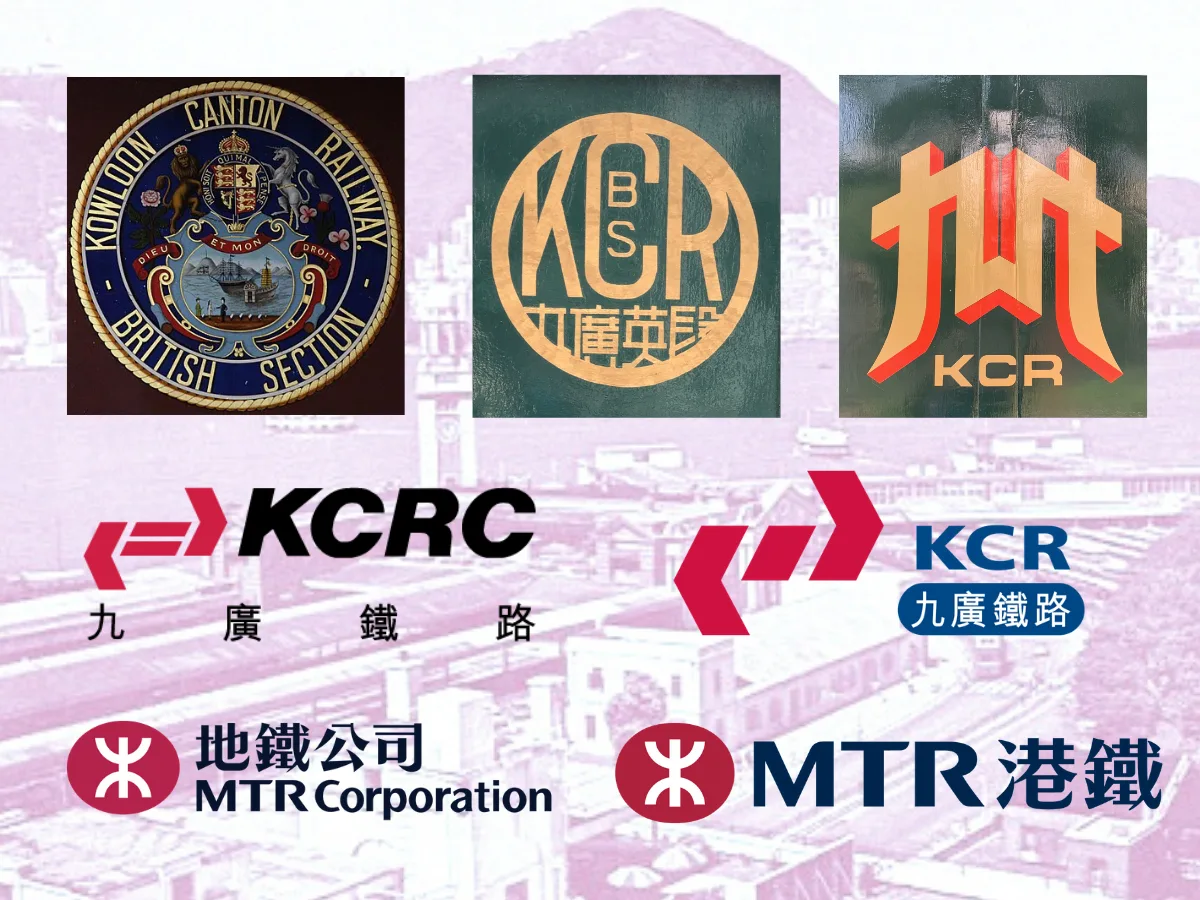
Railways may be public undertakings, but they are in close contact with the public every day, and so railway operators around the world — in Britain, Japan and elsewhere — maintain distinctive brand images to strengthen their emotional bond with passengers and build goodwill. Railway operations in Hong Kong date back to the early twentieth century: the Kowloon–Canton Railway (British Section), opened in 1910, was the British-administered portion of the railway from Kowloon to Canton (Guangzhou), running from the Clock Tower in Tsim Sha Tsui to the border at Lo Wu. A branded Hong Kong railway company, however, did not appear until construction of the underground railway began in the late 1970s.
Railway brands in Hong Kong’s history
1910
Hong Kong’s earliest railway brand
The Kowloon–Canton Railway (KCR), in service since 1910, was long managed by a government department, the Kowloon–Canton Railway Office. Although it had its own logo, and its carriages were painted with the insignia of the day in different periods, more fully developed brand management had to wait for the Mass Transit Railway Corporation, established in 1974 — the predecessor of today’s MTR Corporation. A few years after the Mass Transit Railway — known to everyone as 地鐵 (dei tit, “the underground”) — opened in 1979, the government took the opportunity of the KCR’s electrification (laying overhead power lines to replace the original diesel trains with electric ones) to establish the Kowloon–Canton Railway Corporation, which replaced the old Railway Office in managing what is now the East Rail line. From then on, Hong Kong had two railway brands: the MTR (地鐵) and the KCR (九鐵).
1970s
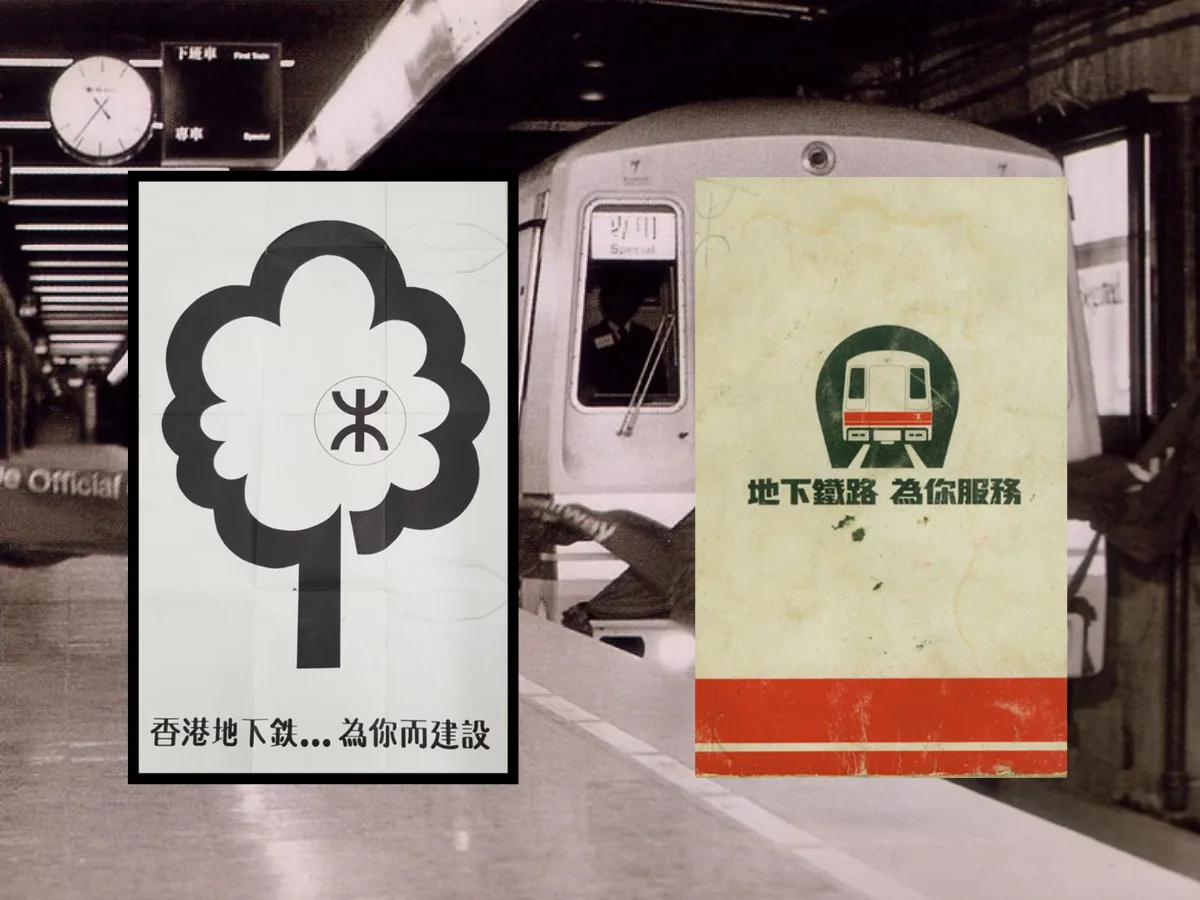
“Ride the underground railway — you’re there in no time” (搭地下鐵路,話咁快就到)
The MTR’s brand-building began well before the line opened. Because the construction works disrupted the lives of many residents, the site hoardings already carried the advertising slogan 「香港地下鐵,為你而建設」 (“Hong Kong’s underground railway, built for you”) before a single train had run. The slogan was later changed to 「地下鐵路,為你而建造」, because some felt that the term 地下鐵 sounded too Japanese, so 地下鐵路 (“underground railway”) was used in publicity instead.
After the line opened, Hong Kong people generally called it 地鐵 (dei tit) — a habit they never shook off even after 港鐵 (the MTR) appeared. In fact, cities all over the world have metro systems, and 地鐵 had become the generic term. The MTR Corporation and the government wanted the public to replace it with 港鐵; some commentators saw this as an attempt to avoid the impression of the MTR swallowing up the KCR, but the results appear to have been less than ideal.
Chinese-language teachers in the 1980s would also cite these two advertising slogans to demonstrate the ingenuity of rhyme in Chinese: quietly changing 建設 to 建造 — so that the final word rhymed with 路 (lou) rather than 鐵 (tit) — solved the rhyming problem created when 地下鐵 became 地下鐵路. Many Chinese teachers still in the classroom today have probably never seen either advertisement.
1980s
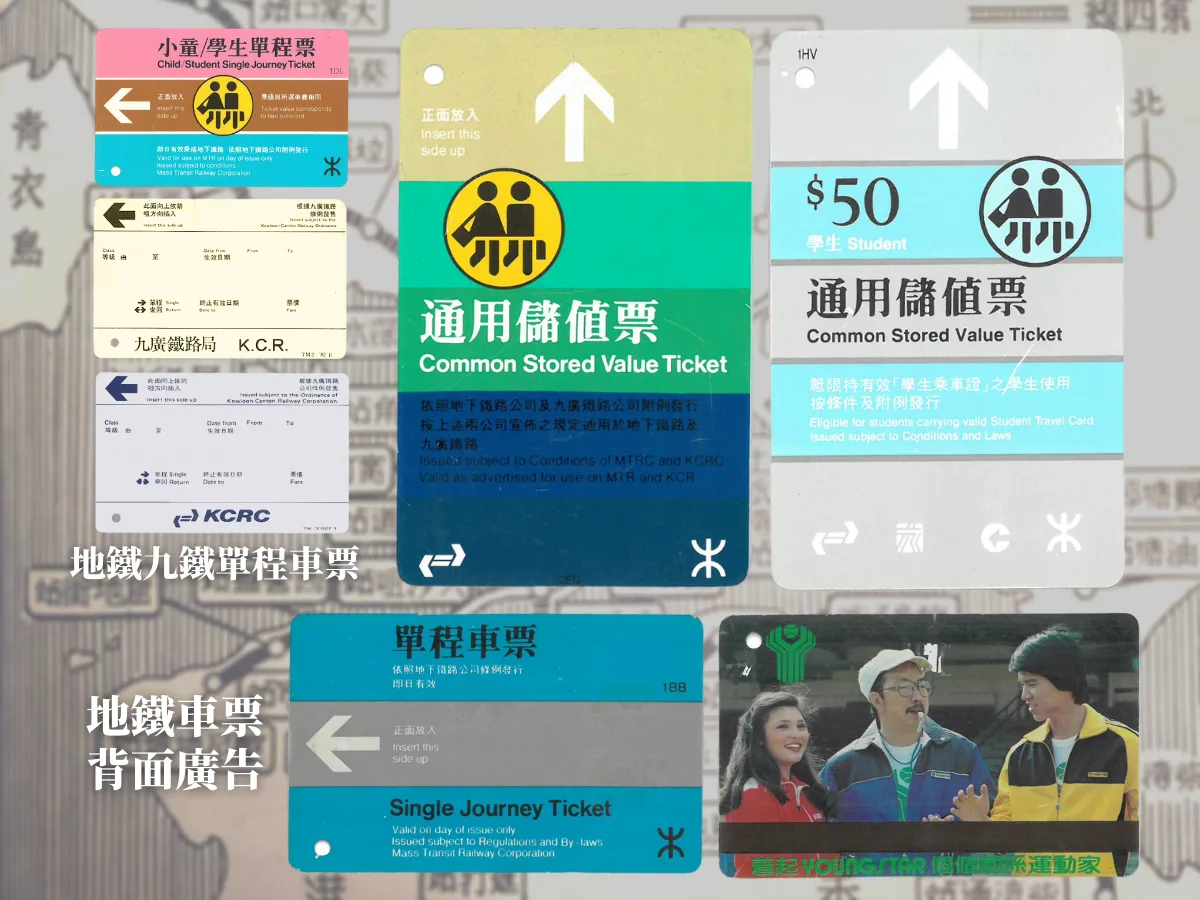
The Common Stored Value Ticket
In those days the MTR and KCR brands were kept quite distinct. Their ticket gates were not interoperable — changing trains at Kowloon Tong meant exiting the gates and entering again — and the word “common” in Common Stored Value Ticket (通用儲值票) itself signalled a ticket that worked across the two brands.
Before the Octopus card existed, the MTR and KCR each used their own magnetic plastic tickets. To make life easier for interchange passengers, the Common Stored Value Ticket was introduced. It was printed with both the MTR and KCR logos and named 通用 (“common use”), so that passengers knew it could be used on the two brands’ different railway systems. In 1989, the logos of KMB (Kowloon Motor Bus) and Citybus were added as well, for the convenience of passengers changing to buses.
Until the Octopus card was launched, stored value tickets were very much a part of everyday life in Hong Kong — including knowing how to make the most of the remaining-balance concession, which let you take one last ride of any length on whatever value was left. The MTR and KCR also frequently issued commemorative tickets on different themes, which the public rushed to buy and collect — another important part of running a brand and strengthening its bond with customers.
Hong Kong’s
Railway brands
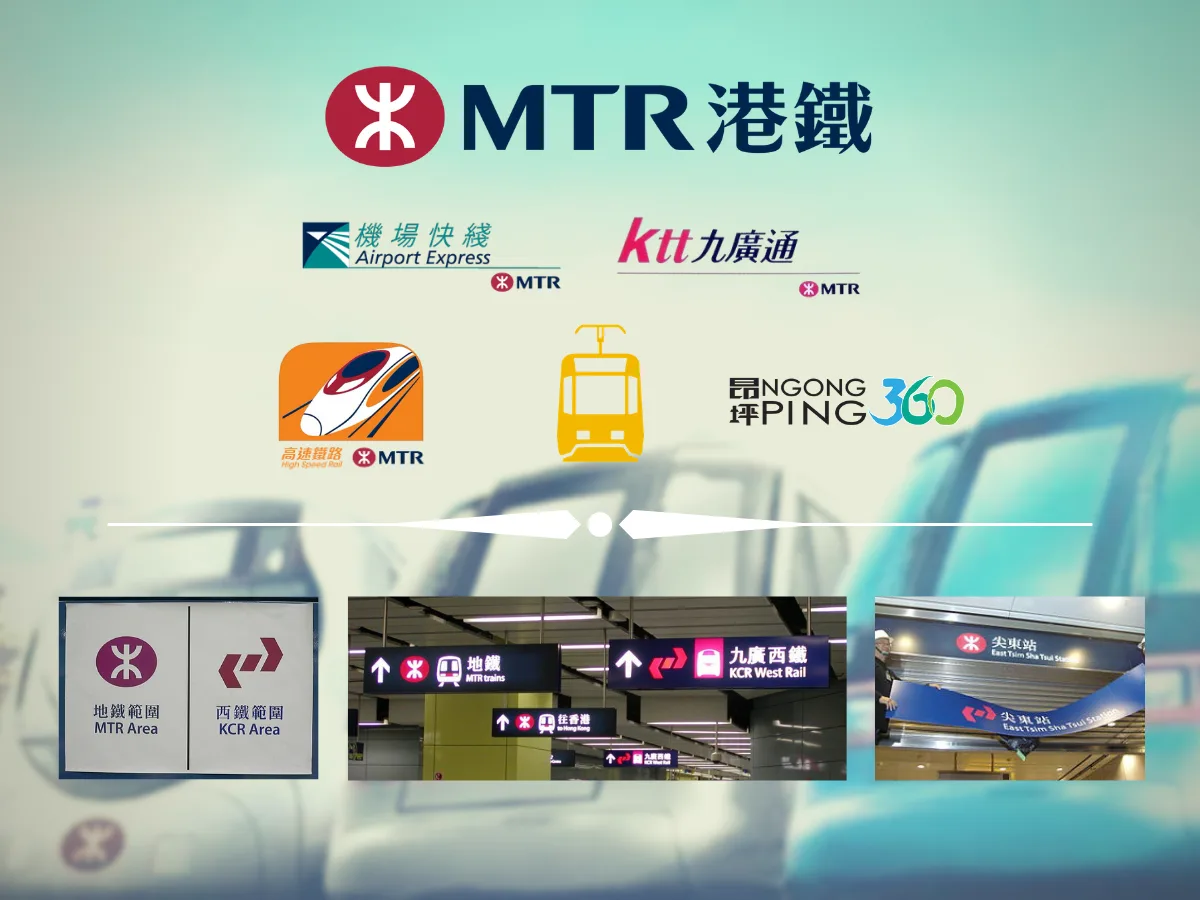
After “the MTR” unified Hong Kong’s railway brands in December 2007, every railway station adopted the original 地鐵 logo — including the KCR network, the Light Rail, and the feeder buses the KCR had operated. Interchange stations and pedestrian signs showing the MTR and KCR logos side by side became a thing of the past.
Because the MTR kept the old 地鐵 logo, anything bearing the KCR logo instantly became a piece of history — East Rail and Light Rail trains, the signage around them, and so on. The only thing the KCR left behind is the Kowloon–Canton Railway Corporation itself. The company still exists, but all of its railway assets have been granted to the MTR to operate under a service concession, so ordinary passengers no longer encounter the KCR in daily life.
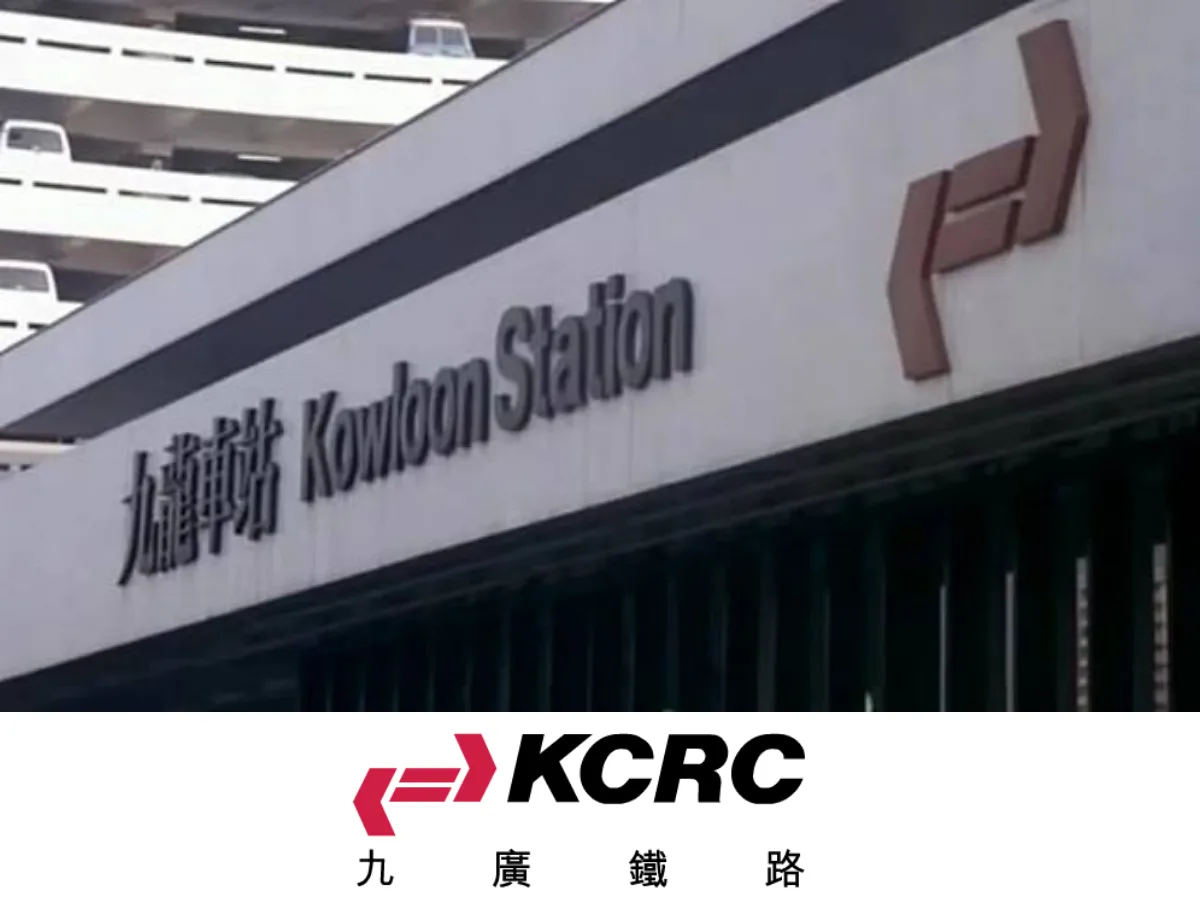
Kowloon Station becomes Hung Hom Station
Perhaps the most fondly remembered piece of the KCR era is “Kowloon Station” (九龍車站) — today’s Hung Hom Station. In those days, every station name on the East Rail line ended in 車站 (“railway station”): Kowloon Tong Railway Station, Mong Kok Railway Station, and so on. Kowloon Station was the terminus of the through trains between Kowloon and Canton (Guangzhou), and so had always carried the name “Kowloon”.
With the East Rail line planned to extend to East Tsim Sha Tsui, and the Airport Express having a “Kowloon Station” of its own, the Kowloon Station beside the Hong Kong Coliseum in Hung Hom was renamed Hung Hom Railway Station in 1996, and became simply “Hung Hom Station” when the MTR took over in 2007. So if someone mentions the “Kowloon Station” in Hung Hom, it feels like stepping straight back into the KCR era.
The MTR beyond Hong Kong
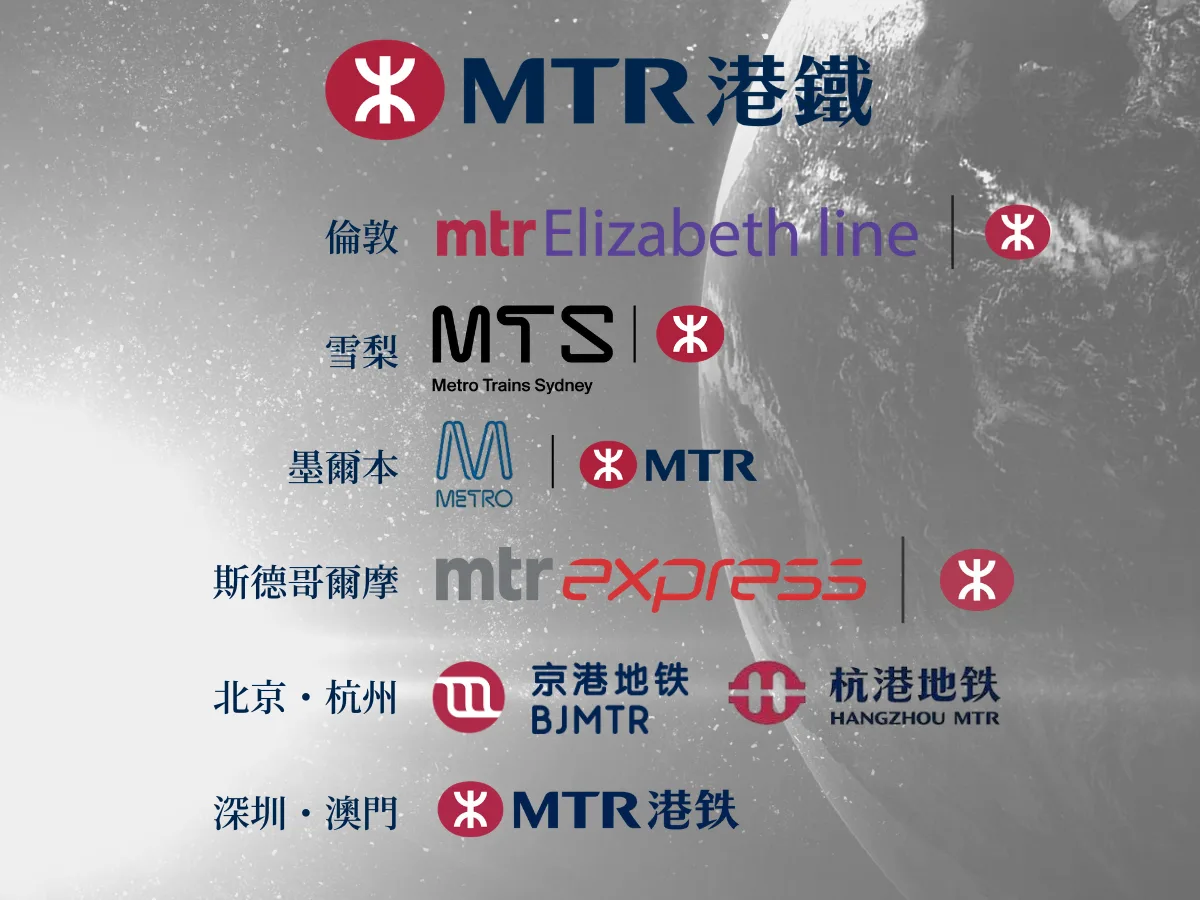
Since its establishment, the MTR Corporation has deliberately strengthened its brand-building and pushed beyond Hong Kong, exporting the MTR logo — in the original 地鐵 shape that has accompanied Hong Kong people for more than 40 years — to London, Melbourne, Sydney, Stockholm, Macau, Beijing, Hangzhou, Shenzhen and other places.
If Hong Kong people travelling in these places have the chance to ride the railways there, it is worth looking out for the familiar 地鐵 logo far from home — and noticing whether the publicity materials, signage, station announcements and style of service carry a familiar flavour.
Hong Kong Railway Museum
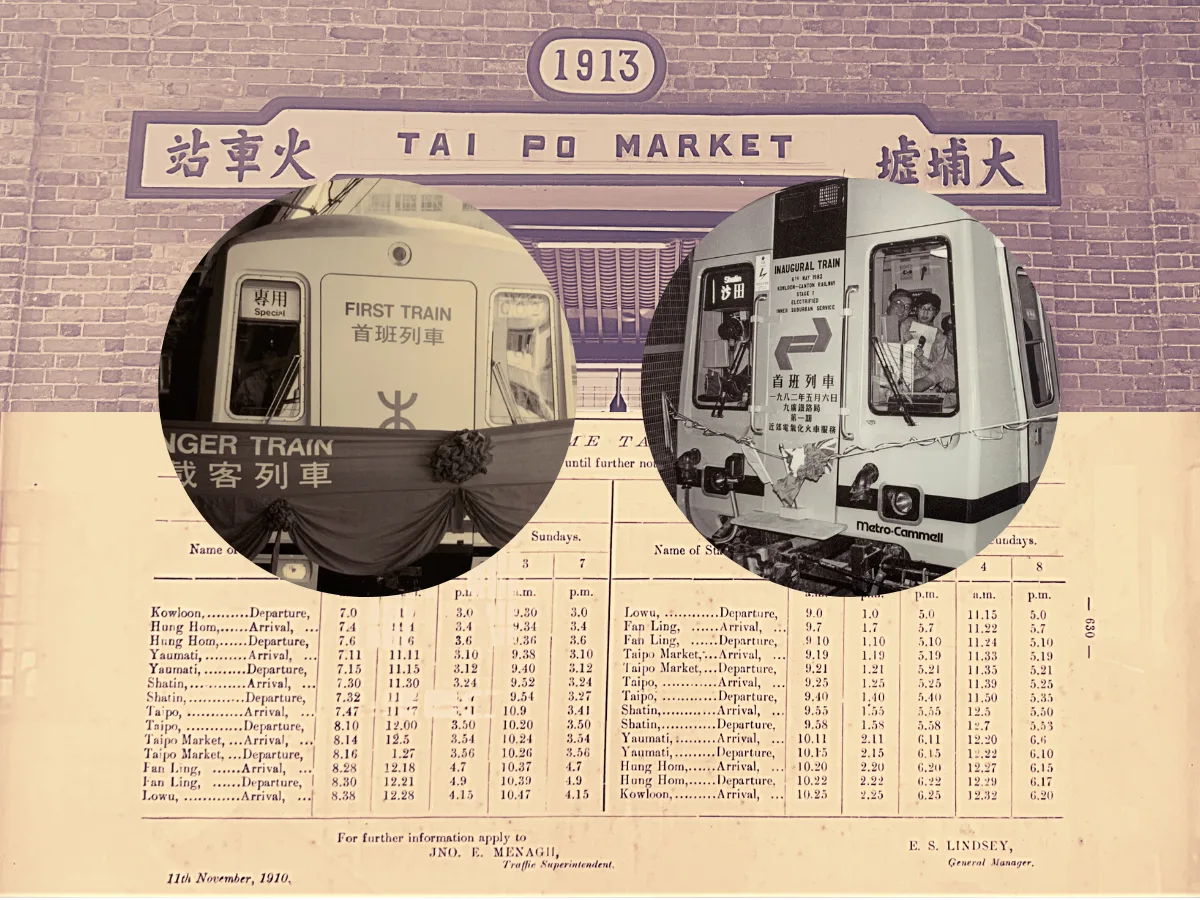
The Hong Kong Railway Museum stands in the centre of Tai Po Market. Covering 6,500 square metres, it is an open-air museum converted from the site of the old Tai Po Market Railway Station. The old station building, erected in 1913, is a distinctive traditional Chinese building with a pitched roof. The station was declared a monument in 1984; after restoration and re-display, the museum opened to the public in 1985.
If you would like to learn more about the history of the Kowloon–Canton Railway, the KCR Corporation and the MTR Corporation, you can take the Railway Museum virtual tour — or, with time to spare, visit the Hong Kong Railway Museum in person; details at: https://www.heritagemuseum.gov.hk/zh_TW/web/hm/museums/railway.html
Sources:
Hong Kong Railway Museum
《香港舊事重提》 by Kong Kai-ming
《香港歷史散步》 edited by Joseph Ting Sun-pao
《香港走過的道路》 by Lau Yun-wo and Ko Tim-keung
《香港金融風雲35載》 edited by Chan King-cheung
https://www.mfhk-vt.com/RailwayMuseum/TC/
https://www.kcrc.com/tc/about-kcrc/history.html
https://www.scmp.com/photos/today-photos/2148908/transformation-transport-hong-kong
https://www.hk01.com/article/767351?utm_source=01articlecopy&utm_medium=referral (東鐵過海|1910年通車歷百年變遷 英女王揭幕紅磡站)
https://www.facebook.com/CantoneseMuseum/posts/2615579065118956/ (九廣鐵路英段通車, opening of the KCR British Section)
https://gwulo.com/node/44836 (Re-starting KCR services after WW2)
https://digitalrepository.lib.hku.hk/
https://www.ourchinastory.com/zh/2972
https://youtu.be/sZ7iWmOd7JA
https://hkrail.fandom.com/wiki/%E5%85%A9%E9%90%B5%E5%90%88%E4%BD%B5 (兩鐵合併, the rail merger)
https://www.facebook.com/VCRBase/photos/a.10153009150396699/10156730496956699/?type=3 (「香港地下鐵,為你而建設」)
https://www.bilibili.com/video/BV1ra4y1W7Wi/ (探古寻源:地下铁路(一))video
https://www.hkmemory.hk/ [archived]
Creativecommons.org (KCR photo credits: foundin_a_attic, [archived] under [archived] CC BY 2.0) [archived]
https://endlesssummerihara.wixsite.com/diffangleshk/single-post/2015/08/28/%E6%B7%BA%E8%AB%87%E5%9C%B0%E9%90%B5logo
https://blog.justfont.com/2015/04/kp-check-this-out/
https://www.mtr.com.hk/ch/corporate/consultancy/railwayoperation.html
<../pdfs/mtr-business-overview-c.pdf>
https://hk.on.cc/hk/bkn/cnt/lifestyle/20190319/bkn-20190319213025571-
Published in Sep 2020 by Hong Kong Brand Museum 香港品牌博物館