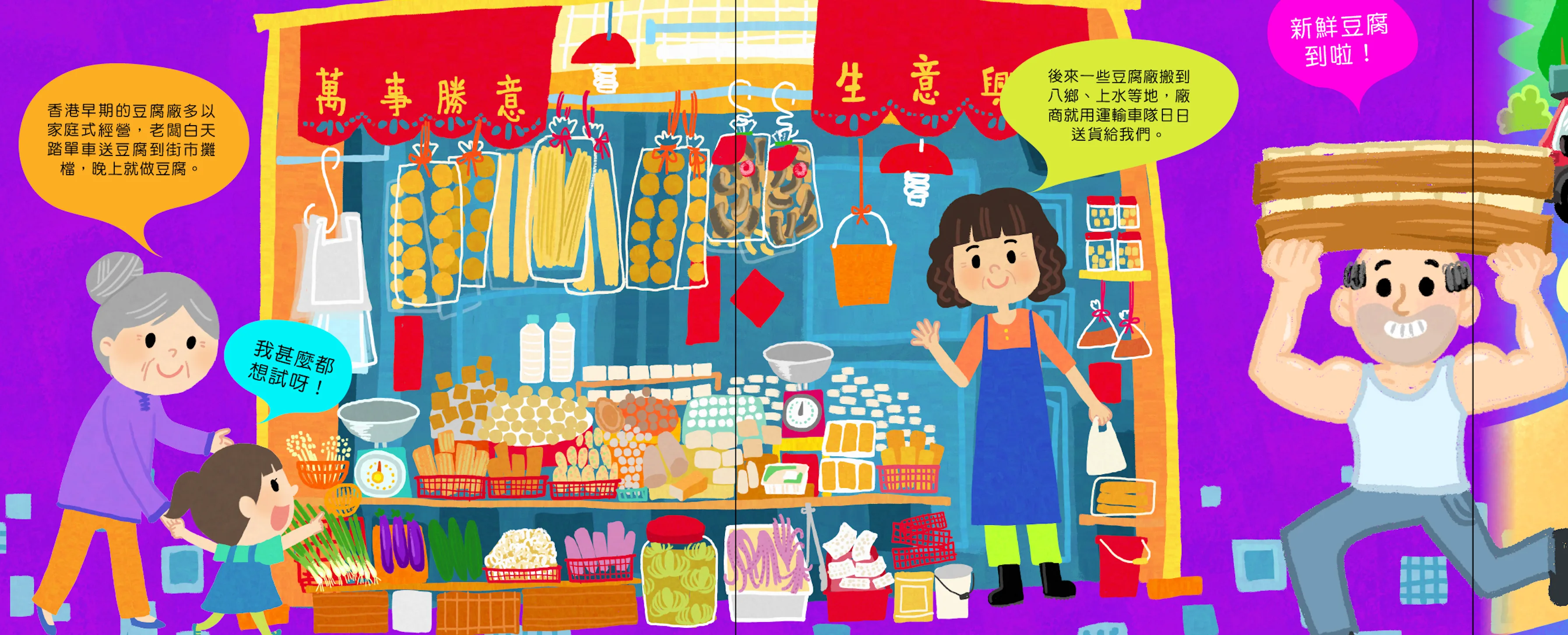
[Further Reading] The Tofu Stall in the Wet Market
The Tofu Stall in the Wet Market | Further Reading
The brand story of Top Soya (壹品豆品):
Being able to eat tofu made fresh that very day is a kind of happiness. Chatting with Jeff Lo Mang-hing (羅孟慶), founder of Top Soya, felt like boarding a time machine back to the Hong Kong of several decades ago.
In the 1960s and 70s Hong Kong had over a hundred tofu factories. By 1997, twenty-four remained; today there are no more than ten. Of the roughly nine soya-product factories still operating in Hong Kong, San Fat Heung Food Products Co., Ltd. (新佛香食品有限公司) is one that managed to escape the industry’s gradual decline and keep this so-called sunset trade developing. In 2007 the company created the “Top Soya” soya-milk brand (壹品豆漿). It is Hong Kong’s largest soya-product factory, and its products supply the gai si (街市, wet markets), supermarkets, eateries of every kind and chain restaurants.
“Buying tofu at the wet-market stall”
Jeff’s mother worked at a wet-market stall for almost fifty years, living through the different eras of Hong Kong’s wet markets and the evolution of the soya-product trade. When the conversation turned to how tofu was wrapped in different periods, it proved surprisingly fascinating. Decades ago there were no plastic shopping bags: when you bought tofu at the wet market, the stallholder would wrap it in newspaper and tie it with haam sui cho (鹹水草, dried sedge straw traditionally used for tying parcels). This old packaging wisdom actually worked — it made the tofu much harder to crush on the way home.
Later, tofu came to be wrapped in the glossy paper used for char siu (叉燒, barbecued pork). Only around the 1980s and 90s did stalls begin putting tofu in red or white plastic bags, sometimes wrapping it in paper first and then bagging it. Today you can also buy pre-packaged boxed tofu at the wet market, because many tofu stalls have now installed suet gwai (雪櫃, refrigerators), and this boxed tofu has proved popular with many customers.
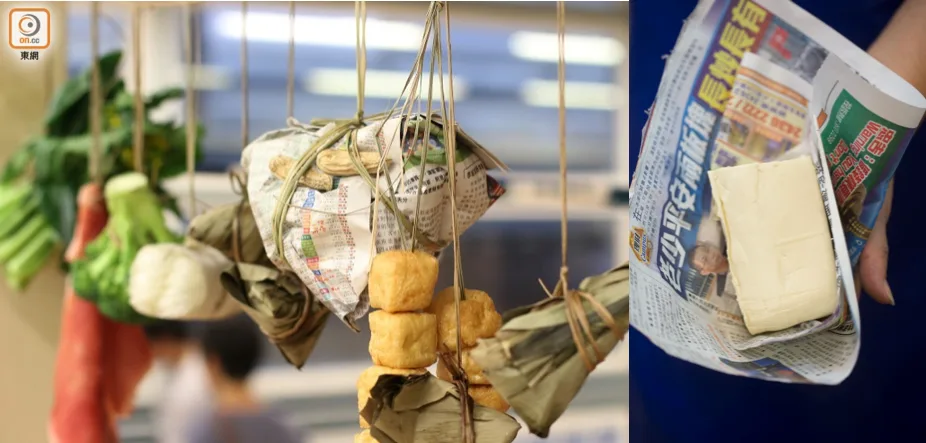
In the old days, tofu stallholders would wrap the tofu in newspaper and tie it with haam sui cho sedge straw. Reference image sources: https://hk.on.cc/hk/bkn/cnt/news/20161215/bkn-20161215060057931-1215_00822_001.html https://www.mpweekly.com/culture/環保-鹹水草-走塑-130656
“Stories of making soya products in the old days”
Jeff recalls watching his father start making tofu in the small hours of his childhood — his father would begin work at four in the morning, long before anyone else was awake. At first the tofu went out by bicycle, with five or six boards of tofu loaded on the front and another five or six on the back.
Later they delivered with a Leyland “red-head” lorry; at the time the MTR (the former Mass Transit Railway) had not yet been built, and using this kind of lorry to move goods was very common. Jeff remembers a delivery man who rode along standing in the cargo bed at the back — while the lorry was moving he had to steady the tofu with one hand and grip a rope at the tail of the lorry with the other to keep his balance.
The wet markets of those days were very rudimentary — stone steps everywhere, no level ground. The markets were so cramped that even a handcart could not get in. A delivery worker had to haul the tofu alone, sometimes putting a cloth on his head and carrying five or six boards of tofu on it to reach the market stalls; those delivering soya milk carried the fresh soya milk on a daam tiu (擔挑, shoulder carrying pole).
The tofu stallholders worked exposed to sun and rain, selling stacks of tofu right at the roadside. Back then, climbing onto the “tofu lorry” meant slowly stepping up a wooden ladder at the tail of the vehicle. The tofu delivery men were as agile as stuntmen. To a child, these scenes were unforgettable classics. Later, indoor wet markets appeared in Hong Kong — with no air-conditioning yet, of course — and their tiny, cell-like stalls became the tofu shops that many neighbours visited every day.
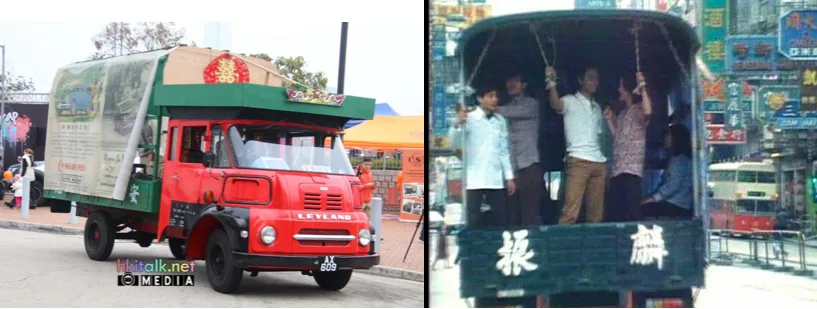
In those days, delivering goods with a Leyland “red-head” lorry was very common.
Reference image sources:
https://www.hkitalk.net/HKiTalk2/thread-1055077-1-1.html
https://ne-np.facebook.com/theoldhongkong/photos/a.648910551801562/6521173684575190/
“Hong Kong may be the only place in the world where fresh tofu reaches the wet market twice a day”
The tofu sold at Hong Kong’s wet-market stalls is in fact extremely fresh, because it is made fresh every day. Top Soya delivers to the wet markets twice daily — once at four or five in the morning, and again at twelve noon. Thanks to convenient transport and short journeys, Hong Kong may be the only place in the world that manages two deliveries of fresh tofu a day. Singapore and Taiwan each deliver only once a day, but Hong Kong still manages two: one production run at midnight, and another at eight or nine in the morning. So the tofu you buy at a Hong Kong wet market is always at its freshest. With two production runs a day, whether you go to the market in the morning or after midday you have the chance to buy the freshest tofu — a genuine Hong Kong speciality.
What customers buying tofu at the wet market fear most is tofu that has sat too long and turned sour — so next time you come across “tofu that is still warm” (仲暖嘅豆腐), you can be sure it is the freshest batch. The stallholder deftly cuts the tofu with a square stainless-steel blade, and every block comes out remarkably neat; if you ask for “an edge piece” (要邊), you may well get a slightly larger block.
Hong Kong people love soya products, and sales of boxed tofu and unsweetened soya milk keep rising. The wet markets renovated in recent years each have their own themes and character, which has kept the market for soya products stable. And as customers pay more attention to health, sales of unsweetened soya milk keep climbing. The most popular soya product at the wet market turns out to be soft “water tofu” (水豆腐); among soya milks, original-flavour soya milk ranks first and unsweetened soya milk second.
Hong Kong people love drinking soya milk, and soya milk from all over can be bought in Hong Kong. The craft differs between Japan and Hong Kong: Japan strains the lees after cooking, while Hong Kong strains them raw before cooking. In Japan’s cold climate, more soya beans are used to make a small, concentrated cup of hot soya milk — warming, and smoother in texture. Cooking the milk first and straining afterwards (“cooked lees”) makes it silkier. In Hong Kong, soya milk is also adjusted to the weather — smoother and more thirst-quenching in summer, richer in winter. Taiwanese soya milk is comparatively sweet, as people there like it with sugar, which masks the beany taste.
“Why is the brand called 壹品 (yat ban)?”
One part of building a brand is designing its logo. Hidden inside the Top Soya logo are the four characters 壹品豆品 (“yat ban dau ban”, the brand’s soya products), and the brand name stands for “quality first” (品質第一).
Children who had seen logos stamped on Japanese tofu asked whether Hong Kong-made tofu would ever carry a stamp. Jeff’s view is that stamping a logo on tofu depends on whether it brings value to the customer. “Branding” a logo onto tofu raises questions of how to apply it, of product quality and of food safety. In Japan, every tofu workshop has its own craft, handed down through the generations, so the names and marks on the tofu carry real meaning. What many people do not know is that the whole boards of tofu San Fat Heung sends to the wet markets do in fact bear the San Fat Heung logo on their surface — take a look next time.
“Times change. So do consumers’ tastes”
An industry as old as soya products must keep adapting to the market, then change step by step. Jeff recalls that when boxed tofu was first launched, the market response was poor. Customers complained that “boxed tofu isn’t tofu — only tofu bought at the wet market is real tofu”. Later, when unsweetened soya milk was launched, some customers grumbled: “Why so stingy with the sugar? Sugar-free soya milk is undrinkable!”
Changes in packaging have brought customers real benefits. The way soya milk is cooked changed, for instance: pasteurisation was introduced into the process, along with rapid chilling, which extends its shelf life. In the old days tofu factories had no cold rooms — hot tofu went straight to the wet market, which is why the freshest tofu was found there. From around 2000, demand for packaged soya products grew, and chain restaurants demanded longer freshness; so the tofu factories began installing cold rooms and running refrigerated lorries to keep products fresh in transit for longer. Then boxed tofu arrived, making tofu even more convenient to buy and eat. The first company in Hong Kong to make boxed tofu was Pak Fook (百福豆腐); Top Soya was the second.
Today Top Soya is Hong Kong’s largest traditional soya-product factory, with close to 100 staff, including several dozen master tofu-makers. It produces a wide range of products, supplying wet markets, restaurants, chain stores and more.
In recent years customers have placed great weight on product quality, pushing manufacturers to keep raising their standards.
Traditional tofu-making starts with soaking the beans, then grinding them into a slurry, separating out the lees, and then cooking. Today the cooking is done not over an open flame but by steam in stainless-steel vats, which saves labour. Once a big 200-litre vat of soya milk is cooked it must coagulate, and the curd is then ladled into wooden boxes, section by section, and pressed into tofu. Good tofu demands the freshest, grade-one, non-genetically-modified soya beans. Top Soya was the first factory in Hong Kong to produce organic tofu.
Soya milk packaging has evolved with the times too. Hong Kong people used to drink soya milk from cups; in the 1980s and 90s, plastic cola bottles were adopted for soya milk. Later, for hygiene and quality control, production moved to sealed pipework and high-temperature-sterilised bottles. Food packaging must also meet the “7+1” labelling requirements and comply with the Trade Descriptions Ordinance. Every product carries a barcode recording the details of its production — just like a birth certificate (出世紙) — so the manufacturer can trace it effectively.
Times change, but Hong Kong people’s love of soya products has never changed. Small factories and large ones alike, Hong Kong’s soya-product industry is still there beside Hong Kong people, making fresh and delicious soya products every day.
How different soya products are made: 1. Cooking the soya milk
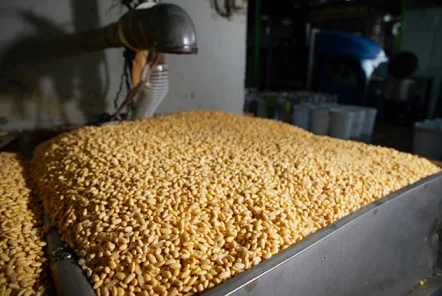
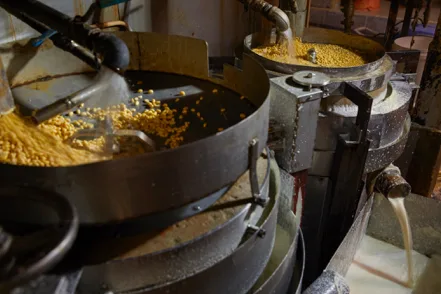
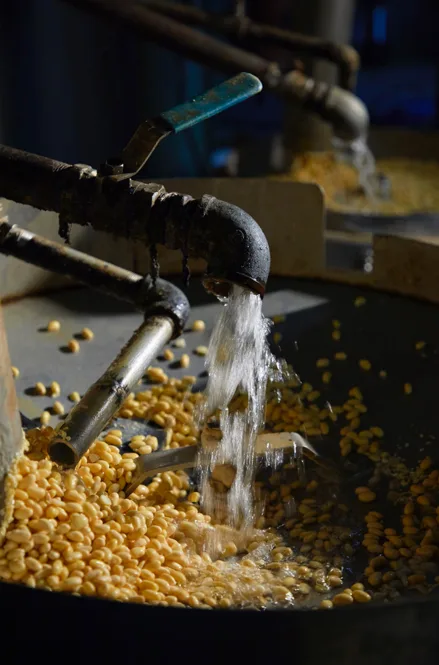
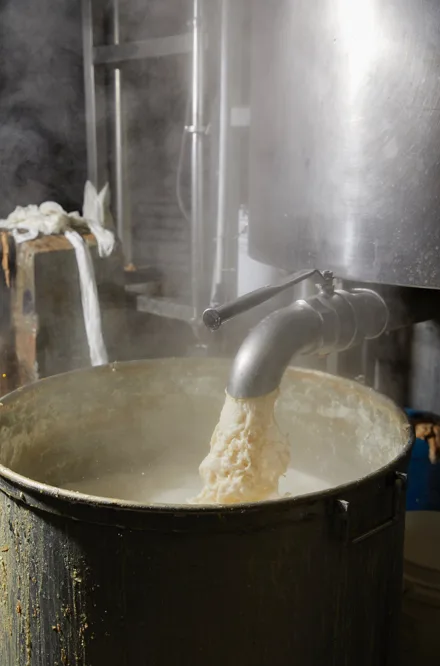
Soaking the beans > grinding the beans > cooking the milk
2. Cloth-wrapped tofu
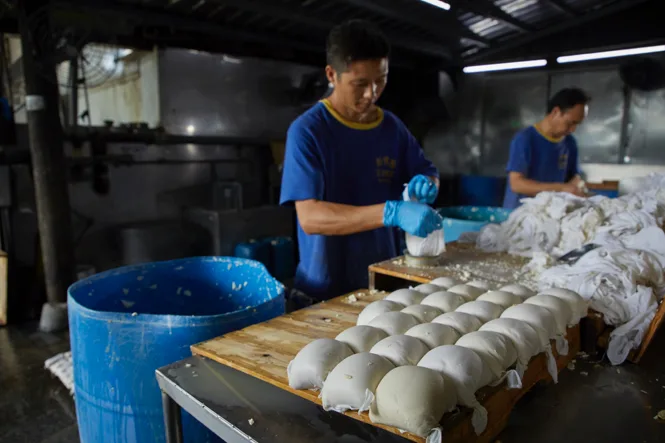
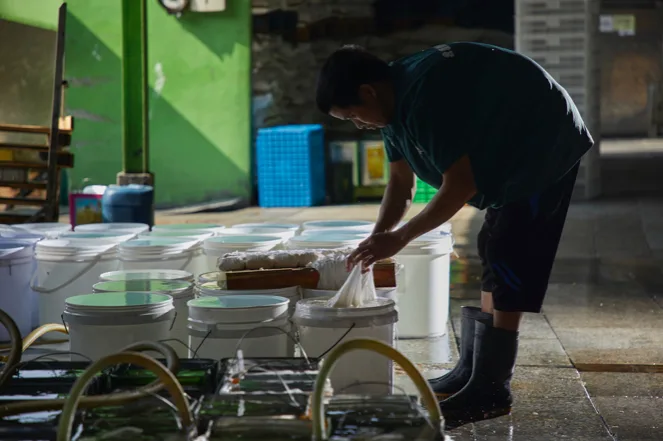
Cloth-wrapped tofu > unwrapping the cloth once the tofu has set
3. Boxed tofu
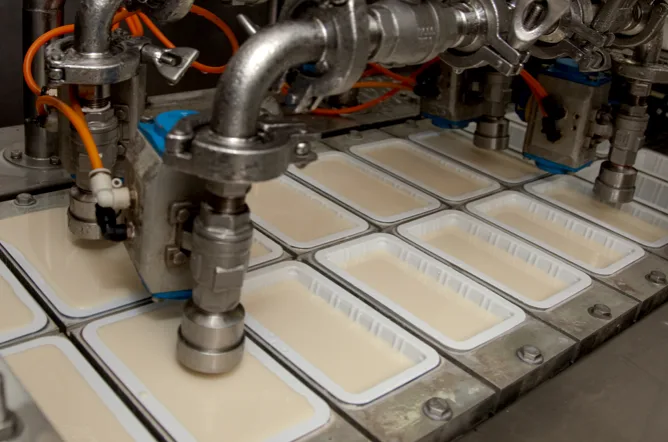
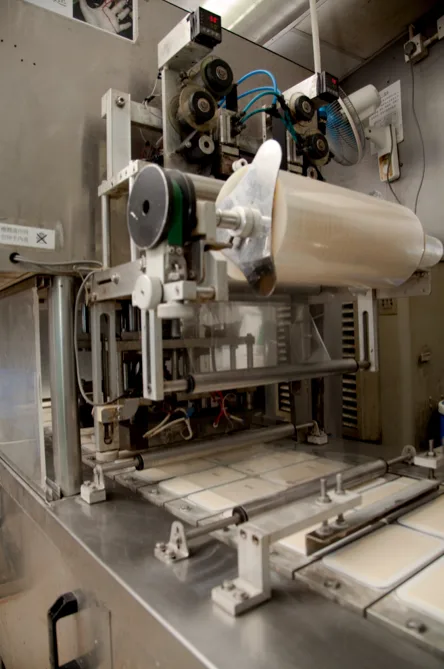
Fully automated tofu filling > boxed tofu
4. Making board tofu
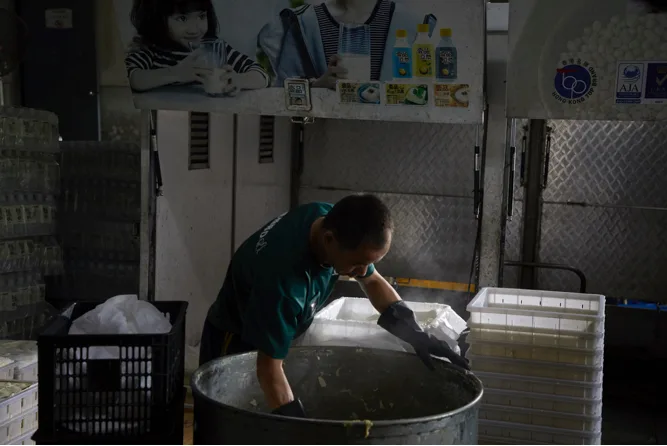
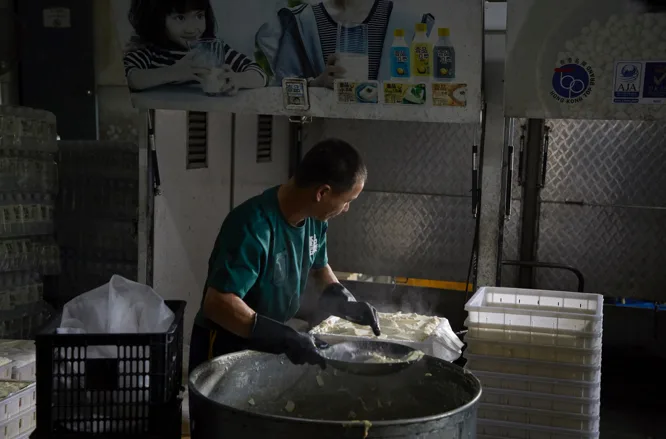
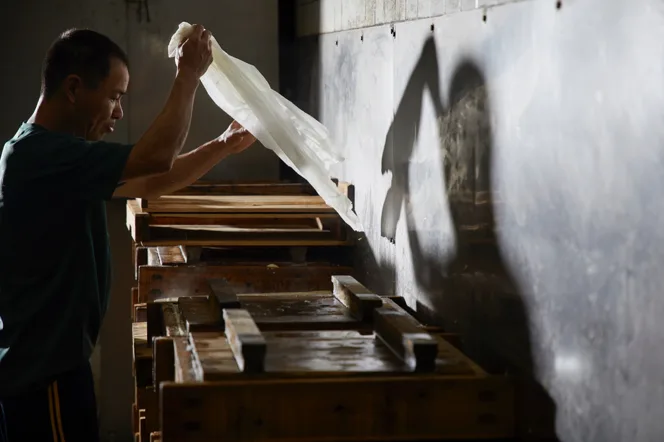
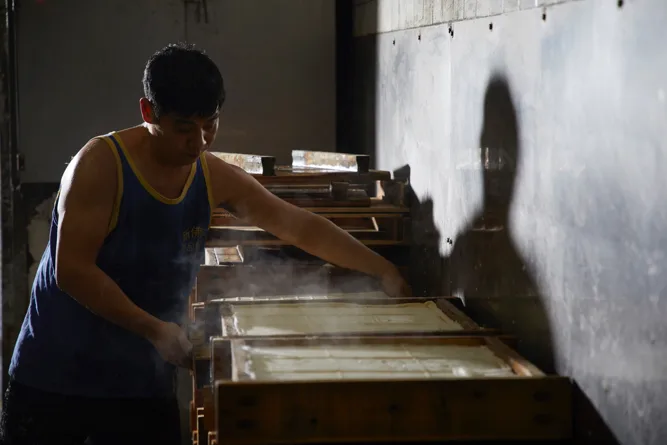
Making board tofu > laying down white cloth and pouring in the curd > sealing with the cloth and pressing under wooden boards > until it sets
5. Making soya milk
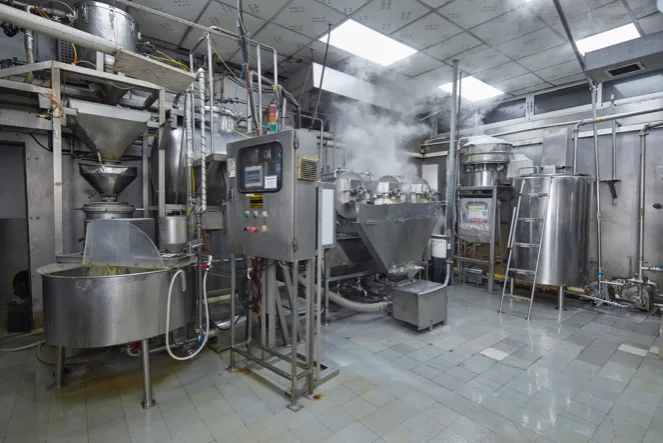
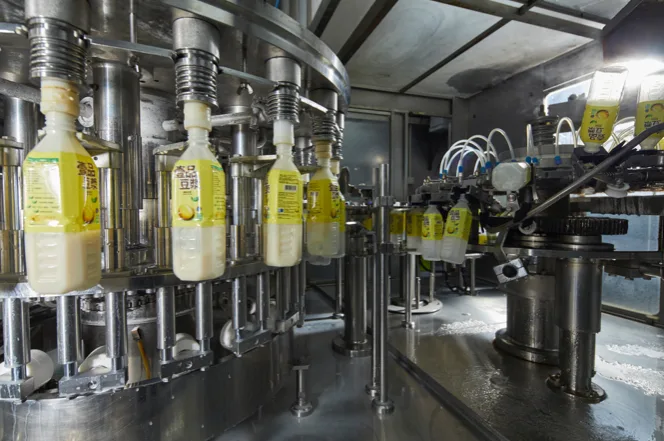
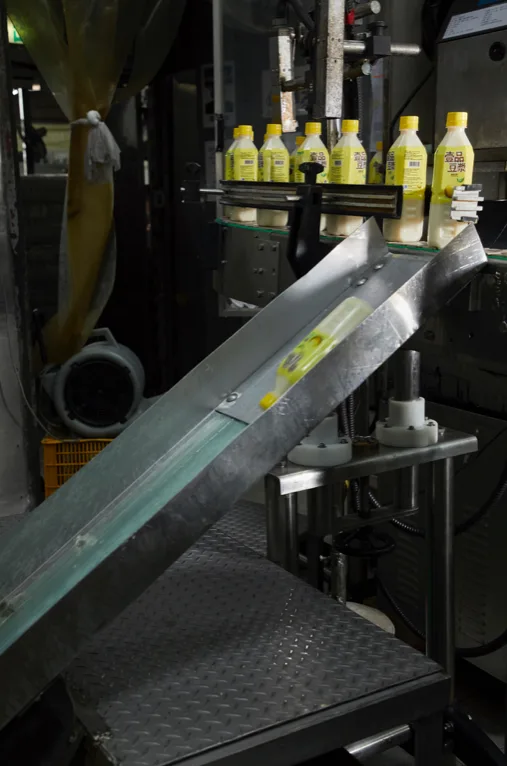
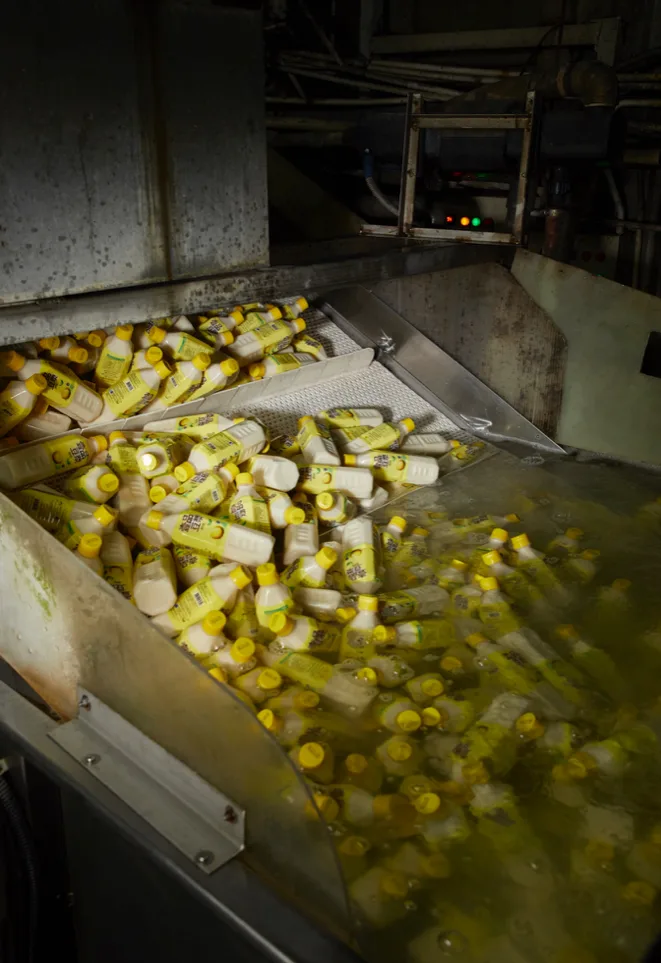
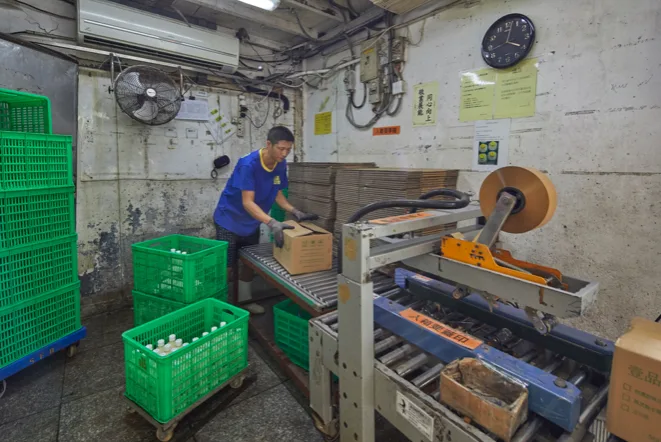
Fully automated soya milk production > filling the milk into bottles > chilling > packaging
Sources: soya-product production photographs courtesy of Top Soya (壹品豆品)
Cable TV Hong Kong https://www.youtube.com/watch?v=r16Qj_WEnHA
Last updated: November 2022. The further-reading links above supplement Hong Kong Brand Museum’s parent-child picture book The Story of Soya Products (《豆品的故事》). Every effort has been made to ensure the accuracy and completeness of the book’s contents; if any information is missing or needs updating, please kindly let the authors know.